
Refine by
Syngas Cleaning Articles & Analysis
13 articles found

This process, known as pyrolysis, breaks down complex organic compounds into simpler substances, producing a range of valuable byproducts, including biochar, syngas, and oil. The continuous nature of the reactor allows for a steady input of waste material and the continuous output of these byproducts, which enhances both efficiency and scalability. ...
The transition to hydrogen as a fuel source is increasingly seen as a critical part of the global energy shift toward more sustainable solutions. Syngas for Industrial Applications The combustible gas produced during pyrolysis can also be converted into syngas (synthesis gas), a mixture of hydrogen, carbon monoxide, and methane. Syngas is a ...
By transforming plastic waste into pyrolysis oil, synthetic gas (syngas), and char, plastic pyrolysis aids in offsetting fossil fuel consumption and reducing greenhouse gas emissions. ...
In contrast, plastic pyrolysis plants mitigate these emissions by converting plastic waste into valuable products such as pyrolysis oil, syngas, and char. By doing so, they not only prevent the release of greenhouse gases but also contribute to the production of renewable energy sources. 2. ...
Energy Generation The gaseous compounds produced during tire pyrolysis, known as syngas, can be utilized as a clean energy source. By harnessing the energy content of syngas, tire pyrolysis contributes to sustainable energy generation, offering an alternative to traditional fossil fuels and reducing greenhouse gas emissions. ...
Exploring the production dynamics and applications of biochar is vital in assessing the efficacy of wood pyrolysis. Syngas Generation and Applications Wood pyrolysis yields syngas, a mixture of hydrogen, carbon monoxide, and methane. This syngas can be utilized as a clean energy source, offering an eco-friendly alternative. ...
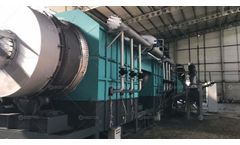
The controlled heating of biomass results in the production of biochar, a valuable soil amendment, and syngas, a clean energy source. Benefits of Charcoal as an End Product 1. ...

Prior to combustion/gasification, sludge is dried to a moisture content of 25–55% by two processes: (1) heat recovered from syngas/flue gas cooling and (2) heat recovered from syngas combustion. The electricity recovered from the combined heat and power process can be reused in syngas cleaning and in the WWT plant. Gas ...

After years of intensive research, Beltran Technologies and associates have adapted and combined legacy technologies with the latest science and engineering, materials and designs, configured into three main components: A high-efficiency gasification reactor that converts biomass and other carbonaceous materials into quality synthesis gas (syngas). A specially engineered wet ...
A wet electrostatic precipitator (WESP) to clean and condition the syngas - a critical prerequisite for downstream uses. ...
Complicating the gas cleaning equipment design is the detrimental formation of tars and scale, coupled with the need to operate at higher temperatures and pressures than those normally encountered with common "atmospheric" gas cleaning applications. ...
The gasifier is engineered to create a clean combustible syngas from a broad spectrum of dissimilar carbonbased solids, liquids, and other feedstocks. ...

The syngas can be used for producing power and/or hydrogen, methanol, Fischer-Tropsch liquids, etc. ...