
Syngas Quality Articles & Analysis
7 articles found
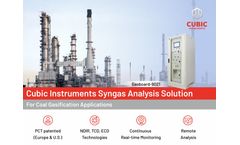
Increased methanation consumes hydrogen, reduces carbon conversion efficiency, and elevates methane concentration in the gas stream, directly affecting both calorific value and short-term gas quality stability. Additionally, variations in CO2 concentration arising from shifts in reaction equilibria and partial oxidation behavior modify the relative proportion of combustible ...

Materials rich in cellulose and hemicellulose tend to produce less biochar but more volatiles (syngas and bio-oil). Bio-oil Quality: The chemical composition of the biomass can significantly affect the quality of bio-oil. ...
However, varying waste compositions can make gasification challenging to control, resulting in inconsistent syngas compositions. Closely monitoring gas composition and adjusting process conditions during gasification can ensure consistent, high-quality syngas production. ...
This results in astoichiometric and uniform combustionand prevents soot production. Syngas online monitoring systems The use of advanced online monitoring systems installed in the heart of syngas processes usually requires integration into air conditioned analyser rooms or shelters to preserve the instruments from harsh plant conditions and corrosive ...

We’ve seen a tremendous amount of interest in Concord Blue our advanced gasification technology partner driven by their efficiency, environmental performance and production of high quality syngas. Also, the ability to cost effectively scale down to the 5-10MW range fits the distributed energy generation model while treating waste locally where it is ...
It is configured into a three-stage process that uses gasification to convert latent hydrocarbons in waste materials into versatile, clean-burning synthesis gas (syngas). The system is configured into three main components: A gasification reactor wliich produces high-quality syngas from biomass and other carbon-based materials. ...
After years of intensive research, Beltran Technologies and associates have adapted and combined legacy technologies with the latest science and engineering, materials and designs, configured into three main components: A high-efficiency gasification reactor that converts biomass and other carbonaceous materials into quality synthesis gas (syngas). A ...