
Refine by
Tagout Articles & Analysis
25 articles found
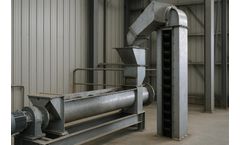
Sizing assumes starting torque of 150–200% of running power, 20–30% surge capacity, and provisions for future expansion.Design Specifications for RecyclingAbrasion-Resistant MaterialsBucket Elevator Boots: AR400 or AR500 steel (400–500 Brinell) in paste or metallic service; replaceable wear liners for maintenance access.Screw Conveyor Flights: Hardened steel with overlay welding (Chromium carbide ...
This includes wearing appropriate PPE, securing the work area, using proper lifting techniques, and following lockout/tagout procedures. Documentation Maintain detailed documentation of the installation process, including design specifications, permits, inspection reports, and testing results. ...
Use warning signs, barricades, and lockout/tagout procedures to prevent unauthorized access and ensure a safe working environment. ...
Follow Safety Protocols When performing rail repairs or replacements, adhere to safety protocols, lockout/tagout procedures, and crane manufacturer guidelines. Use proper personal protective equipment (PPE), work in teams, and follow established safety procedures to prevent accidents and injuries. ...
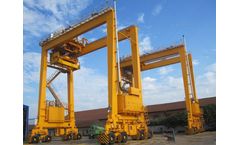
Safety Precautions Before starting any repair work, prioritize safety by following established safety protocols, wearing appropriate personal protective equipment (PPE), and ensuring that the gantry container is securely immobilized and powered off. Lockout/tagout procedures should be implemented to prevent accidental startup or movement during maintenance activities. ...

Safety Measures Before initiating any repairs, implement safety measures to ensure the well-being of personnel and prevent further damage. This includes: Lockout/Tagout Procedures: If applicable, follow lockout/tagout procedures to de-energize the winch and prevent accidental start-up during repairs. ...
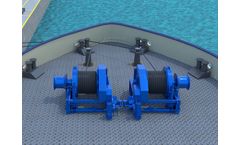
Safety Measures: Incorporate safety features such as emergency stop buttons, overload protection, and lockout/tagout procedures. Safety guards and warning signs should be installed to prevent unauthorized access and accidents. ...

Fall Protection, construction (29 CFR 1926.501) [related safety resources] Respiratory Protection, general industry (29 CFR 1910.134) [related safety resources] Ladders, construction (29 CFR 1926.1053) [related safety resources] Hazard Communication, general industry (29 CFR 1910.1200) [related safety resources] Scaffolding, construction (29 CFR 1926.451) [related safety resources] Fall ...

As per OSHA, environment control measures can be taken in the form of safety signs & tags, work permit issuance for working in confined spaces or work at height etc. lockout/tagout procedure should be implemented while working or performing maintenance of the equipment. ...

What are the restrictions on youth/minor workers in dangerous workplaces? What are the lockout/tagout and guarding requirements for machinery? If we carry out welding, cutting and hot work activities at the facility, what precautions do I need to take? ...

Companies can prevent caught-in incidents that involve machinery by ensuring all workers receive proper lockout-tagout training, and also by ensuring that every worker’s lock and tag can only be removed by them. ...

A separate State Police investigation into the incident determined that the explosion occurred as a result of a failure in "lockout/tagout" procedures which should have made it clear that the flow of hydrogen gas through the pipeline had not been shut off. ...

Challenge: Antea®Group was contracted by one of the world’s largest chemical manufacturing organizations to provide equipment-specific lockout / tagout procedures at their largest Research and Develop facility in North America. The overall objective of the project was to evaluate the worker risks during maintenance and repair operations associated with laboratory ...
EHS Today looks at how an OSHA exception can free your machines from Lockout Tagout procedure requirements based on a presentation at the recent Safety Leadership Conference. ...
Respiratory Protection (1910.134) – 3,305 violations. Lockout/Tagout (1910.147) – 3,002 violations. Powered Industrial Trucks (1910.178) – 2,760 violations. ...
Most notably this year, OSHA’s Lockout/Tagout standard has moved up the list, from 8th place in 2013 to the 5th position. ...

The most frequent violations were electrical hazards, lockout/tagout protections, machine guarding, fall protection, hazard communication, and powered industrial trucks (forklifts), Galassi said. ...
The alleged violations included fall hazards, obstructed exit routes, an absence of lockout/tagout procedures to allow maintenance on a trash compactor, an unguarded grinder, lack of training for employees using personal protective equipment, a lack of eye and face protection, and a lack of information and training on hazardous chemicals (42 OSHR 126, 2/9/12). ...
Electrical-wiring methods ( 1910.305) 1,744 violations Violations included problems with flexible cords and cables, boxes and temporary wiring, poor use of extension cords, and using temporary wiring as permanent wiring. Lockout/Tagout (1910.147) 1,572 violations Frequent violations were poor or no energy control procedures, inadequate worker training, and inspections not ...
As seen on OSHA’s website, here are the most frequently cited standards following Federal OSHA worksite inspections (each category is also a clickable link here): 1926.451 – Scaffolding 1926.501 – Fall Protection 1910.1200 – Hazard Communication 1910.134 – Respiratory Protection 1910.147 – Lockout/Tagout 1910.305 – Electrical, ...