
Refine by
Tailings Acid Articles & Analysis
17 articles found
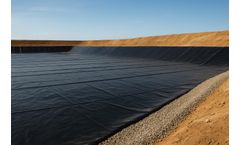
EarthShield delivered a targeted anti-seepage solution for a large tailings storage facility in Tanzania, employing a 2.00 mm HDPE geomembrane to reinforce containment, support regulatory compliance, and enable safe production operations.Mining projects in East Africa confront core challenges that drive liner design decisions, including intense UV exposure and extreme temperature ...

Chemical & Petrochemical Industry Applications: Acid/alkali flow (e.g., HCl, NaOH, H₂SO₄). Solvents, corrosive process liquids. ...
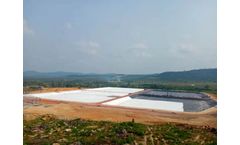
The full name of HDPE Geomembrane is “High-Density Polyethylene Geomembrane”, which has excellent resistance to environmental stress cracking, low-temperature resistance, anti-aging, corrosion resistance, and a large operating temperature range (-60–+60) and long service life (≥50 years) is used in anti-seepage projects such as domestic waste landfills, solid waste landfills, ...

Despite the highly activity in N2O decomposition, the catalysts performance decreases in the presence of contaminants in the tail gases of nitric acid plants. In our paper, we present systematic studies evaluating the inhibiting effects of each of the contaminants (O2, H2O, and NO) on the N2O decomposition over fully optimized double doped (K, Zn) cobalt spinel ...
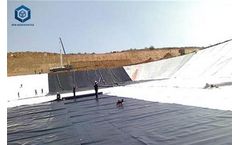
With the economic development, the demand for mineral products has increased significantly, the scale of mining development has increased, and the amount of mineral tailings produced will continue to increase. The large amount of tailings piled up will cause many problems for the mining, environment and economy, the tailings composition and the ...

A uranium mill in the western United States uses sulfuric acid in the extraction process. The remaining byproduct is then stored in a tailings disposal cell. The liquids are acidic with a pH between 1 and 2. Project Details Uranium Mill Tailings Disposal Location Ores Processed in Utah, Colorado & Arizona ...
ByCETCO

As a result, pH and electrical conductivity oscillations as a function of time, acid-forming potentials and elemental contents of synthetically prepared rainwater leachates of massive sulfides and sulfide-bearing lead–zinc tailings from abandoned and currently used deposition areas have been determined. Although the lowest final pH of 2.70 was obtained in massive ...

Fugitive particulates can be released during the handling and transport of ores, concentrates and tailings. Acidic vapours can be produced during pyrometallurgy and other secondary processing. ...
In this study, the developmental toxicity and genotoxicity of 10 DBPs (four trihalomethanes [THMs], five haloacetic acids [HAAs] and sodium bromate) in the zebrafish embryo model were evaluated. ...

Up to the present polluted Acid Mine Drainage (AMD) also known as Acid Rock Drainage (ARD) from South Africa's gold mines was treated by the precipitation of heavy metals with lime and expensive caustic soda where the residues accumulate in the treated water. ...

MHC-II is a heterodimer of two transmembrane proteins, each containing a short cytoplasmic tail that is dispensable for transduction of death signals. This suggests the function of an undefined MHC-II-associated transducer in signaling the death response. ...
The microbial communities of three different sulfidic and acidic mine waste tailing dumps located in Botswana, Germany, and Sweden were quantitatively analyzed using quantitative real-time PCR (Q-PCR), fluorescence in situ hybridization (FISH), catalyzed reporter deposition-FISH (CARD-FISH), Sybr green II direct counting, and the most probable number (MPN) ...

The legacy of past mining practices is large quantities of acid generating waste materials and tailings that caused abounding acid mine drainage problems. Modern mining environmental management tends to focus on concerns over the impact of waste disposal on surface primarily in the form of tailings and waste materials structures. ...

Abstract Previous investigations have found that plants grown on sulphide-rich mine tailings have phytostabilising effects on acid mine drainage (AMD) by decreasing the pH and preventing the release of metals. ...

Commercial plants are operating to treat sulfuric acid plant tail gas, prevent emissions from a sulfur recovery unit and to provide safe storage and transport of sulfur dioxide. ...
(CTI) has successfully realized startup of three commercial applications of their CANSOLV® System SO2 scrubbing technology: 10,000 TPY SO2 Unit in Noranda’s smelter operations in Quebec 4,000 TPY SO2 Unit for Claus Tail Gas Clean-up at a chemical manufacturing complex in Belgium 3,000 TPY SO2 Unit for Spent Acid Recovery Unit Tail Gas ...
The tail gas from a single absorption sulfuric acid plant typically contains 2000-3000 ppmv of unreacted SO2. ...