
Tailings Site Articles & Analysis
28 articles found

The U.S. Dept of Energy (DOE) classifies critical materials and minerals based on their importance to energy and supply risk. With the new U.S. administration taking office in January 2025, there has been a renewed effort to focus on strengthening the supply of these resources both domestically and ...
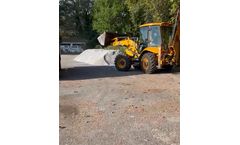
From mine haul roads, secondary roads, stockpiles and tailings to airstrips, construction sites and municipal roads, these are the applications we see most often for DUST/BLOKR®, our dust suppression solution. ...

Geomembranes are geotechnical impermeable materials made of plastic film as an impermeable base material and compounded with non-woven fabric, divided into low-density polyethylene (LDPE) geomembranes and high-density polyethylene (HDPE) geomembranes. They are polymeric flexible materials with low specific gravity, high extensibility, high adaptability to deformation, corrosion resistance, ...
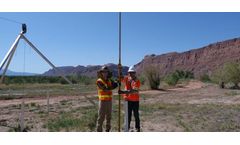
Field testing was conducted at the Moab Uranium Mill Tailings Remedial Action (UMTRA) site in Moab, UT, in conjunction with a project that used the Javelin Slim 2.38 inch logging tool. ...
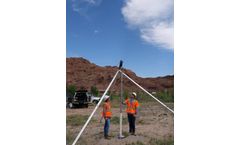
The Moab Uranium Mill Tailings Remedial Action (UMTRA) site is a former uranium ore-processing facility managed by the U.S. ...
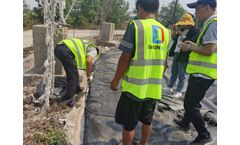
Moreover, it has strong chemical corrosion resistance, a mature manufacturing process, and easy on-site welding, so it is used in the anti-seepage treatment of landfills. ...
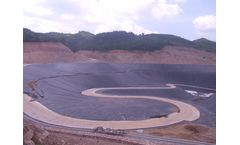
It is used in waste landfills, tailings storage sites, pathway anti-seepage, dike anti-seepage, subway projects, etc. 4. ...
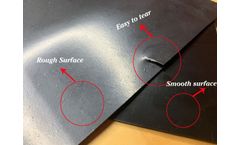
Anti-seepage engineering in aquaculture, anti-seepage engineering in the lotus pond, anti-seepage engineering in the reservoir, anti-seepage engineering in salt field, anti-seepage engineering in landfill, anti-seepage engineering in tailings disposal site, anti-seepage engineering in sewage pool, biogas The use of recycled geomembrane in the anti-seepage project ...
The geomembrane itself has a wide range of applications, such as landfills, hazardous waste disposal sites, tailings dams, heap leaching tanks, oil seepage prevention, sewage plants, biogas tanks, and so on. ...
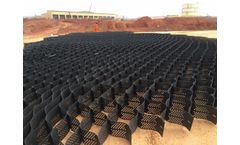
Mined materials are essential to our everyday lives. We use these valuable minerals in nearly every sector of the economy—they are necessary to construct roads and buildings, manufacture vehicles, build computers, and generate electricity. Additionally, the mining industry stimulates economic growth by providing employment opportunities and generating tax revenue that helps fund vital ...

Fugitive dust is generated from soil and debris tracked onto paved roads, from wind erosion of mine tailings, and unpaved roadways. Construction site managers should review their worksite conditions to determine the risk of fugitive dust and the needed dust control measures. ...

The treatment method of tailings is generally as the filling material of the underground mining goaf of the mine, that is, the water-sand filling material or the aggregate of cemented filling; perhaps some of them are directly covered with soil on the tailings accumulation site to cultivate crops or plant trees. In fact, the most economical way ...
BPM natural pond liner is widely used in fish and shrimp breeding farms, artificial lakes, garbage landfills, tailings storage sites, canal seepage prevention, dams and dams seepage prevention, Energy engineering and industrial waterproofing, tunnels, air-raid shelters, subway engineering, etc. ...
Geomembrana HDPE 2 mm is widely used for landfills, tailings storage sites, channel seepage prevention, dam seepage prevention and subway engineering, etc. ...
The fish pond lining material can also be used for shrimp ponds, landfill sites, tailings storage sites, canal seepage prevention, dam seepage prevention, and subway engineering. ...
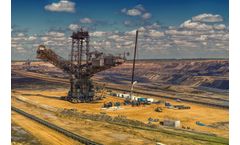
Mineral waste disposal The waste or unwanted minerals (tailings) separated from the valuable minerals are routinely disposed of in a tailings pond near a mine site. ...

Embankments are common features in mine sites, necessary for tailings storage, surface water management or general infrastructure such as dewatering ponds. ...

The use of polyphosphates for remediation applications is a relatively new approach but an extremely cost-effective solution for reducing the bioavailability and mobility of toxic heavy metals and radionuclides in mining tailings, soil, and groundwater. CASE STUDY A recent remediation effort focused on uranium immobilization using polyphosphates was conducted by Arcadis U.S., ...

Biofilms can make good bioindicators and biomarkers, offering a convenient tool to monitor metal contamination in streams that results from mine tailing sites. Biofilm metal content (Cu, Zn, Cd, Pb) as well as diatom diversity and the presence of teratologies (diatom abnormalities) were determined for biofilms from rivers with a variety of physico‐chemical ...

Soils, water and crops around abandoned metal mines can be contaminated by heavy metals from adjacent tailings and waste rocks accumulated during mining operations. The results indicate that the As, Zn, Cd, and Cr concentrations exceed the soil contamination standard in many soil samples of the nearby farmlands as well as the tailings sites. ...