
Tds Level Articles & Analysis
48 articles found
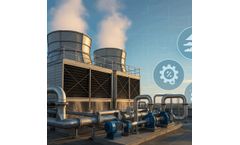
Cooling towers represent one of the most critical—and water-intensive—components across commercial and industrial operations, consuming up to 3% of total freshwater usage globally. For sustainability directors managing facilities ranging from power generation, general manufacturing plants to commercial office complexes, data centers, and healthcare facilities, the challenge extends ...
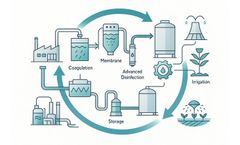
Water scarcity pressures and stricter discharge regulations are driving industrial facilities and municipal operators to implement comprehensive water reuse strategies. However, successful water reuse projects require methodical scoping that matches treatment technologies to specific water quality parameters and operational constraints. This systematic approach prevents costly oversizing, ensures ...
The semiconductor industry’s pursuit of smaller, faster, and more powerful chips demands ultrapure water. Achieving this level of water purity presents water management challenges, making silica water treatment management solutions for semiconductor companies crucial. From high water usage to stringent regulations, semiconductor companies face several water treatment process complexities. ...
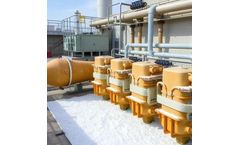
I’ve seen firsthand how unchecked silica can wreak havoc on industrial water systems. It’s a problem for plant managers, maintenance crews, and a drain on resources. Effective silica precipitation control in water systems can safeguard your operation and your bottom line. This article explores silica’s impact, removal methods, and innovative ways to tackle silica scale control ...

Total Dissolved Solids (TDS) is a common metric used to assess water quality. However, the misconception that low TDS levels equate to safe water can be misleading. ...
ByWaltr
Let’s plunge into the core of industrial water treatment— grasping electrocoagulation in industrial water treatment. It’s a game changer. This innovative technology is revolutionizing how companies sustainably remediate their wastewater and treat their process water. You’re about to get the inside scoop on why electrocoagulation is winning fans across various ...
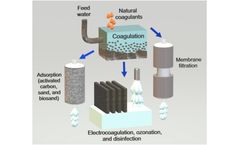
The question of what natural coagulant is best for water treatment has been stirring up quite a storm in the world of environmental science these days. With different coagulant options available, it can be difficult to decide which natural coagulant is most suitable to sustainably optimize water treatment in an environmental friendly way. Indeed, figuring out what natural coagulant is best for ...

The pH scale ranges from 0 to 14, with 7 being neutral. A pH level below 7 indicates acidic water, while a pH level above 7 indicates alkaline water. ...

Taste, odor, and appearance are the three key characteristics that consumers use to judge the quality and safety of water and aquaculture products. The global phenomenon of increased freshwater salinity may affect water quality. Technology is advancing capabilities to detect and treat tastings and odorants (T&O), algal/cyanobacteria cells, and toxins, as well as understanding sensory ...
What is Conductivity? Specific conductance, or conductivity, with regards to water quality is the measurement of how many and how mobile ions are in solution. The more ions that are present and the faster they can move, the higher the conductivity. This water quality parameter is measured in Siemens/cm (S/cm), or more commonly microSiemens/cm (µS/cm). Conductivity is also the inverse of ...
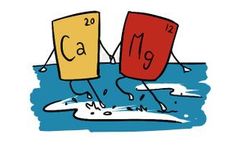
Innovation in Water Remediation, A look to Specialized Electrocoagulation for Water Hardness Removal Hardness in water can be characterized into its primary constituent mineral components, typically calcium and magnesium. Excess water hardness in a water supply creates many issues for industry, utilities and life in general. Calcium and magnesium which are the principal sources of ...
Electrocoagulation is an advanced, yet reliable and cost efficient process harnessing the conductivity of the water source, along with a direct electrical current between metal electrodes to create chemical reactions to remediate the water source.Listed below are some of the advantages of this process: – Does not increase TDS levels– Does not affect permanent ...

As long as the water coming from the faucet is clear, most residents will assume it’s safe. However, water is an excellent solvent, and a clear stream may hide many impurities. Measuring the level of total dissolved solids in water can determine whether the local water treatment system is doing its job of solids handling. ...
What is an Electrocoagulation ETP? An Electrocoagulation ETP is an effluent treatment plant used for the treatment of water, wastewater, and process water. Electrochemical technology and in particular specialized electrocoagulation has become a sustainable water treatment technique due to its ability to remove multiple contaminants more efficiently and economically than conventional chemical ...

The Challenge The worldwide energy sector has accelerated the development of its unconventional oil and gas resources through increased use of horizontal drilling and hydraulic fracturing practices. Water is an essential element in the fracturing process and the recycling or reuse of spent water can dramatically reduce costs. The volume of water required to fracture a well varies, but it ...
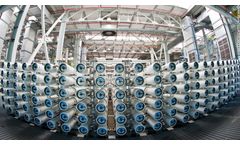
Produced water often contains varying levels of dissolved minerals, salts, heavy metals, and organic compounds. ...
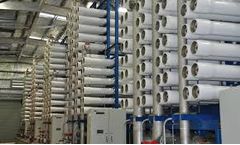
This is why tertiary sewage treatment using reverse osmosis will allow for the safe discharge or reuse of this wastewater stream. Some industries produce more TDS than others. Whether they want to safely discharge their wastewater or reuse it, those high TDS levels present a challenge to meet requirements. ...
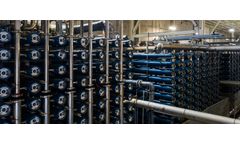
GWT seawater desalination plant solutions are capable of performing effectively in multiple applications and with varying salt water feed TDS levels from 10,000 ppm up to 42- 45,000 ppm. We’ve aided municipalities and industrial clients all over the world with desalination systems for a number of applications.Solid System Warranty and Technical Support. ...
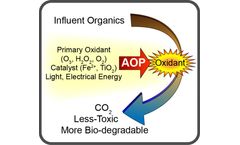
An advanced oxidation system was used in the tertiary stage to reduce the phenols to an acceptable level for discharge into the Mediterranean Sea. The AOP advanced oxidation system was used in conjunction with a pre-existing oil separator as well as an electrocoagulation unit and microbubble technology. ...

Typically, the pollutants found in textile wastewater include: Concentrations of nonbiodegradable organics or inorganics like metals, dyes, phenols, pesticides, phosphates, and surfactants Elevated concentrations of total suspended solids (TSS) High biological oxygen demand (BOD) High chemical oxygen demand (COD) High levels of total dissolved solids ...