
Refine by
Temperature Chamber Articles & Analysis
143 articles found

A Direct Fired Thermal Oxidizer (DFTO) is a VOC destruction system that uses a high-temperature combustion chamber to oxidize volatile organic compounds into carbon dioxide (CO₂) and water vapor (H₂O).Unlike Regenerative Thermal Oxidizers (RTOs), DFTO systems do not use ceramic heat storage beds. Process exhaust passes directly through the combustion ...
CADAIR VOC Treatment Solution After detailed site investigations and process analysis, CADAIR designed the following system:Pretreatment + Zeolite Rotor Concentration + Three-Chamber RTO This technology is widely applied in:Photovoltaic Silver Powder VOC Treatment Conductive Silver Paste VOC Treatment Photovoltaic Adhesive VOC Treatment Electronic Chemical VOC Treatment Silicone ...

The machine glides on skids and forms a sealed cooling chamber directly against the snow, where the open side of the chamber is the snow itself. ...
Safety and Risk Management Flammable and toxic solvents such as NMP require advanced safety design, temperature control, and explosion prevention measures. Recommended VOC Treatment Solutions for 3C Electronics Manufacturing To address the unique challenges of electronics manufacturing VOC emissions, CADAIR recommends integrated systems centered around: Zeolite Rotor ...

The former has lubricity, thermal conductivity, and good high-temperature performance. The latter is also in thermodynamic equilibrium at room temperature and pressure.Application of Hexagonal Boron Nitridehttps://www.eticeramics.com/Hexagonal boron nitride is a material with high-temperature resistance, corrosion resistance, high thermal ...

The equipment mainly consists of a microwave generation system, an extraction chamber, a temperature control system, a pressure monitoring system, and an intelligent control system. First, the sample and extraction solvent are placed in a high-temperature resistant extraction vessel, which is then placed inside the microwave extraction ...
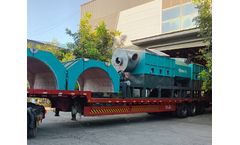
Thermal Oxidation and Condensation Thermal oxidation is employed to decompose volatile organic compounds that escape initial filtration. High-temperature combustion chambers convert hydrocarbons into carbon dioxide and water vapor, drastically reducing odorous emissions. ...
Abstract Boron nitride (BN) is a high-performance material known for its exceptional chemical stability, high-temperature resistance, corrosion resistance, and electrical insulation properties. It is widely utilized in the production of advanced components such as liquid metal delivery pipes, high-power device substrates, steel casting molds, high-temperature ...

Carbonization Reactor At the core of the system lies the carbonization reactor. This cylindrical chamber, lined with high-temperature insulation materials, operates under a semi-oxygen-limited environment to enable pyrolysis rather than combustion. As the sawdust enters, it is gradually exposed to rising temperatures, typically between 400°C ...

Gasboard-2063 ensures long-term stability by automatically calibrating within the cycle applying the lowest measured point as the baseline, eliminating temperature effects through software compensation, and optimizing filter parameters for narrow-band absorption. ...
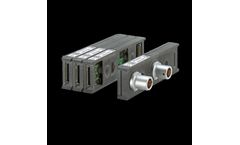
This technology not only ensures high signal fidelity and short cable runs, but also increases safety, as no high voltages need to be routed outside the temperature chamber of the test bench. Other key features of the multi-channel EIS modules are the time-synchronous measurement on a large number of channels and the comparatively low measurement costs. ...

Stability chambers and Accelerated Stability Assessment Program (ASAP) chambers are both used for product testing under controlled environmental conditions. However, these chambers are designed for different purposes and cater to specific, often highly specialized industries, including pharmaceuticals, electronics, and materials science. If you’re unsure whether you need a Stability ...

In high-tech industries from consumer electronics to semiconductors and medical devices, advanced manufacturing is critically reliant on precise dimensional measurements to ensure superior product quality and optimize process efficiency. As manufacturers increasingly depend on the accuracy offered by metrology solutions providers, it is imperative that the industry establishes traceability ...
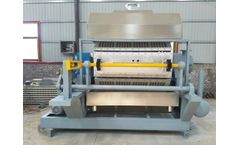
Mold Wear and Surface Degradation The molds are subjected to constant mechanical stress, water exposure, and temperature fluctuations. Over time, this leads to surface wear, dimensional inaccuracies, and rust formation—especially in machines lacking corrosion-resistant coatings. ...
A variety of industries—from pharmaceuticals to food and beverage to cosmetics and more—depend on stability and photostability chambers to help ensure that their products are designed to withstand environmental fluctuations. These chambers stress test the effects of temperature, humidity, and light on products to measure their ...
Silica extraction involves burning rice husk at high temperatures to remove organic matter and impurities, leaving behind pure silica ash.3. ...
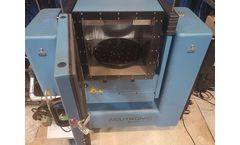
Challenges Faced by MEMS Accelerometers and Gyroscopes While precise engineering developments have led to significant advancements in the size, weight, and power reduction of MEMS sensors, natural challenges may, over time, affect the sensor’s accuracy performance.Temperature Variations: MEMS sensors are sensitive to temperature changes, leading to variations in output ...
Understanding Tyre Pyrolysis Process In a tyre pyrolysis plant for sale, the process begins with the feeding of shredded tires into a high-temperature reactor chamber, typically operating in the range of 300°C to 800°C, in the absence of oxygen. ...
Components of a Thermal Desorption System 1. Desorption Chamber: At the heart of the thermal desorption system lies the desorption chamber, a chamber specifically engineered to accommodate the sample matrix. It provides a controlled environment where the targeted compounds are liberated from the matrix under precisely regulated ...
Step 2: Heating and Pyrolysis Once the pyrolysis chamber is loaded with feedstock, the heating process commences. Small pyrolysis machines are equipped with heating elements or burners that elevate the temperature within the chamber to the desired level for pyrolysis. Typically, temperatures range from 300°C to 800°C, ...