
Textile Sorting Articles & Analysis
23 articles found

Textile upcycling transforms old or unused clothing and textile materials into new, more valuable products without going through industrial decomposition. As fast fashion drives a global textile waste crisis — with over 16 kg of textile waste discarded per EU inhabitant annually — upcycling is gaining momentum ...
How Textile Recycling Machines Work Textile recycling requires a chain of specialized machines: automatic sorting systems, shredding machines, and chemical recycling and fiber regeneration equipment. ...
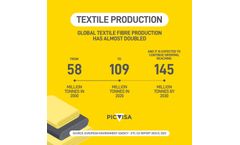
Textile recycling Innovative technologies in the production of recyclable textiles Every day, large amounts of damaged recyclable textiles and other materials are discarded worldwide, contributing to pollution either because of their long decomposition time or because they release harmful chemicals. ...
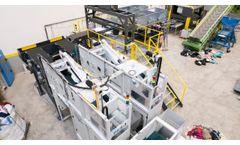
The focus here is on reuse and recycling. PICVISA, textile sorting, AI © PICVISA PICVISA, a specialist in AI-based optical sorting technologies for the reuse and recycling of materials, and GIRBAU, a global leader in industrial laundry and automation solutions, have announced a strategic collaboration to advance the full automation of ...
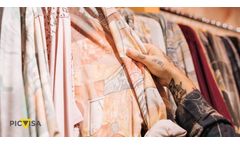
Hence the importance of promoting textile recycling, a process that involves several stages:Collection and sorting of used clothing. ...

In the case of Goodwill, and as announced at the end of last year, it is worth highlighting its participation in launching a multi-year initiative—in collaboration with companies Reju and WM—that involves the imminent implementation of pilot programs to divert textiles from landfills through collection and sorting, thus paving the way for a more circular ...
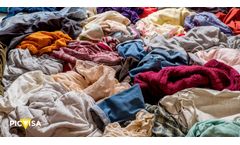
Thanks to an efficient collection and sorting system, Germany recovers about 75% of its textile waste for reuse and recycling, according to the German Federation of the Textile and Fashion Industry. ...
Case Study – PICVISA & Textile House Slovakia: Advancing Textile Sorting for a Circular Future Enhancing Textile Sorting: How ECOSORT Enhances Circularity at Textile House Slovakia For over 20 years, Textile House has been at the forefront of circularity, transforming ...
By participating in this international fair, PICVISA aims to demonstrate its technological solutions to the Italian market, particularly the textile sector. Innovative solutions such as those applied by Esposito, a leading Italian company in the production of management and sorting equipment for used clothing, will be featured. Recently, they signed a contract ...
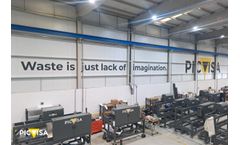
It is an automated process that uses cameras and artificial intelligence to identify and sort recyclable materials. Machine vision systems analyse images of the conveyor belt, detecting and sorting different types of waste accurately and quickly.What are the benefits of machine vision sorting? ...
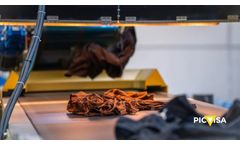
At PICVISA, we are driven by the vision of a more sustainable world. Through the development and implementation of innovative technologies, we transform recycling into an efficient and precise process, making a new useful life possible for discarded materials and contributing to the development of an increasingly consistent and scalable circular ...
In this field, PICVISA offers solutions such as ECOSORT and ECOPICK, designed specifically to address the complex specificities of waste generated by an industry as important to the economy as textiles. PICVISA’s automated separation technology uses techniques such as optical sensors and artificial intelligence-based robotics to sort and recycle ...
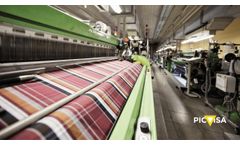
However, the true driving force, the key to sustainable progress in the textile sector, lies in recycling. PICVISA: INNOVATION IN TEXTILE SORTING AND RECYCLING. ...

This is where the importance of automation technology in textile recycling sorting lies. AUTOMATED TEXTILE WASTE SORTING TECHNOLOGY Automated textile waste sorting is a technology that uses cameras and sensors to identify and separate the different materials that make up ...
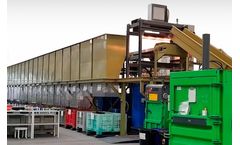
It is at this point, where automated textile sorting is positioned as a key technology for textile recycling. ...
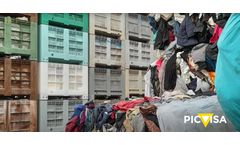
Germany, for example, faces a volume of one million tons of textile waste while its sorting capacity is capped at 191,000 tons.?Sorting capacity in the Netherlands is slightly higher than the amount of textiles collected, but much of that capacity is used to treat German textiles. The room for improvement is ...
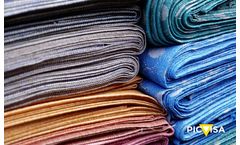
AUTOMATED SORTING OF TEXTILE WASTE But what exactly is hyperspectral vision? This solution combines two different technologies. ...
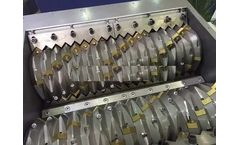
Textile material that is shred by a recycling plant or shredder is called ‘’commercial textile waste’’. ...
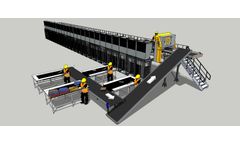
TITLE: PICVISA DEVELOPS AND INSTALLS SORTING SYSTEM FOR TEXTILE FRACTION PICVISA has developed a sorting system for the textile fraction. It is a new and innovative solution from Picvisa, opening new applications of optical science. The function of the textile classification line managed by Insertega Recycling in ...
Food can be classified by the level of maturity at the harvest stage. Textile. Allows sorting of different fabrics at the recycling stage or quality control at the production stage of new garments. For example, textile waste can be classified according to the percentage of polyester in the recycling phase. ...