
Refine by
Thermal Hydrolysis Articles & Analysis
87 articles found

The District of Columbia Water & Sewer Authority's (D.C. Water) Blue Plains Advanced Wastewater Treatment Plant (AWTP) is the largest plant of its kind in the world. On an average day, the facility treats close to 370 million gallons of wastewater and has the ability to treat over 1 billion gallons a day at peak flow. Wastewater flows in from the District of Columbia and from Montgomery and ...

Climate change studies Stable Isotope Analysis Monitoring nitrogen pollution in coastal waters Measuring isotopically labelled species in wastewater Specialised inlet technology for denitrification studies Enzyme Activity Studies Real-time analysis of dissolved gases in enzymatic solutions Direct measurements of reactants and products in real-time Customised light shielding, ...
Mass spectrometry is used to research the thermal hydrolysis of waste materials to gain a deeper understanding of how changing parameters affect the outcomes of the process. ...
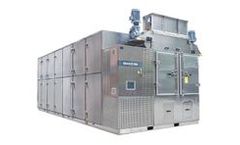
At present, the commonly used sludge treatment technologiesin China mainly include sludge thickening technology, sludge dewatering technology, sludge anaerobic digestion technology, high temperature aerobic fermentation technology, and sludge thermal drying technology. Treated sludge requires safe disposal. At present, the commonly used disposal methodsin China include land use ...
In the case of the digester, we can talk about the injection of air, the injection of oxygen in the dome or the addition of iron hydroxide or ferric chloride. In the case of sludge, thermal hydrolysis or the addition of iron hydroxide in the sludge flow entering the reactor is of interest. ...

They are also investigating the feasibility of using high-temperature and high-pressure thermal cracking technology to recover biofuels from sludge. The average treatment capacity of the Marselisborg wastewater treatment plant is 27,500m³/day. ...
Proven technologies such as anaerobic digestion, thermal hydrolysis, co-digestion or thermal drying are enabling sludge to be converted into a valuable energy source, with uses varying according to country energy prices. ...
The sludge treatment process features Veolia’s continuous thermal hydrolysis technology Exelys™, enabling a significant reduction in the volume of sludge produced, while increasing biogas production. ...
The contract is to produce an enhanced treated sludge through pre-treatment (sterilization and steam explosion) prior to entering the digestion system using Cambi’s thermal hydrolysis process. The use of Thermal Hydrolysis technology has a number of benefits, including: Increased sludge dewaterability Enhanced ...
The project was finished in February 2017, making Xiao Hong Men the first operating Cambi plant in China, serving a population of two million people. Cambi Thermal Hydrolysis Process (Cambi B12) was part of an upgrade at the Xiao Hong Men WRP’s five digesters for advanced sludge treatment. ...
Client: Beijing Drainage Group Solution: CambiTHP - B12 On 1st September 2014, Cambi was awarded the initial Beijing project, Gao Bei Dian, from Beijing Drainage Construction Company, a flagship for large-scale sludge projects with Cambi Thermal Hydrolysis Process (Cambi THP). The project finished in December 2016. ...
The renewable energy source provided by the new installation at Davyhulme will contribute towards the UK's target of 15% of all energy supplied by the National Grid coming from renewable sources by 2020. The Thermal hydrolysis plant will increase capacity of existing digesters by nearly two and a half times. ...
This plant treats sludge from several municipalities in and around Vigo. Cambi has installed his thermal hydrolysis – one B6 – 3 model, with a designed capacity to treat more that 22000 tons of dry solids per year. ...
As part of the Phase 4 Expansion project PUB choose to implement a Cambi THP system to provide the thermal hydrolysis system to process waste activated sludge (WAS) from the Jurong WRP treating industrial and municipal wastewater. ...
In 1995 Cambi built its first full-scale thermal hydrolysis installation at HIAS as part of a new sludge treatment process including hydrolysis, digestion and dewatering. ...
It is designed to treat 8,000 tonnes of dry solids annually, which is produced at Chertsey, Leatherhead, Esher and other wastewater treatment plants. By introducing thermal hydrolysis, the existing digesters at Chertsey have doubled capacity. ...
In order to improve the energy footprint of the WWTP, the application of Thermal Hydrolysis Process (THP) was preferred to the option of constructing additional anaerobic digestion tanks. Since August 2015 approximately half of the generated Waste Activated Sludge has been treated by a Cambi Thermal Hydrolysis B6-4 system, while ...
In 2011 WDD decided to centralise the sludge treatment, by building an advanced anaerobic digestion (AAD) plant at Tilburg WWTP turning it into a Water and Resource Recovery Facility (WRRF). A Cambi Thermal Hydrolysis B12-3 MARK II plant, including a process gas unit and additional sludge cooling was implemented in close cooperation with Cambi AS. ...

As part of the £60 million Thermal Hydrolysis Plant (THP) development, the BIODOME® gas holder units provide the site with 9000m³ of biogas storage. ...

In particular, thermophilic digestion, pasteurisation, thermal hydrolysis, urea treatment and mono-incineration with phosphorus recovery were compared. ...