
Refine by
Thermal Imaging Articles & Analysis
82 articles found
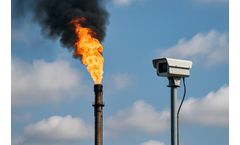
This framework outlines how high-resolution thermal imaging can detect leaks and unburned hydrocarbons at the flare tip, delivering an optical-based audit trail aligned with Appendix CAM requirements.1. ...
ByOPGAL
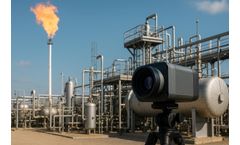
The Resolution Disconnect: Legacy OGI vs Modern Orbital EnforcementThe “Blind Spot” of Early OGI When OOOOa was drafted, the imaging requirements were broad and did not specify strict thermal sensitivity benchmarks (NETD). ...
ByOPGAL
In a facility with thousands of components, a full survey can take weeks, poses safety risks, and can yield false negatives when leaks are not encountered by the probe.Optical gas imaging (OGI) cameras visualize infrared absorption to provide a real-time, top-down view of plumes. They enable rapid screening of hundreds of CH4 connections, offer contextual intelligence to ...
ByOPGAL
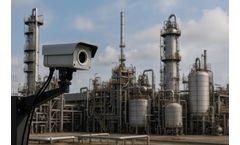
This shift toward fixed Optical Gas Imaging (OGI) technology augmented by Artificial Intelligence (AI) enables autonomous, continuous vigilance, establishing an unblinking safety architecture for real-time detection with reduced false alarms and improved compliance in petrochemical and energy facilities. ...
ByOPGAL
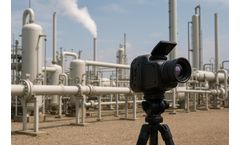
In a facility with thousands of components, a full survey can take weeks, poses safety risks, and can yield false negatives when leaks are not encountered by the probe.Optical gas imaging (OGI) cameras visualize infrared absorption to provide a real-time, top-down view of plumes. They enable rapid screening of hundreds of CH4 connections, offer contextual intelligence to ...
ByOPGAL
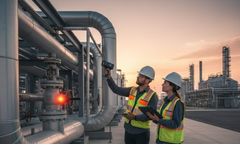
Most mature inspection programs are built around layered detection strategies, where different tools support one another depending on the type of leak, operating conditions, and inspection goals. Within this framework, thermal imaging to detect leaks is widely used as a complementary method. Rather than replacing specialized gas detection technologies, ...
ByOPGAL
Electrical rooms and vaults house some of the most crucial components of a building’s electrical infrastructure, including switchgear, transformers, distribution panels, and more. Regular inspections are essential to ensure the safety, functionality, and compliance of these systems. As technology advances, innovative equipment is increasingly used to enhance the accuracy, efficiency, and ...
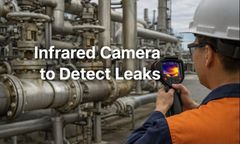
Instead of measuring gas or fluid concentration at a single point, infrared imaging visualizes temperature and emission anomalies across entire systems. When combined with a thermal camera to find leaks, operators gain a fast, non-contact, and highly effective way to locate leaks before they escalate into ...
ByOPGAL
Introduction: Reliability When It Matters Most Industrial facilities rarely operate in controlled, comfortable conditions. Oil fields experience scorching desert heat. Offshore platforms endure high winds, salt spray, and brutal humidity. Chemical plants face corrosive vapors, particulate dust, and extreme temperature swings. In these environments, detection equipment must perform flawlessly ...
ByOPGAL
Traditional monitoring methods often struggle to detect leaks early, especially when they occur inside insulated pipes, behind equipment, or within high-temperature environments. This is where thermal imaging leak detection becomes a game-changing solution. By using a thermal camera to find leaks, operators can visualize temperature anomalies, ...
ByOPGAL
Introduction: OOOOc - The Next Step in Methane Regulation As global attention on methane intensifies, the U.S. Environmental Protection Agency (EPA) continues to roll out new standards aimed at reducing emissions from the oil and gas sector. Following the introduction of OOOOb, the agency is now advancing OOOOc, a complementary rule targeting existing oil and gas sources rather than new ...
ByOPGAL
Introduction: Why Methane Regulations Are Evolving Methane emissions have become one of the most pressing challenges in environmental regulation. Although methane accounts for a smaller percentage of greenhouse gases compared to carbon dioxide, its warming potential is over 80 times greater in the short term. This makes methane a critical target for climate action, particularly in the oil and ...
ByOPGAL
When gases or fluids escape, they create subtle variations in surface or atmospheric temperature. Thermal imaging identifies these anomalies instantly, enabling maintenance teams to act before a small issue becomes a costly disaster. ...
ByOPGAL
Inspecting industrial equipment in high-heat environments is a challenge. Standard cameras and inspection tools often fail when exposed to furnaces, engines, turbines, or other extreme conditions. That’s why a camera that can withstand high temperatures is essential for professionals who need accurate, reliable inspections without risking equipment ...
At OPGAL, we see CH4 connections as a bridge between advanced optical gas imaging (OGI), thermal detection, and the broader goals of safety and sustainability. ...
ByOPGAL
At the same time, AI is entering the conversation as a force multiplier for detection and reporting. For Opgal, a global leader in thermal imaging and Optical Gas Imaging (OGI), this intersection of stricter regulation and cutting-edge technology represents an opportunity to help industries comply, innovate, and ...
ByOPGAL
This shift creates both compliance obligations and an opportunity: integrating advanced tools like thermal imaging and Optical Gas Imaging (OGI) to detect invisible leaks faster, more accurately, and more safely than ever before. ...
ByOPGAL
Introduction: The Human Eye Can’t See Thermal or Gas Anomalies Gas leaks and thermal anomalies are among the most dangerous and costly issues in modern industry. ...
ByOPGAL
In the evolving landscape of environmental regulation, staying ahead of new standards is essential for any company operating in the oil and gas sector. Among the most important updates issued by the Environmental Protection Agency (EPA) in recent years are the NSPS Subparts OOOOa, OOOOb, and OOOOc — each building upon the last to increase stringency in emissions monitoring and leak ...
ByOPGAL
In high-risk industrial environments, gas leaks can mean far more than lost product - they can result in environmental harm, operational shutdowns, regulatory penalties, and severe safety risks. That’s why more and more facilities are turning to infrared camera leak detection as a frontline strategy for emission control and preventative maintenance. Unlike traditional leak detection ...
ByOPGAL