
Refine by
Titanium Dioxide Articles & Analysis
189 articles found

The system was designed to treat VOC emissions generated from: Titanium dioxide coating processes Ethyl silicate emissions Ethanol-containing exhaust gas Shipyard painting VOCs After years of stable operation, the original RTO equipment continued to maintain compliant emissions with reliable performance and low maintenance requirements. ...

Phase-dependent photo-assisted electrocatalytic reduction of nitrate to ammonia was studied using titanium dioxide (TiO2) as the catalyst. By comparing amorphous and rutile TiO2, the work demonstrates how structural order and electronic properties influence charge transfer and the formation of key reaction intermediates during nitrate conversion.The synergistic ...

This study develops a biodegradable photocatalytic membrane with titanium dioxide (TiO2, p25) nanoparticles with a polylactic acid (PLA) support to remove volatile organic compounds (VOCs) from indoor air. ...
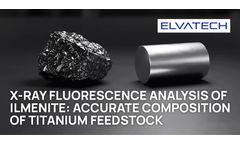
Ilmenite and Its Significance: Where It’s Used and Why Composition Matters Ilmenite is a mineral—the primary source of titanium—occurring as iron–titanium oxide (FeTiO3). It is a raw material for producing titanium dioxide (TiO2), a widely used white pigment, and for metallic titanium. ...

Comparison of Ozone, HEPA filters, bipolar ions, photocatalysis, and other sanitization systems for ambulances In recent years, ambulance sanitization has become increasingly central to the safety of healthcare workers and patients. There are various technological solutions available on the market for sanitizing the sanitary compartment, but not all guarantee the same level of effectiveness ...

Physical Sunscreens rely on inorganic compounds—primarily zinc oxide and titanium dioxide—that create a protective barrier on the skin's surface, reflecting and scattering UV rays. ...

Quantum Disinfection™ (QD) is a revolutionary technology that utilizes principles from quantum mechanics to achieve unparalleled disinfection capabilities. This innovative approach harnesses the movement of electrons to create catalytic active surfaces that can instantly disintegrate any microorganism upon ...
Common inorganic electron transport materials are usually titanium dioxide (TiO2), zinc oxide (ZnO) and tin dioxide (SnO2). In PSC devices, the basic function of ETM is to form electron selective contact with the perovskite absorber layer, improve the photo-generated electron extraction efficiency, and effectively block the migration of holes to ...

There are several methods available for the enrichment of phosphorylated peptides, including immobilized metal affinity chromatography (IMAC) and titanium dioxide (TiO2) beads.2. Analysis via LC-MS/MSPeptides can be introduced into the mass spectrometer via liquid chromatography combined with electrospray ionization (ESI) or matrix-assisted laser ...

Among them, phosphorylation, as the most studied PTM, often uses titanium dioxide-based beads for high-specificity enrichment of phosphopeptides. ...
Photocatalytic Oxidation (PCO): This technology uses UV light and a catalyst (usually titanium dioxide) to break down VOCs into less harmful substances, such as water and carbon dioxide. 2. ...

Before TMT labeling, it is usually necessary to enrich phosphorylated peptides in the sample through specific enrichment strategies, such as Immobilized Metal Ion Affinity Chromatography (IMAC) or titanium dioxide (TiO2) enrichment. This step is necessary because phosphorylated peptides are relatively low in abundance in protein samples. ...

In the current era of digital transformation, the uptake of new technologies has already revolutionized several industries, and the wastewater treatment sector is no exception. As environmental concerns increase, wastewater treatment plants have evolved so they can address the challenges associated with wastewater management more efficiently and sustainably. We are at a critical juncture. The ...
ByIdrica
Photocatalyst is a general term for semiconductor materials with photocatalytic function represented by nano-scale titanium dioxide. The representative photocatalyst material is titanium dioxide, which can produce strong oxidizing substances under light irradiation, and can be used to decompose organic compounds, some inorganic ...

Solid Microneedle Solid microneedles are usually made of metal materials and non-degradable polymers, such as silicon and titanium dioxide, which do not carry drugs themselves. Their function is to puncture the epidermis and form the microchannels required for drug penetration. ...
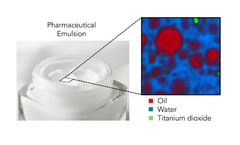
Also observed in the mixture were particles of titanium dioxide (green) at different depths, which displayed a very intense and narrow peak at 148 cm-1 and gives the sample its white ...
Avobenzone Avobenzone is a synthetic sunscreen ingredient (full name Butyl Methoxydibenzoylmethane), which can protect against full-wavelength UVA rays. Titanium dioxide Titanium dioxide is an inert mineral used in cosmetics as a thickener, whitener, lubricant, and sunscreen. ...

Phosphorylated protein enrichment method Based on how much they can enrich and how much they cost, immobilized metal ion affinity chromatography (IMAC) and titanium dioxide affinity chromatography (TiO2) are the most common ones. ...

They were using competitor’s 2" AODD Pumps to transfer titanium dioxide powder (a raw material for varnish production) in their production line. ...
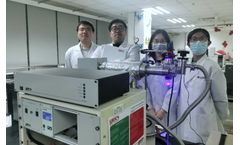
Kinetic study of catalytic reactions is vital to understand the reaction mechanisms and optimize the design of catalysts. Prof. Su’s group upgraded the HPR-20 system with their customer designed gas-inlet and in-situ reactor to explore the evolution of gas-phase chemicals during photocatalytic synthetic processes under realistic conditions. The system allows in-situ, quantitative probing ...