
Refine by
Title V Permit Articles & Analysis
45 articles found
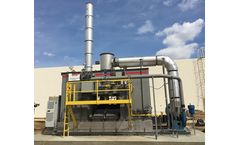
Batteries have become a key contributor in the world’s energy transition and critical in the effort to slow climate change. As a result, battery manufacturing technologies and techniques are constantly evolving as producers look to remain competitive, increase storage capacity, and improve efficiency while decreasing battery size and weight. For instance, some producers are turning to a ...

EPA and individual states mandate various VOC and toxic chemical destruction rates. Title V permits under the Clean Air Act restrict specific sources of air pollution according to an operating permit that must be compliance-certified annually. ...
Amine Tail GasMuch like other industries, oil and gas producers are often required by the Environmental Protection Agency(EPA) to obtain a Title V permit, the objective of which is to prevent untreated air pollutants from entering the atmosphere. ...

During this RATA audit, actual stack emissions levels (including NOx, SOx, CO2, CO, O2, flow rate, temperature, velocity and pressure) from the thermal oxidizer (TO) are compared to those logged by a continuous emissions monitoring system (CEMS) permanently installed within the TO stack at the ethanol facility. Under this facility’s Title V ...

At the same time, the industry is bracing for a final legal decision on whether biogenic emissions must be counted under the Tailoring Rule for Prevention of Significant Deterioration (PSD) and Title V permitting programs. Recently, the U.S. Environmental Protection Agency (EPA) issued changes to the GHG mandatory reporting rule (MRR) promulgated ...

Consisting of a dewatering complex and a compost operation that utilized a portion of the dewatered biosolids (with the balance transported offsite for disposal), the BRC had an expired Title V air management operating permit and was at risk of regulatory enforcement. ...

Recently, a contract drug manufacturing company faced violation of their state operating permit, costly fines, and potential Title V permit classification. To avoid penalties, a more robust abatement device had to be installed, one that met the necessary emissions standards for volatile organic compounds (VOCs). ...

For example, sources regulated by state minor NSR programs can take synthetic minor permit limits to avoid permitting programs such as Title V and PSD, while a comparable source in Indian country could not. The only permitting processes under which a synthetic minor limit could be issued for a source in Indian ...
”2 In order to determine if an emission unit combusts non-hazardous solid waste, please refer to the article titled Defining Solid Waste for additional details. NSPS versus EG A new CISWI unit is required to comply directly with the NSPS provided under 40 CFR Part 60, Subpart CCCC within six months after promulgation of the rule or upon initial startup, whichever is later. ...
The plan must be submitted to the permitting authority upon request, at least 60 days before the initial performance evaluation. ...

Will the tailoring rule have an impact as title V permits are renewed? We will explore these factors during this presentation and what the power industry can expect to moving forward. . ...
EPA has issued a variety of guidance in an attempt to clarify the BACT determination process for GHG emissions from common stationary sources:1 EPA’s “PSD and Title V Permitting Guidance for GHGs,” which provides general guidance for the evaluation of BACT for GHG emissions White Papers on GHG Control Measures which focus on ...
There is an upside for forward-thinking manufacturers regarding EPA blueprint for the way state and local regulatory agencies use the Clean Air Act permitting process to regulate greenhouse gas emissions in the United States. ...

EPA estimates that Title V permits would be required for over six million sources not now subject to the program. ...

EPA estimates that Title V permits would be required for over six million sources not now subject to the program. ...
The plan must be submitted to the permitting authority upon request, at least 60 days before the initial performance evaluation. ...

The NAAQS will become effective in August 2010, at which point any future construction permit applications or applications that are still under state or U.S. EPA review for major new sources or major modifications will need to address compliance with the 1-hour NAAQS level (i.e., there is no “grandfathering” of existing construction permit ...
However, these thresholds are not realistic for GHGs which are emitted by numerous sources in much greater quantities, and at these levels tens of thousands of additional PSD permits and millions of additional Title V permits would be required. The PSD and Title V GHG Tailoring Rule ...
Upon promulgation of GHG control requirements, GHGs become regulated pollutants, and the major source threshold for GHGs would by default be set at 250/100 tons per year (tpy) for PSD and 100 tpy for Title V. EPA has estimated that the influx of permits resulting from the regulation of GHGs at current PSD and Title ...
The order specifically applied to petitions filed by environmental groups requesting that EPA object to PSD/Title V permits issued by the Kentucky Division for Air Quality (KDAQ) to Louisville Gas and Electric Company (LG&E) for construction and operation of a new coal-fired electric generating unit (EGU) at the Trimble County Generating ...