
Total Dissolved Solids Turbidity Articles & Analysis
14 articles found
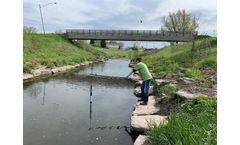
Overview Buffalo Niagara Waterkeeper has been a guardian of Western New York’s fresh water for over 30 years. They work with partners, municipalities, and elected officials to ensure the health and protection of New York State’s Great Lakes and shoreline ecosystems. Waterkeeper has improved water quality through volunteer programs, water quality monitoring, restoration projects, ...
Overview Bio fouling (or biological fouling) is the accumulation of microorganisms, plants, algae, or animals on wetted surfaces. Ajman Municipality, Environment Department, Natural Resources Conservation Section, had installed six water quality monitoring stations. ELARD served as the integrator for monitoring creeks and water surfaces in the city of Ajman, United Arab Emirates, and ...

We will discuss the major factors and risks including the water temperature and chemistry, concentration of total suspended solids, dissolved oxygen levels, pH, turbidity, and algal growth. ...
We will discuss the major factors and risks including the water temperature and chemistry, concentration of total suspended solids, dissolved oxygen levels, pH, turbidity, and algal growth. ...
It also needs to be tested for iron, manganese, total dissolved solids, pH, calcium, hardness, alkalinity, turbidity, arsenic, nitrate, sulfate, chloride, sodium, ...

These include thermotolerant coliforms or Escherichia coli, arsenic, cadmium, lead, nitrate, color, turbidity, pH, total dissolved solids, and disinfectant residual. The 55 primary parameters are site-specific and can be adopted as enforceable parameters when developing new water sources or when the existing source is at high ...
Twenty-three water quality parameters were analyzed, including pH, total dissolved solids, turbidity, nitrate, nitrite, ammonia, hardness, arsenic, iron, cadmium, nickel, chromium, manganese, mercury, selenium, lead, zinc, Escherichia coli, and total coliform. ...
The study notes that well-water quality parameters such as total dissolved solids (TDS), turbidity, electrical conductivity, coliform and nitrate (NO3−) are fairly high above safe drinking water standard. ...

They are testing water parameters including temperature, dissolved oxygen, pH, total dissolved solids, salinity and turbidity. The latter is what the research team are particularly interested in at Litla-Skard because turbidity is related to the concentration of particles in water. The aim of ...

Samples of ground water from five villages have been tested and it has been found that 65% of samples have excessive fluoride, 100% have excessive turbidity, and 55% have excessive total dissolved solids (TDS). A survey has been conducted to assess the impact of drinking water quality; 300 persons participated in the survey from ...
Water quality determinants of the new index include Dissolved Oxygen, Total Dissolved Solids, Turbidity, Nitrate, Fecal coliform and pH. ...
Physicochemical parameters measured were: temperature, pH, electrical conductivity, salinity, total dissolved solids, turbidity, nitrate, copper and lead. With few exceptions, all these parameters were within WHO guideline values. ...
The studied parameters were chromium, turbidity, salinity, Total Dissolved Solids (TDS), Electric Conductivity (EC), pH and temperature. ...
The amount of time needed to see improvements depends on parameters, such as the type of the algae present in the algal population, water temperature, the amount of light, the amount of nutrients present (especially phosphate and nitrate), size and depth of the water body, TSS levels, total dissolved solids (TDS) levels, ...