
Refine by
Total Nitrogen Articles & Analysis
576 articles found
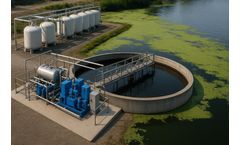
They can struggle with variable influent and seasonal swings, leading to inconsistent performance and higher chemical dosing and oversight costs.Strategies for Reducing Nitrogen and Phosphorus EfficientlyBiological Nitrogen Removal involves nitrification followed by denitrification. ...
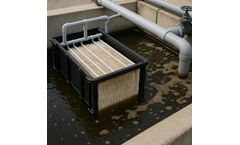
A Solution Built for Nitrification MABR is commonly applied alongside activated sludge systems for total nitrogen removal. In contrast, biofilm-only MABR is a more focused configuration designed specifically to convert ammonia into nitrate. ...

Project Overview Business Model: EPC + Equipment Leasing Construction Period: Sep 2018-Dec 2018 Service Term: 3 years + 2.5 years (extension) Treatment Capacity: 15,000 m3/d (1 plant, 30 sets of 500 m3/d integrated equipment) Wastewater Type: Municipal Wastewater Treatment Process: Anaerobic->Anoxic-> Oxic Membrane Bioreactor (A2/O-MBR) Design Feeding CODcr s 500 mg/L NHs-N S45 mg/L ...

Purpose The purposes of this technical memorandum are briefly outlined as: To evaluate the wastewater discharge payment method used by Metro Wastewater Reclamation District (METRO). To develop a wastewater discharge payment model applied to Industrial Park Water and Sanitation District (District). Based on the wastewater discharge payment model (Payment Model), to predict the ...

Shifting demands are reshaping how utilities plan wastewater treatment As demand for water service grows and existing wastewater treatment systems age, municipal wastewater planning is in a period of transition. Tighter regulatory timelines, uneven growth, and staffing constraints are adding pressure to traditional expansion strategies. At the same time, advances in treatment technologies and ...
The payment is calculated based on five wastewater qualities, including wastewater flow (Flow), biological oxygen demand (BOD), suspended solids (SS), Total Kjeldahl Nitrogen (TKN), and Metering and Sampling (CECU). METRO determines a unit charge for each parameter each ...

Modular systems and smart financing help municipalities meet regulations affordably Small towns across the United States must meet stricter wastewater discharge limits for nitrogen and phosphorus. State and federal regulators are tightening standards to protect rivers, lakes, and coastal ecosystems, but traditional plant upgrades to achieve those standards can cost millions. Operations and ...
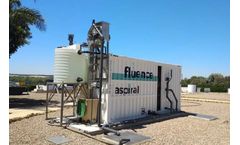
Affordable wastewater solutions help small towns with compliance challenges Iowa’s small towns face new wastewater nutrient limits that could overwhelm local budgets if addressed with traditional plant upgrades. Stricter nitrogen and phosphorus standards mean communities must modernize treatment systems or risk fines, stalled development, and tighter regulatory scrutiny. Fortunately, ...

Advanced technologies help in the removal and recovery of nitrogen and phosphorus Meat-processing facilities generate wastewater that contains high concentrations of nitrogen and phosphorus. These nutrients are by-products of organic matter, like proteins and amino acids. While essential for biological functions, when discharged in excess, they pose serious environmental risks by triggering ...
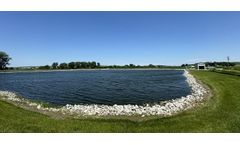
A smarter way to meet tightening nutrient discharge limits As nitrogen regulations tighten, lagoon-based wastewater systems face increasing pressure to perform. ...

Atmospheric NO and NOy monitoring during in-flight research missions has become an essential tool for understanding the complex chemistry of the upper troposphere and lower stratosphere. The ECO PHYSICS CLD780TR analyzer plays a crucial role in these measurements, offering high precision and reliability for airborne applications. ...
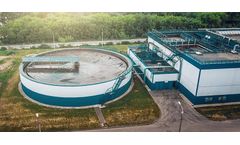
When nitrogen removal must be increased to comply with effluent regulations, Fluence solutions can update conventional activated sludge treatment systems Excess nitrogen in treated effluent is a key contributor to eutrophication in rivers, lakes, and coastal areas. ...

Improvements in biological treatment ensure robust removal of nutrients from wastewater to meet even the strictest effluent standards Around the world, nutrient removal standards have become stricter in recent years, and it’s no mystery why. Despite a global focus on per- and polyfluoroalkyl substances (PFAS) and other emerging contaminants in wastewater, nutrient pollution may still be ...

High wastewater strength: Wastewater from RVs and mobile homes tends to have high levels of biological oxygen demand (BOD), total suspended solids (TSS), and nitrogen. This is due to lower water usage and the presence of odor-control chemicals, resulting in more concentrated waste that requires specialized treatment. ...
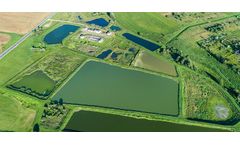
Systems may require add-on technologies to deal with inadequate removal of substances including ammonia, total nitrogen, and phosphorus. Seasonal changes affect loadings, temperature, and discharge, further challenging treatment efficiency. ...

Dairy processors face a significant challenge: treating wastewater efficiently and affordably. This wastewater, a byproduct of processes from cheese making to yogurt production, contains milk, whey, cleaning agents, and more. Effective dairy wastewater treatment plants are essential for water management and minimizing environmental impact. Dairy industry wastewater treatment systems are complex ...
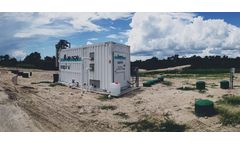
Decentralized design is customized to suit treatment needs As demand grows for sustainable wastewater solutions, the Aspiral™ Flex line from Fluence stands out with its versatile, containerized wastewater treatment units. Ideal for small- to medium-sized communities and facilities, the Aspiral™ Flex units can handle flows from 5,000 to 250,000 gallons per day (20 to 950m3 per day), ...
Treatment offers environmental and economic benefits Digestate, a byproduct of wastewater treatment, plays a pivotal role in nutrient management and waste disposal. Technologies are available for treating digestate to maximize both environmental and economic ...
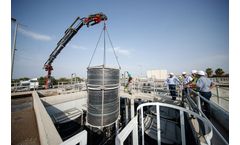
Membrane aerated biofilm reactor technology is a proven wastewater treatment process that offers high nutrient removal and energy savings The wastewater treatment landscape is witnessing a paradigm shift toward technologies that offer flexibility, adaptability, and environmental stewardship. Among these solutions, membrane aerated biofilm reactor (MABR) technology stands out for its proven ...

Cyanobacteria, or blue-green algae, is the organism that primarily produces microcystin in a Harmful Algal Bloom (HABs). The reason cyanobacteria produce toxins is still being studied, but nevertheless, is a problem that requires careful consideration to manage and ...