
Refine by
Trace Element Articles & Analysis
249 articles found

Although copper is an essential trace element for humans, excessive copper accumulation in the body imposes a heavy burden on organs, especially the liver and gallbladder. ...

While rotary furnaces and other primary smelting technologies achieve 96-98% lead purity, battery manufacturers require 99.85-99.99% with tightly controlled trace elements. The final purification occurs in specialized refining kettles and softening furnaces where metallurgical chemistry, temperature control, and process timing combine to deliver premium product. ...

Analyzing rock or drill core on-site yields elemental compositions in 5–20 seconds, with no sample shipment and no lab queue. ...
Moreover, while copper is an essential trace element for the human body, excessive copper intake can place a heavy burden on human organs, particularly the liver and gallbladder. ...

When a $2.3 million aerospace component fails catastrophic testing, investigators often trace the problem back to a single moment: the loading dock where the wrong alloy entered the facility. A batch of 316L stainless steel arrives with paperwork certifying its composition. It looks identical to 304 stainless. The receiving team checks the documentation, signs off, and sends it to production. Six ...

Molybdenum is used as the matrix to add other elements (such as titanium, zirconium, hafnium, tungsten and rare earth elements, etc.) to form non-ferrous alloys. ...

Dosing pumps from the Magdos series, on the other hand, give greenhouse operators more options: for example, an integrated, programmable control system for the automated supply of liquid fertilisers, chelates and trace elements at intervals. “This automation promotes stable growing conditions for healthy plants. ...

Cast aluminum-silicon alloys are widely used in automotive, mechanical, and instrument manufacturing. They allow complex parts to be produced with precise geometry and low weight. But the properties of silumin depend heavily on its chemical composition. Even small deviations from the standard can affect fluidity, strength, crack resistance, and corrosion behavior. That’s why it’s ...
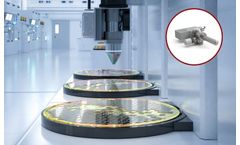
Advanced semiconductor manufacturing necessitates control at every stage of the fabrication process, with etch processes being among the most critical to perform with precision. Even a microscopic deviation at a material interface can impact device performance, yield, and long-term reliability. Secondary Ion Mass Spectrometry (SIMS)-based end point detection has emerged as a dependable way to ...

Imagine the first human settlements: people building homes, making pottery, storing water and grain. The material that made all this possible was clay. It is highly plastic, easily molded into any shape, and after firing becomes as hard as stone. Not by chance, clay tablets became the very first “pages” of human history. Even today, clay remains the foundation of entire industries: ...
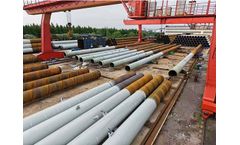
Common grades: Grade B, X42, X46, X52, X56, X60, X65, X70 The typical mechanical properties of each grade are approximately as follows (taking API B/X60 as an example) : Grade B: Yield ~245 MPa, tensile strength ~415 MPa, elongation ~23% X52: ≈360 MPa, 460 MPa, 21% X60: ≈415 MPa, 520 MPa, 18% X70: ≈485 MPa, 570 MPa, 17% This standard steel pipe has restrictions on chemical ...

Microwave digestion technology, known for its speed, energy efficiency, minimal sample loss, and contamination-free operation, has been widely applied in the digestion and analysis of trace, minor, and major elements in refractory materials. In this study, a microwave digestion method is employed to achieve complete digestion of platinum-rhodium alloy samples, ...
As the industry pushes for higher capacity and performance, the utilization rate of graphite anodes is approaching their theoretical limit, placing higher demands on material stability. The presence of trace metal elements directly impacts the performance and stability of graphite materials, which are typically classified into artificial and natural graphite. ...
Abstract Crude oil is primarily composed of carbon and hydrogen, but it also contains trace amounts of metal elements such as vanadium (V), nickel (Ni), iron (Fe), copper (Cu), manganese (Mn), and cobalt (Co). ...
National standard GB 20814-2014 sets clear limits for the content of 12 heavy metal elements in dye-related products to ensure product safety and environmental compliance. To accurately detect trace metal elements in optical brighteners, a reliable and efficient sample preparation method is essential. ...
These elements significantly influence the fermentation process, product quality, and flavor profile. Essential minerals in beer include potassium, sodium, and magnesium, while trace elements like copper, zinc, iron, manganese, and lead also exist. ...
Since many inorganic pigments are derived from natural ores, they often contain trace amounts of heavy metal impurities. During the application and use of coatings, these metals can come into contact with the human body, where they may gradually accumulate. Long-term exposure may lead to chronic heavy metal poisoning. Accurate detection of trace metal ...
Known for its high melting point, hardness, wear resistance, mechanical strength, electrical insulation, and corrosion resistance, a-alumina is widely used as a reinforcing and toughening agent in various advanced materials. Accurate determination of trace metal elements in a-alumina is crucial for quality control and material performance evaluation. ...

Nanotechnology operates at a scale where a few atoms can change everything. Whether developing next-generation semiconductors, targeted drug delivery systems, or catalytic surfaces, precision is paramount. But how do you ensure consistency, safety, and performance at the ...

Bio-remediation technology adopting a unique bio catalyst system of multi enzyme liquid concentrate, Oil Spill Eater II (OSE II), developed by Steven Pedigo. The technological process is schematically explained in the following ...