
Trace Hydrocarbons Articles & Analysis
23 articles found

The chemistry of a material’s outermost nanometres often determines its functional performance, making accurate surface characterisation vital for modern materials research. Yet, analysing these nanometre-scale layers is inherently challenging, as many surface-sensitive chemistry techniques, like AES, can modify the material or disturb its native chemical composition and techniques like EDX ...

The oil and gas industry is known for its heavy reliance on synthetic materials, however a growing movement is changing how we approach this industry. Today, let’s talk about natural polymers for oil & gas industry applications. They are rapidly gaining traction. What is driving this change, and why should you pay attention? I’ve spent years in this field, and what I’ve ...
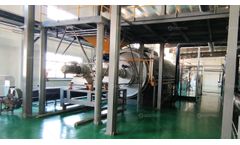
Decoding Oil Sludge: A Complex Challenge The Composition Conundrum: Oil sludge, a byproduct of oil refining processes, is a complex amalgamation of hydrocarbons, solids, water, and trace elements. This intricate composition poses a multifaceted challenge for conventional disposal methods. ...

Likewise, rainwater falling on the transformer will also drain hydrocarbons and may pollute the soil. The installation, which is compulsory, of a hydrocarbon retention bund under each transformer, however, prevents any pollution risk, by blocking the oils thanks to a rainwater filter. ...

Mechanical Separation End Client UK Operator Location Offshore North Sea Asset Platform Services Mechanical separation Fluid treatment Sample analysis The Challenge A major North Sea operator required support with their waste/ullage management while running a platform shutdown. To avoid incurring extensive commercial and environmental costs for the fluid waste transportation back to shore ...
ByOsso Ltd
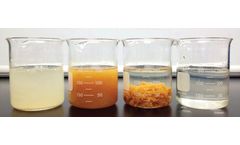
One reason, its physical and chemical properties have demonstrated efficiency in reducing turbidity, sediment, and trace heavy metal levels. For another, unlike many other synthetic flocculants, both are purely natural and eco-friendly materials.Its constituents have excellent adsorbent and cation exchange capabilities. ...

In most standard water treatment systems, there is a flocculation process that is used to reduce the concentrations of solids within the effluent stream. This particular process makes use of substances that aid in the clumping together of suspended particles. There are several different substances that have been used for decades, but research continues looking for more. Ideally, newer flocculants ...
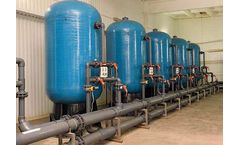
Along with being able to handle higher loads of suspended solids, zeolite can reduce levels of trace metals, ammonia, and hydrocarbons. It also doubles as a water softener.MembraneThis type of filtration uses a pressure differential to force water through a membrane to separate it from even the smallest of suspended or dissolved particles. ...
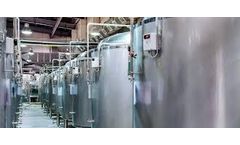
The influent feedwater contained troublesome contaminants like hardness minerals, dissolved salts, trace hydrocarbons, and a few heavy metals such as ferric iron.GWT designed, engineered, built, and supplied the system and a local implementation partner installed it with technical assistance from GWT. ...
This article will summarize some cases studies in which Genesis Water Technologies, Inc. (GWT) has previously aided some of our industrial clients in different industries in reducing their operating costs through wastewater treatment and reuse. Each of these applications made use of some of GWT’s wastewater filtration systems to maximize pollutant ...
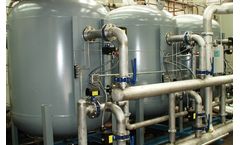
Many of these commercial facilities are required to deal with these pollutants, but it isn’t impossible that they would end up in trace amounts at municipal treatment facility as well. There are many different types of hydrocarbons depending on their composition of hydrogen and carbon so they can have varying health effects. ...
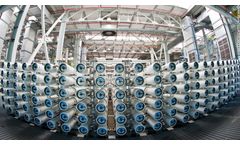
Genesis Water Technologies was contacted by a power generation client that needed a way to improve the quality of their feedwater. It contained traces of hydrocarbons as well as heavy metals, dissolved salts, and hardness minerals. ...

As the name implies, this sensor type uses a flame to burn hydrocarbons, which requires air and hydrocarbon-free hydrogen fuel gas to burn. ...
The main idea behind developing such a media is to address issues related to total suspended solids (TSS), algae, ammonia, turbidity, hydrogen sulfide, silt, some hydrocarbons and bio particle, especially in the primary clarification process.The GWT Zeoturb can be used to treat wastewater in sectors like:Municipal wastewater treatmentFood or BeverageAquaculturePower ...
The inlet feed water contained several contaminants including hardness minerals such as calcium/magnesium, dissolved salts, trace hydrocarbon and certain heavy metals including ferric iron. Solution Genesis Water Technologies provided consulting, design and engineering services as well as building and supplying the specified system solution. ...

Worldwide, health and environmental considerations encourage landfill diversion of the organic fraction (OW) of municipal solid wastes, through alternative such as home composting. Of poor sanitation, and trace element and toxic hydrocarbon content (PAH) documentation, this study compared against a laboratory composter (LR), the performance (temperature regime ...

Although today’s dispersants eliminate the visual and other damaging aspects of the spill on the surface, the spill’s toxicity problem has remained in the environment and at times been worsened by the addition of further hydrocarbons in dispersants. The goal of the bioremediation process is to convert oil/hydrocarbon based material to CO2 and water, ...
Highest temperature stability—application range extended to 250 °C. New Technology Improves Trace Analysis of Polar Hydrocarbons The chromatographic analysis of light hydrocarbons, including unsaturated isomers, is common in the petrochemical industry. ...
Abstract Identifying and quantifying trace impurities in 1,3-butadiene is critical in producing high quality synthetic rubber products. Standard analytical methods employ alumina PLOT columns which yield good resolution for low molecular weight hydrocarbons, but suffer from irreproducibility and poor sensitivity for polar hydrocarbons. ...

Samples were analysed for chloride, trace metals and polycyclic aromatic hydrocarbons (PAHs). Runoff from a major multilane divided highway, with the highest traffic intensity, contained the highest levels of chloride (45–19,135 mg/L) and metals. ...