
Refine by
Transdermal Articles & Analysis
19 articles found

Semiconductor chip packaging is the final yet most critical stage in the semiconductor manufacturing chain, where a fabricated silicon die is transformed into a usable component for electronic devices. While the integrated circuit itself may contain billions of transistors, it cannot function in a system without proper packaging. Packaging provides mechanical protection, electrical ...
Defect detection in manufacturing refers to the process of identifying imperfections or faults in products during or after production. These defects can range from surface irregularities to structural flaws and dimensional inaccuracies. Detecting these defects early is crucial to ensure that products meet required specifications and quality standards. Advanced systems such as computer vision and ...
High-speed measurement refers to the process of capturing, analyzing, and interpreting data at exceptionally rapid rates to ensure precision, quality, and efficiency in various industrial and scientific applications. It involves the use of advanced tools and methodologies to measure critical parameters in real-time, such as dimensions, tolerances, and defects, across high-throughput production ...

Classification of Excipients for Transdermal Drug Delivery System There are six major categories of excipients used in transdermal drug delivery systems: membrane materials and skeletal materials, pressure-sensitive adhesives, backing materials, anti-adhesive materials, drug reservoir materials, and transdermal enhancers. Membrane and skeleton ...
The selection of hyaluronic acid, which improves the swelling capacity of the prescription and increases the speed of drug release and transdermal absorption efficiency. The use of hydrophobic mold material to prepare microneedles maintains the integrity of the needle shape and the uniformity of drug loading. ...
Hydrogel microneedle patches offer a valuable alternative to conventional delivery methods, enabling the transdermal delivery of a wide range of medications. Solid Microneedle Technology Solid microneedles are made entirely of a biocompatible material and do not contain any therapeutic agents. ...
These systems include Microneedle Technology, Transdermal Patches Drug Delivery System, Nanoparticle Development Services for Drug Delivery Systems, and CAR-T/CAR-NK Cells Development for Drug Delivery Systems. ...
Transdermal drug delivery systems have gained considerable importance in the pharmaceutical industry due to their convenience, effectiveness, and ease of use. ...
In addition to the advantages of a transdermal delivery system, it also has the following advantages: l The transdermal absorption rate is stable. l Controlling the length of microneedles can avoid touching capillaries and nerve endings, reducing or eliminating pain. l The method of administration is convenient and can be used by oneself. ...
The video below shows a 3D Raman map revealing the layers of a transdermal patch. The resulting volume render clearly shows the separate layers of the patch coloured to represent PET (red), PET/PIB (pink), PE (blue) and the active ingredient (green).The RM5 Confocal Raman MicroscopeThe RM5 is a compact and fully automated Raman microscope for analytical and research purposes. ...

MED3000 is a breakthrough, fast-acting gel produced by Futura Medical’s transdermal DermaSys drug delivery technology. It is CE marked in?Europe and CA marked in ...
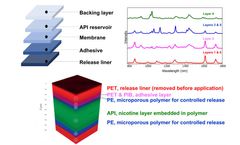
Every month we will highlight our pick for Map of the Month to show how our spectrometers can be used to reveal all the hidden secrets in your samples. A transdermal patch is a method of drug delivery through the skin into the bloodstream. ...
By Route of Administration Excipients can be added to develop different dosage forms, such as oral, injection, mucosal, transdermal or topical administration, nasal or oral inhalation administration, and ocular administration. ...
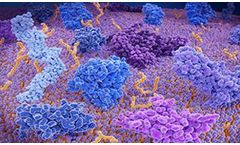
In recent years, in addition to the classical subcutaneous, intramuscular and intravenous administration, other routes of administration have been progressively developed, including mucosal administration (nasal, pulmonary or sublingual), oral administration (gastrointestinal permeation promoters, protease inhibitors or carriers) and transdermal routes of administration. In ...
After entering the sand making machine, they are transported to 3-layer vibrating screen by transdermal belt. Material > 5mm is returned to the sand making machine for further crushing (which can also be sold as refined stone). ...

In a nutshell, Dyve’s novel transdermal delivery technology delivers existing drugs through the skin, improving safety, efficacy, and ease of use. ...
Joel Cohen, M.D., thinks it could be just what the specialty has been looking for. Researchers using a novel transdermal drug delivery system to deliver tranexamic acid deep into melasma patients’ skin found the technology-assisted treatment quickly and notably reduced the skin pigmentation of moderate-to-severe melasma. ...

Furthermore, drug delivery formulation and transdermal application of SC is challenged by its amphoteric nature, low oil and water solubility, pH-dependent characteristics and poor membrane permeability. ...
This review outlines and explores nanocarrier systems for drug delivery by various administration routes including parenteral, oral, transdermal, pulmonary, ocular, and mucosal and discusses the product development and related issues in nanopharmaceutical drug delivery.Keywords: liposomes, polymeric nanoparticles, polymeric micelles, lipid nanoparticles, microemulsions, nanogels, ...