
Refine by
Tree Canopy Articles & Analysis
20 articles found
In densely populated cities with high pollution levels, biological filtration alone cannot overcome emissions from vehicles, industries, and waste burning. In fact, larger trees, such as certain eucalyptus species, may exacerbate regional smog by emitting VOCs or by collecting pollutants in their dense canopies. ...
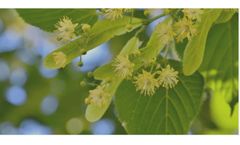
Every year millions of people around the world breathe in polluted air, endangering their health. Concentrations of fine particles, nitrogen dioxide (NO2) and ozone (O3) are particularly high in cities and other urban areas. Trees offer a natural solution to improving everyone’s quality of ...
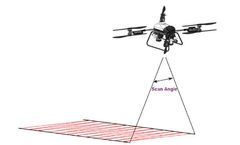
When the LiDAR laser beam strikes an object, such as a tree or a building, part of the light is reflected to the sensor, as shown in Figure 1. ...
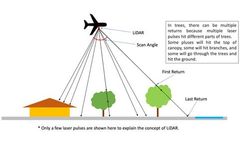
They are like LiDAR, but these methods do not provide information about the surface under tree canopies and other possible obstacles, as shown in Figure 2 [15]. ...

As part of the Cities Taking Action to Address Health, Equity, and Climate Change Initiative, Tempe was one of six U.S. cities that received support from the Robert Wood Johnson Foundation and C40 Cities to create transformative community-led projects.What is Cool Kids, Cool Places, Cool Futures? Tempe, Arizona is a sprawling Phoenix suburb impacted by record-breaking heat and heat-related ...

GCPs can be geolocated down to the centimeter which enables us to track plant and tree canopy growth to centimeter accuracy. ...
Bacteria and fungi in the soil convert carbon into more fungi and bacteria and their exudates, (that’s just another word for bacterial poo), and the soil particles form a very efficient filter capturing the finest particulate matter if the soil is deep and the infiltration of water is slowed down by plant foliage and tree canopy. But nature needs help to do ...

According to Carly Ziter, an assistant professor of biology in the Faculty of Arts and Science, extensive tree canopy cover in an urban area can dramatically reduce the temperatures of their immediate environs - enough to make a significant difference even within a few city blocks. In a new paper published in the journal Proceedings of the National Academy of ...

Why is Canopy Cover Important? Canopy cover is the layer formed by the branches and crowns of plants or trees. ...
Why is Canopy Cover Important? Canopy cover is the layer formed by the branches and crowns of plants or trees. ...

It is “tree spade”. The tree spades can make this crucial job easyer to be done. ...

Garlic, onion, cauliflower and wildflower varieties that pollinators have shown a preference for in field research now grow under the apple trees — after the trees bloom. The distributed flowering strategy keeps the bees focused on pollinating apples during their short bloom season while still providing a variety of nectar sources that help keep them going ...
ByEnsia

Each individual tree significantly alters the growth of surrounding vegetation by partitioning of rainfall and nutrients to the rooting zone. ...

That doesn’t sound at all convincing whether you are standing at the foot of canopy giant in Berau, Indonesia, or indeed on the margins of straggly community of mangrove shrubs in the desert margins of the Middle East. ...

Farmers in Malawi are planting Faidherbia albida trees on fields using modest amounts of fertilizer. These trees provide canopies of shade and lock nitrogen in the soil. ...

Bark beetles have killed more than 100,000 km2 of pine forest in western North America, causing trees to lose the majority of their canopy material and potentially leading to enhanced subcanopy snow accumulation. ...

The Pigeon Problem Pima’s main campus in the downtown area of Tucson consists of 11 large, low-rise buildings, expansive parking and tree canopies in a park-like setting. Pigeons were widespread on campus, although not concentrated in any particular location. ...
An alternative technique of landfill remediation known as 'Phytocapping' was trialled at Rockhampton, Australia. Twenty one tree species were established on two types of phytocaps (thick cap; 1400 mm soil and thin cap; 700 mm). The trial was monitored for plant growth, transpiration loss, canopy rainfall interception and methane oxidation. The results show that ...
In this study, linear and non-linear regression equations were developed to estimate biomass of tropical forests along with estimates of goodness of fit and percentage of errors. Basal area, average height of trees and tree density data from published reports, were used to develop equations to estimate biomass of deciduous and evergreen forests. Basal area and ...

The model tracks evapotranspiration from five components of the land surface at each site—the tree canopy, the grass under and between tree canopies, and the bare soil under and between tree canopies. ...