
Refine by
Tss Removal Articles & Analysis
141 articles found
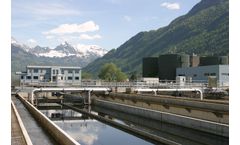
Key performance metrics include hydraulic capacity expressed in MGD or cubic meters per day, organic and nutrient removal rates such as percent BOD and TSS removal, effluent concentrations measured in mg/L, and overall energy consumption. ...
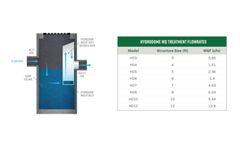
HydroDome The HydroDome is a hydrodynamic separator that removes oil, trash and total suspended solids (TSS) from runoff. The device can be installed within new or existing storm drain infrastructure, making it suitable for retrofit applications where downstream receiving waters require additional trash or sediment control. ...

The Problem: Tortilla manufacturer generates wastewater in the process of cleaning the tortilla and tortilla chip manufacturing machines. Cleanings are constant throughout the week and on the weekend the entire plant is cleaned and sanitized. These cleaning evolutions generate a volume of wastewater that is loaded with FOG ( Fats, Oils, and Grease) and Suspended Solids. Their discharges were ...
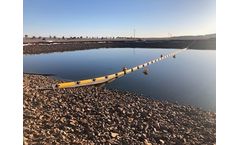
Effluent results indicate that the pond is not meeting targets for turbidity, BOD, TSS or pathogens despite adequate theoretical volume (Rivers & McLaughlin 2015; Chatoyer Environmental 2025). ...
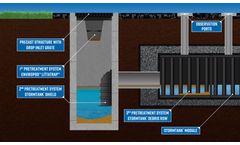
Hydroworks HydroDome – A hydrodynamic separator used to remove TSS, debris, and trash from stormwater. StormTank Shield – An inlet-based pretreatment device that intercepts sediment and debris before it enters the stormwater system. ...

The Johnsons were a responsible family who took pride in maintaining their home, whether it was caring for their yard or ensuring that everything in their house ran smoothly. They were always on top of things, from routine maintenance to small home improvements. Therefore, when they decided to move into their dream home, a charming three-bedroom house in the peaceful suburban neighborhood of ...

The Challenge Anguil Environmental Systems was asked to supply an oxidizer and packed tower air stripper to treat a 65 gallon per minute water stream containing significant concentrations of Diesel Range Organics (DRO), Volatile Organic Compounds (VOCs) and Total Suspended Solids (TSS). The customer was sending the wastewater stream through a cooling tower which was continually fouling from the ...

Every year, lagoons accumulate more and more sludge. If this gets out of hand, one might confuse a 10’ deep lagoon, for a collection of 6” deep mud puddles. Even the best-designed lagoons with the most forgiving waste streams require dredging (mechanical removal of soft sediments) every 15-20 years. So how do you deal with this unwanted sludge production? This depends on your site ...
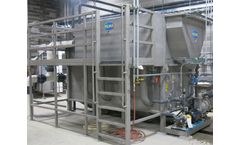
Tiny air bubbles force suspended solids to the water’s surface, where they can be removed more easily. This means that any potentially harmful byproducts and sediments such as algae can be safely and quickly removed from a water source. ...

Information can be utilized to more effectively dose coagulant chemicals to improve BOD and TSS removal efficiency at primary clarifiers or improve control of aeration rate and recycle ratio in activated sludge processes.For treatment plants that are prone to organic loading spikes, such as industrial wastewater treatment plants, municipal wastewater plants ...
This is a concern to wastewater treatment systems since it can result in increased effluent ammonia levels even with no other obvious signs of toxicity, such as high TSS, poor BOD removal, slimy flocs, etc. The other challenge is that there may be more than one compound in the influent that is toxic to nitrifying bacteria and the effects of more than one such ...
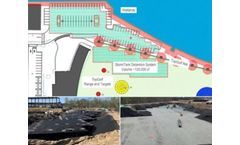
Debris Row sections were incorporated into the system design to meet water quality requirements of 80% TSS removal for the 1.8-inch allowable water quality event, per the North Charleston Stormwater Design Manual. ...

The process goal for the design team was the efficient removal of BOD, TSS and other constituents (both suspended and dissolved) prior to discharge. ...
This unit utilizes counter‐cross flow hydraulics with regenerative turbine aeration. The DAF can remove 99% TSS and FOG with their associated BOD. Industrial Wastewater System The DAF solids are collected in a tank and can be either pumped directly to a tanker for wet haul; or alternatively dosed with polymer with a PolyAccu Dose chemical feed station and then ...
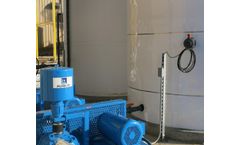
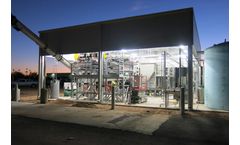
Without an operating facility an estimated flow along with surrogate numbers for TSS and BOD were utilized in designing the treatment system. The treatment challenge was overcome with multiple components for the process stages. The unique compact system was designed with a Screen, EQ/pH, pre-DAF, aerobic Moving Bed Biofilm Reactor (MBBR), post-DAF and solids recovery. The screen ...

Sofi Filter efficiently removed 96.2 % - 97.9% TSS from purifying cooling water in Steel plant.Background: For decades steel manufacturers are relying on Sand Filter technology for total suspended solids (TSS) removal in wastewater treatment. However, this conventional technology fails to efficiently remove ...
How mobile systems are offering flexible, cutting-edge water treatment without a prohibitive upfront cost. For mining operations, effective water treatment is about more than meeting regulatory requirements and maintaining a social license to operate. Choosing the right approach to water treatment can have a profound impact on a mine business. One increasingly attractive option for mining ...
The Challenge Food production has always been a demanding and competitive process. Executives are constantly challenged by slow product development cycles, competition from healthier alternatives and even food fraud. In today’s climate, producers now worry they can be perceived as environmentally and socially irresponsible, resulting in some retail chains refusing to stock their brands ...

The paper and pulp industry is among the largest industrial users of water resources operating across the world. Typically, pulp and paper industry operations require on average about 54-70 m3 (18,000 gallons) of water per metric ton (2200 pounds) of processed paper goods. This water usage is staggering, and water is used in almost every single part of the pulp and paper manufacturing process. ...

Problem Your lagoon has served your community or company well for so long but now modern regulations or sludge buildup make it untenable. You don’t want to give up on your existing infrastructure, and more mechanical solutions require higher level operations training. The Nexom Answer optAER fine-bubble aeration and in-lagoon upgrades turn your lagoon into a modern treatment plant for ...