
Refine by
Turbidity Reduction Articles & Analysis
40 articles found

Introduction Dredging is a fundamental activity to ensure port navigability, sediment management, and the hydraulic safety of rivers, canals, and artificial basins. However, it also involves significant environmental impacts that require careful management and appropriate technologies. This article analyzes the main environmental issues related to dredging and illustrates the sustainable ...

When the time came for a new water line through Denver Water (Colorado) to be installed, a sediment control perimeter device was needed to protect the limits of disturbance from sediment intrusion. Bowman Construction Supply out of Denver, CO worked with their contractor Powell Restoration to submit approximately 4,000 LF of WattleFence for approval in lieu of traditional silt fence and standard ...
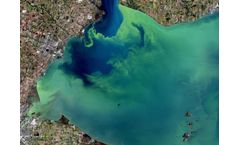
Introduction Across drinking water reservoirs and managed lakes, operators keep coming back to the same question: what is the best practice to prevent algae growth while still protecting ecosystems, budgets and public trust? Blooms can seem to appear almost overnight, turning clear water into green streaks or scums, releasing toxins, and in the worst cases forcing closure of raw-water intakes or ...

Chemical-free approach controls cyanobacteria, improves water clarity, and supports fisheries in phosphorus-rich lake. Background Lake Tanglewood is a 255-acre reservoir located in the Texas Panhandle, surrounded by a private residential community of about 500 people. This recreational lake constantly receives highly treated wastewater from the city of Amarillo, located in the Texas Panhandle ...

Test Conditions Water Source: Surface water (river water with silt and clay particles after a rain event in San Antonio). Equipment Description. Multimedia System. 36" bed depth comprised of #16 Garnet, #50 Garnet, 20x30 mesh sand and anthracite, operated at 12gpm/ft2. next-Sand System. 1/4x1/8 gravel to cover hub and laterals, 36" bed depth of 14x40 mesh next-Sand operated at 12 gpm/ft2. ...

Disclaimers: – Links to third party websites in this post are not to be considered as Flowlink's endorsement of their products. Turbidity reduction is often necessary to provide water suitable for discharge to the environment or a municipal sewer system. Conventional clarification is the most commonly used process for turbidity ...
Summary Chitosan can be a very good chemical of choice for sediment control / turbidity reduction process, that is assuming that the jar tests on site confirmed its effectiveness to be sufficient for achieving the treatment objectives: Chitosan retained in the water treatment sludge is biodegradable and will leave no residue. ...

The below feed water consisted of elevated levels of turbidity, iron, hardness minerals and salts. Solution: Genesis Water Technologies conducted bench tests on multiple samples of the clients produced and flow back water from several of their existing oil wells. ...
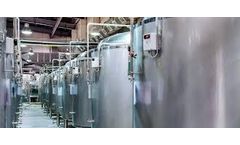
The wastewater in question contained high levels of BOD, COD, turbidity, and suspended solids. GWT was consulted on the process design and an optimized treatment system was engineered that would meet the stipulations provided by the client. ...

States usually establish limits on fecal or total coliform bacteria and may require that wastewater be filtered before it can be reused as reclaimed water. Turbidity standards are also frequently established. On the operational side, unique treatment issues posed by utilizing reclaimed water include the need to determine cleanliness levels that must be achieved to satisfy a ...

The company is one of the largest and fastest developing water treatment companies that treat water for agricultural, aquaculture, home, corporate sector, as well as large industries and factory purposes for Zeoturb Medium for turbidity and ammonia reduction. With an increased level of awareness, it has become a lot easier to implement water resource management ...

The plant has a production capacity of 1200 Ml/day This solution strongly reduced the chlorine demand for the plant compared to the alternative execution with break point chlorina The water treatment works takes water from the river Dongjiang in the Guangdong Province north of Hong Kong. The raw water has an average turbidity level of around 11 NTU and contents, among other ...
The levels of BOD (1.689 mg/L), COD (2,646 mg/L), total suspended solids (TSS) (205 mg/L) and turbidity (80 to 120 ntu) required reduction for reuse. Genesis Water Technologies provided process consulting/design in addition to building and supplying the pilot system in association with a local partner. ...

The GEM System offers superior reduction of total suspended solids (TSS), biological and chemical oxygen demand (BOD/COD), oils and grease (FOG) and turbidity. ...
The levels of BOD, COD, TSS, and turbidity were required to be reduced to allow for reuse. Raw BOD levels: 1689 mg/l Raw COD levels: 2646 mg/l Turbidity: 80-120 NTU TSS: 205 mg/l Solution Genesis Water Technologies provided process consulting/design as well as building and supplying the specified pilot system solution in association with a local ...

Performance was benchmarked in terms of the reduction of turbidity, dissolved organic carbon (DOC), disinfection by-product (DBP) precursors, and ultrafiltration foulants (biopolymers). Increasing the EBCT from 4 to 8 min resulted in a higher reduction of DOC (5%), trihalomethane (THM4) and haloacetic acid (HAA9) precursors (∼12%) without ...
The objective of this study was to evaluate the performance of a modified biosand filter (MBSF) with an extra disinfection layer (brass or zero valent iron (ZVI)) and three layers of underdrain in a range of parameters including Escherichia coli, total coliform, turbidity, pH, and dissolved oxygen. On average, a 91.29% reduction (log 1.43) in total coliform, ...
The results indicate that impoundment within a reservoir was responsible for a significant reduction in turbidity and a significant drop in aluminium concentrations as the reservoir acted as a sediment trap and chemical sink. ...
Combinations of IOBAC treatment with coagulation pretreatment and UF post-treatment resulted in sustained chemical oxidant demand and turbidity value reductions in excess of 90 and 99.5%, respectively. Such an approach would be useful for gray water treatment for low tier applications like irrigation or toilet flushing, or as a pretreatment system upstream of ...
A reactor with iron and stainless steel electrodes was built and introduced into a water treatment system equipped with conventional coagulation with alum and direct descending filtration. Factors such as pH levels, turbidity, colour, and reductions in the specific UV absorbance were evaluated. The results showed a significant reduction in the ...