
Refine by
Uasb Articles & Analysis
130 articles found

This testing can be applied pretty much universally for anaerobic sites, including mixed systems, lagoons (though sampling here can be a major hurdle), and UASBs. While BMP testing procedures can vary by site, the key points are always the ...
As we have discussed, different humans have the different capacity to handle the same stressed situation and the same is true for the microbes in our activated sludge process /MBR/MBBR /SBR/ UASB and other biological systems of wastewater treatment plants. In BactaServe - Bioculture the each strain has been either isolated from similar polluted conditions or has been acclimatized ...
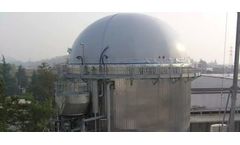
EFC reactors bring many advantages for treating high COD wastewater The external forced circulation (EFC) reactor is a type of anaerobic digester developed by Fluence that is particularly suited for the treatment of high soluble COD wastewater streams like those of: Paper and pulp manufacturing Livestock operations and slaughterhouses Meat and seafood processing and packaging Confectionary ...
The EFC reactor, designed and developed exclusively by Fluence, is a high-rate anaerobic system that increases digestion efficiency with lower hydraulic retention times than standard digesters. Conventional and UASB digester design can be limited by the volume of flow and solids retention time. EFC picks up where the UASB reactor leaves off, improving its ...
Activated Sludge Tanks (AST) Membrane Bio Reactors (MBR) Rotating Biological Contactors (RBC) Expended Granular Sludge Bed Reactors (EGSB) Moving Bed Bio Film Reactors (MBBR) Trickling Units (TU) Up flow Anaerobic Sludge Blanket Reactors (UASB) Sequencing Batch Reactors (SBR) --Tertiary treatment Tertiary Treatment removes specific types of residuals/pollutants that are toxic ...
Wisconsin Institute for Sustainable Technology at UW Stevens Point conducted a study to evaluate impacts of Ana-Zyme G on fatty acids in dairy wastewater. Ana-Zyme G was added as a single dose at 1 ppm at the start of testing. The addition of 1 ppm Ana-Zyme G led to a 34% reduction in total fatty acids by the end of the test. Levels of short-chain fatty acids also decreased with the addition of ...
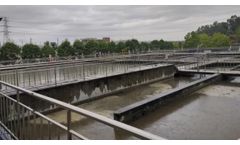
In addition, the biological community composed of aerobic bacteria, protozoa and metazoans on the surface of the membrane can effectively degrade organic matter and COD. 4. UASB Upflow Anaerobic Sludge Bed The advantage of UASB lies in the large concentration and high activity of microorganisms in the sludge bed. ...

ULRDs are simply the vertically stretched versions of traditional UASB digesters. UASB digesters are commonly built up to 6.0 to 12.0 m height while ULRDs are 20-24meter tall. ...
Where should I find relevant information? (Anaerobic UASB + high-load biological filter method/solid contact method). Answer: 1. ...
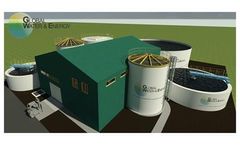
The multi-step treatment line includes several GWE starship technologies, including the robust and highly-efficient ANUBIX – B – Upflow Anaerobic Sludge Bed (UASB) System. This anaerobic reactor has been implemented at hundreds of industrial wastewater treatment plants around the world. ...
The total capacity of urban household waste is 1,400 tons per day. A process of pretreatment +UASB anaerobic reactor +MBR biochemical treatment system +NF nanofiltration is adopted to ensure that the treated waste water quality meets level-3 criteria of national discharge standards and then can discharge treated waste water to the centralized sewage treatment plant of the ...

Timeline: Anaerobic wastewater treatment and GWE GWE Founder and Chairman/CEO, Jean-Pierre Ombregt, is a pioneer of modern anaerobic wastewater treatment and his involvement in the development of our Upflow Anaerobic Sludge Blanket (UASB) systems, GWE’s ANUBIXTM product line, dates back as far as 1977. ...

The effect of granular activated carbon (GAC) addition on the removal of diclofenac, ibuprofen, metoprolol, galaxolide and triclosan in a up-flow anaerobic sludge blanket (UASB) reactor was studied. Prior to the reactor studies, batch experiments indicated that addition of activated carbon to UASB sludge can decrease micropollutant concentrations in both ...
Up-flow anaerobic sludge blanket (UASB) has been in use since last few decades for the treatment of organic wastewaters. However, the performance of UASB reactor is quite low for treatment of low strength wastewaters (LSWs) due to less biogas production leading to poor mixing. ...
The analyzed systems had three general configurations: A, septic tank; B, septic tank combined with upflow anaerobic sludge blanket (UASB) reactor; C, septic tank combined with UASB and a final filtration step. ...

The heart of the project is the External Forced Circulation Reactor, a technology created by Fluence Italia based on upflow anaerobic sludge blanket (UASB) technology. The system’s increased flow velocity is obtained by incorporating a recycled portion of the raw effluent, which permits partial expansion of the granular sludge bed, improving wastewater-sludge contact and ...
New data on biogas production and treatment of cattle wastewater were registered using an upflow anaerobic sludge blanket-anaerobic filter (UASB-AF) hybrid reactor under mesophilic temperature conditions (37 °C). ...
A pilot-scale upflow anaerobic sludge blanket-moving bed biofilm (UASB-MBB) reactor followed by a high-rate algal pond (HRAP) was designed and operated to remove organic matter, nutrients and pathogens from sewage and to facilitate reuse. ...
In this study, a pilot-scale ZVI packed upflow anaerobic sludge bed (ZVI-UASB) was built up and operated for actual dye wastewater treatment in a textile dye industrial park. ...
Hence, an innovative scheme has been tested to treat swine wastewater, combining a low cost anaerobic reactor, upflow anaerobic sludge blanket (UASB), with intensified constructed wetlands (aerated CWs) in a pilot scale experimental study. ...