
Refine by
Ultraviolet Spectroscopy Articles & Analysis
40 articles found
At its core, Gasboard-9801 leverages high-precision hydrogen flame ionization detection (HFID) technology for superior THC&CH4 measurements accuracy and advanced ultraviolet differential absorption spectroscopy (UV-DOAS) technology for direct NOx concentration measurement without the need for NOx converters. ...
At its core, Gasboard-9801 leverages high-precision hydrogen flame ionization detection (HFID) technology for superior THC&CH4 measurements accuracy and advanced ultraviolet differential absorption spectroscopy (UV-DOAS) technology for direct NOx concentration measurement without the need for NOx converters. ...

Traditional ECD (electrochemical detector) H₂S sensors tend to have a short lifespan under such conditions, resulting in frequent and costly replacements.To reduce maintenance demands and enhance monitoring reliability, a gas analyzer equipped with a long-lifespan H₂S sensor was required for effective biogas system operation.SolutionsAfter evaluating various technologies and suppliers, CG ...
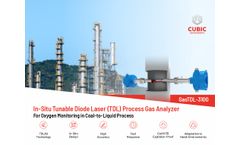
Based on Tunable Diode Laser Absorption Spectroscopy (TDLAS) technology, GasTDL-3100 has high selectivity for oxygen, ensuring no cross-interference from background gases in the coal-to-liquid process. ...
At its core, Gasboard-9801 leverages high-precision hydrogen flame ionization detection (HFID) technology for superior THC&CH4 measurements accuracy and advanced ultraviolet differential absorption spectroscopy (UV-DOAS) technology for direct NOx concentration measurement without the need for NOx converters. ...
Mass Spectrometry (MS)(1) Mass spectrometry is a highly sensitive and accurate analysis method that can be used to identify and quantify the mass and composition of chemicals.(2) When combined with liquid chromatography (such as LC-MS) or gas chromatography (such as GC-MS), this technique can provide detailed information about trace components in the medium.3. Ultraviolet-Visible ...
Common methods for protein concentration analysis include the Bradford method, the Lowry method, the BCA method, and the ultraviolet absorption spectroscopy method.The Bradford method is a protein concentration determination method based on dye binding. ...
Nuclear Magnetic Resonance (NMR) Spectroscopy(1) Principle: NMR can provide detailed information about the atoms inside proteins, including the environment of disulfide bonds.(2) Application: It's used to study the three-dimensional structure of proteins and the accurate location of disulfide bonds.3. Spectroscopy(1) Ultraviolet ...
Ensuring the purity, concentration and conformational stability of the drug is crucial, which not only relates to the efficacy of the drug, but also affects its safety.Ultraviolet spectroscopy technique is based on the absorption characteristics of antibody proteins to specific wavelengths of ultraviolet light, and can provide rapid and non-destructive detection ...
Circular Dichroism (CD) spectroscopy is an experimental method used to analyze molecular structures and chirality properties, typically in the fields of chemistry, biochemistry, and biophysics. ...
Ultraviolet spectroscopy can obtain information about molecular structure and functional groups, which is extremely important for the development of recombinant protein drugs. In addition, ultraviolet spectroscopy can also be used to study the structure, stability, and folding state of recombinant protein drugs. By measuring ...
There are many methods for detecting the secondary structure of proteins, commonly used ones include Nuclear Magnetic Resonance (NMR), Circular Dichroism (CD), X-ray diffraction, Ultraviolet and Fluorescence Spectroscopy, and Infrared Spectroscopy (IR). ...
Kjeldahl MethodThe nitrogen element in the sample is converted into ammonia nitrogen, and then the content of ammonia nitrogen is measured by titration to calculate the protein content.Features: Classic and accurately quantitative, the operation is relatively simple, the cost is low, suitable for the determination of protein in various foods; but it is time-consuming, the accuracy is low, and the ...
At present, polypeptide drugs have been widely used in the diagnosis and treatment of tumors, autoimmune diseases and certain cardiovascular diseases, diabetes, etc., with broad application prospects.Spectral technology is widely used to study the secondary structure of polypeptide drugs, such as ultraviolet spectroscopy. The biggest advantage of this technology ...
This temperature is called the denaturation temperature (Td), which is an important parameter for evaluating thermal stability.2. Ultraviolet-Visible (UV-Vis) Spectroscopy(1) PrincipleUV-Vis spectroscopy utilizes the absorption characteristics of proteins in the ultraviolet region (especially around 280 nm) to monitor structural ...
Circular Dichroism (CD) spectroscopy is a rapid, simple, and accurate method for studying protein structure in dilute solutions. ...

This method is most suitable when samples are clear solutions with proteins and peptides in a narrow concentration range. Fluorescence spectroscopy Ultraviolet and fluorescence spectroscopy is limited to the determination of a few proteins containing chromophores such as aromatic, heterocyclic or conjugated ring systems. Infrared ...

With the long-term accumulation on R&D of exhaust gas monitoring, Cubic, a leading manufacturer specializing in high-quality gas sensors and gas analyzers, has developed a total solution for automotive emission testing from OEM gas bench, exhaust gas analyzer, opacity meter, engine tachometer to engine emission measurement system and PEMS based on Cubic core gas sensing technologies ...

Environmental Monitoring Gas Sensing Solutions With the long-term accumulation on R&D of exhaust gas monitoring, Cubic has developed a total solution for automotive emission testing from OEM gas bench, exhaust gas analyzer, opacity meter, engine tachometer to engine emission measurement system and PEMS based on Cubic core gas sensing technologies including dual beam NDIR, Microflow NDIR, ...

In this article, we provide an overview of the most widely used methods for the detailed analysis of DAR in these molecules. Ultraviolet-Visible (UV/Vis) Spectroscopy UV/Vis spectroscopy is a simple and convenient method to determine protein concentrations as well as the average number of drugs that are conjugated to the antibody in an ADC. ...