
Refine by
Urea Articles & Analysis
202 articles found

SAMPLE(s): “SBR” TEST 1: reduce foam and NH3 (also COD) with Aquafix products Goal: reduce foam and improve nitrification Test dates: 5/7/12 – 5/11/12 Set up: 32oz glass straight sided jar + 400ml mixed sample + D.O. 2mg/L + 20ppm per day products for 5 days ...
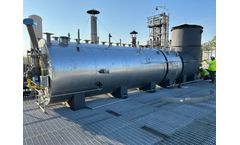
The Challenge Many industrial furnaces operate in oxygen depleted conditions, emitting high levels of ammonia, NOx, and other nitrogen-bearing compounds. This presents a significant challenge for manufacturers striving to meet air quality regulations and limit carbon output. Emission streams that contain nitrogen bearing hazardous air pollutants (HAPs) cannot be thermally treated in a ...

As platelets circulate in the blood the micromotors activate asymmetrical reactions to breakdown urea and ammonia while producing carbon dioxide which propels doxorubicin-loaded platelets toward targeted delivery sites. ...
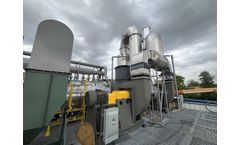
The add-on technology injects ammonia or urea into the process stream before passing it through a specialized catalyst that converts the NOX into nitrogen gas (N2) and water vapor. However, this approach comes with significant operational burdens:The need for ammonia or urea storage, pumps, and customized control systems to maintain injection rates.High operating ...
Welcome to the first installment of our three-part blog series, where we delve into the relationship between aerobic wastewater treatment and the essential nutrients: carbon, nitrogen, and phosphorus. Many operators and engineers know the textbook ratios – ranging from 100:5:1 to 100:10:1 – and understand that carbon, nitrogen, and phosphorus originate from compounds targeted for ...
Bulgaricus L plantarum L. reuteri L. rhamnosus Lactococcus lactis Hydrated Sodium alluminium Silicate Nigella sativa plumbago indica S. boulardi Sodium bicarbonate Sodium Hydroxide Spirulina T.Viride Mannon Oligo SaActivated Carbonides, 1,3/ 1,6 beta glucans Swertia chirraita Thio Urea Thymol, cinnamon containing trans-cinnamic acid, trans-cinnamaldehyde, and ferulic acid ...

With the Sensation project Dordtech realized the complete exchange of 2x 1 MWe Combined Heat and Power (CHP) installations for a greenhouse in ...
ByDordtech

The main components of soil amendment are humic acid, acrylamide, glucose, lignin sulfonate, nitrohumic acid, acrylic acid, lignin, cellulose, organic silicon, polyacrylamide, poly (ethylene oxide), starch, polysaccharide carboxylic acid and urea. Classification There are many classification methods of soil amendment. ...
With the Sensation project Dordtech realized the complete exchange of 2x 1 MWe Combined Heat and Power (CHP) installations for a greenhouse in ...
ByDordtech
Summary This case study explores the efficacy of liquid and dry formulations of SmartBOD, compared to glycerin-based supplementation, in improving wastewater treatment processes. Focusing on aerobic activated sludge systems, the study aims to enhance microorganism health and effluent quality, with a particular emphasis on the newly introduced liquid formulation of SmartBOD. ...

Placing fertilizer within the seed row has been long-standing practice for many farmers across the prairies. Having those nutrients close to the seed makes it easily accessible by the plant, and can help the crop out of the ground and into the sun. Potash fertilizers and other nutrients, such as phosphate, are immobile fertilizers, meaning they don’t travel more than a half-inch through ...

Also Carbon-13 has a non-zero spin quantum number of 1/2, thus permitting the use of Carbon13 NMR to study the structure of carbon-containing materials. In addition, the Carbon-13 Urea Breath Test is a safe and highly accurate diagnostic tool for detecting the presence of Helicobacter pylori infection in the stomach. ...

Thanks to its unloading pneumatic solutions, VIGAN has a lot of experience of handling delicate cargoes where breakage must be prevented such as rice, wood pellets, urea ...

NOX emissions can be reduced by reactions with ammonia (or more precisely, usually urea) in the presence of a catalyst, forming nitrogen and water. Exhaust gas recirculation, particulate filters, and catalytic reduction is applied both to stationary sources and in vehicles. ...
ByOPSIS AB
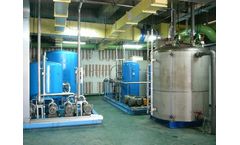
The new AOP design effectively removes challenging refractory organic compounds such as DMSO, TMAH, NMP, IPA, THMs, Urea, chlorinated compounds, taste and odour-causing compounds found in treated water and process water used in semiconductor applications as well as Endocrine disrupting chemicals (EDCs) and pharmaceutical and personal care products (PPCPs), active pharmaceutical ...
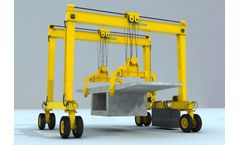
Tier 4 engines are designed to be more fuel-efficient and environmentally friendly compared to their predecessors.Selective Catalytic Reduction (SCR): SCR systems are employed to further reduce NOx emissions from diesel engines. By injecting a urea-based solution into the exhaust stream, SCR technology converts NOx into nitrogen and water vapor, resulting in cleaner ...
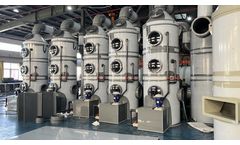
There are different types of NOx scrubber systems, and they may use different chemicals such as ammonia (NH₃), urea (CO(NH2)2), or other compounds. The choice of reagent usually depends on the specific application, emission characteristics and environmental regulations. ...
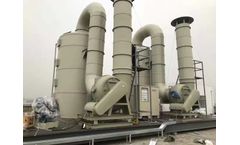
Selective catalytic reduction (SCR) or selective non-catalytic reduction (SNCR) systems reduce nitrogen oxide emissions by reacting with ammonia or urea in the presence of a catalyst. Particle Filtration: After the initial removal of particles, a further stage of filtration can be employed to capture any remaining fine particulate matter not removed in the first stage. ...
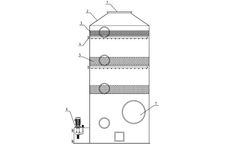
SCR uses a catalyst and ammonia or urea to convert NOx into nitrogen and water, while SNCR injects ammonia or urea directly into the flue gas to chemically reduce NOx. ...
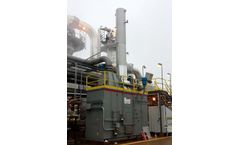
We achieve NOx reduction through the injection of a liquid reductant (ammonia or urea) and the aid of emission catalyst. Once properly mixed and heated, the exhaust is directed through the catalyst chamber which reduces the NOx to elemental Nitrogen (N2). ...