
Uv Advanced Oxidation System Articles & Analysis
15 articles found
There is a dire need today for pure and safe water. The modern municipal water treatment system is not only set up to provide safe drinking water; it is meant to uplift thehealth, environmental sustainability, and economic capacity of a given population. Let us study how today’s advanced municipal water treatment contributes toward health, infrastructure, and sustainability in urban ...
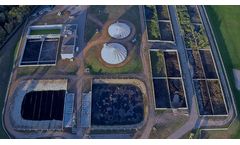
Approximately 3.5 billion people will be living in water-scarce areas by 2025, while water demand is expected to soar by 30% by 2050. The current situation calls for thought to be given to efficient alternatives that reduce the water footprint and optimize resource management. Consumers are also beginning to insist that companies should adopt environmental sustainability policies and actions. In ...
ByIdrica
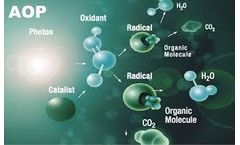
Even biological treatments involve chemistry at their core. Advanced oxidation (AOP) is a water treatment process that utilizes the chemical reaction of oxidation to treat water in the tertiary stage of an integrated water treatment system. ...

Granular activated carbon (GAC) can be used to quench residual hydrogen peroxide (H2O2) after ultraviolet (UV)-H2O2 advanced oxidation processes in drinking water treatment. Bench- and pilot-scale studies examined the possible loss of GAC reactivity due to continuous exposure to natural water from a water treatment plant in both the presence and absence of H2O2. Six common types of GAC were ...

James Englehardt, principal investigator for the project, described one of the project's main goals: to be able to do this for a single stand-alone building (decentralized) with a low-energy and low-emission water-reuse treatment system. The engineering techniques used in this eco-friendly project allows many functions of water-monitoring, water quality control, and ...
Other disinfection technologies, such as UV treatment, chemicals or advanced oxidation systems, are available, but they are expensive. ...
Ultraviolet (UV) light emitting diodes (LEDs) may be a viable option as a UV light source for advanced oxidation processes (AOPs) utilizing photocatalysts or oxidizing agents such as hydrogen peroxide. ...
Nitrosodimethylamine (NDMA), a potent carcinogen, is found in natural and engineered water systems. Ultraviolet (UV) treatment is potentially a useful tool for controlling NDMA at water purification plants. However, a recent study has reported that UV/advanced oxidation process (AOP) treatment may provide a ...
HF Pure Water offers two technologies that may be used in the desalination of seawater – Reverse Osmosis (Membrane systems) and Advanced Oxidation (UV systems). Pre and post treatment of seawater will be needed for conversion to drinking water, depending upon the standards set by local government for ...
Experiments with the ultraviolet (UV)/H2O2 advanced oxidation process (AOP) were conducted to investigate the abatement of micropollutants in wastewater treatment plant effluent. The fluence and the starting concentration of H2O2 in a bench-scale batch reactor were varied according to response surface method (RSM) to examine their influence on the treatment efficiency. It was shown that the ...
Water and wastewater effluents contain a vast range of pharmaceutical chemicals. The present study aims to determine the potential of the advanced oxidation technology UV/H2O2/O3 and its sub-processes (i.e. UV, UV/H2O2, UV/O3, O3 and H2O2/O3) for the degradation of the antibiotics ciprofloxacin (CIP) and trimethoprim (TMP), and the antineoplastic drug cyclophosphamide (CPD) from water. Creating ...

ESCO International Solutions & Technologies provide a unique portfolio of technical expertise and equipment, specializing in Ozone, UV and Advanced Oxidation Processes (AOP) for water, gas effluent & Odour treatment. ...
The degradation of propoxycarbazone-sodium, an active component of commercial herbicide, in aqueous solution with ozone, UV photolysis and advanced oxidation processes: O3/UV, O3/UV/H2O2, H2O2/UV, and the Fenton process was studied. All these methods of degradation proved feasible. The kinetics of propoxycarbazone-sodium degradation in water followed the pseudo-first order equation for all ...
The main goal of this study was to examine the influence of natural organic matter (NOM) on the efficiency of H2O2/UV advanced oxidation process (AOP) as a preventive treatment for biofilm control. Pseudomonas aeruginosa PAO1 biofilm-forming bacteria were suspended in water and exposed to various AOP conditions with different NOM concentrations, ...
Advanced oxidation processes, like UV/H2O2 oxidation, are important barriers against organic micro pollutants in drinking water treatment. In order to guarantee safe drinking water, it is important to be able to predict the reactors' performance to adjust the operating conditions to the actual influent water characteristics (like ...