
Uv Fluorescence Detection Articles & Analysis
10 articles found

High-Performance Liquid Chromatography (HPLC): HPLC is another reliable method for separating and quantifying glucosinolates, especially when coupled with UV or fluorescence detection. These techniques are complemented by robust sample preparation protocols, ensuring efficient extraction and purification of glucosinolates from complex matrices. ...
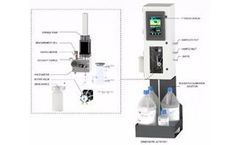
CST technologies are underpinned by photometric detection along with either automated sampling or in situ (in-line) analysis. CST photometric products enable UV-vis absorption, fluorescence, and near infrared detection for reliable real-time analysis of various constituents or analytes of interest. ...

The analysis method varies depending on the optical properties of the molecule. By example, SO2 is often detected using UV fluorescence, while gas correlation is used to detect CO. ...
ByOPSIS AB

Solution The TD-4100XD, with its UV fluorescence technology and non-contact flow cell, has very strong advantages over any other oil in water monitor for this application. ...

Analysis of polyaromatic hydrocarbons (PAH) is typically conducted using HPLC with UV- and fluorescence detection. Polychlorinated biphenyls (PCB) are usually analysed using GC-ECD (electron capture detection). ...

The two most prevalent technologies for continuous testing are UV fluorescence and particle analysis. With UV fluorescence, ultraviolet light excites the aromatic hydrocarbon molecules and the intensity of the emitted light is correlated to the concentration of oil. ...
For example, samples often contain a mix of aromatic and aliphatic hydrocarbons. UV fluorescence only detects aromatic hydrocarbons while infrared will detect both aromatic and aliphatic hydrocarbons. ...
For example, samples often contain a mix of aromatic and aliphatic hydrocarbons. UV fluorescence only detects aromatic hydrocarbons while infrared will detect both aromatic and aliphatic hydrocarbons. ...
It is complicated by the fact that otl comes in many forms and is not a unique chemical entity Added to the chemical non-uniformity is a number of different analytical methods that could be used, ie' solvent extraction/gravimetric, gas chromatography, solvent extraction/infrared, and solvent extraction/UV to name a few. The measurement is, therefore, defined by the particular ...
For example, samples often contain a mix of aromatic and aliphatic hydrocarbons. UV fluorescence only detects aromatic hydrocarbons while infrared will detect both aromatic and aliphatic hydrocarbons. ...