
Uv Illuminator Articles & Analysis
11 articles found

Paper industry Optical brighteners are used in many papers, especially high brightness papers, resulting in their strongly fluorescent appearance under UV illumination. Fluorescent brightener VBL and 220 are optical brighteners commonly used in the paper industry. ...
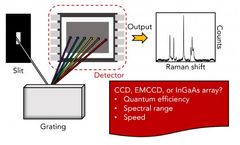
It should also be noted an EMCCD can be operated with adjusted gain levels and even without gain, as is shown in the example spectra in Figure 4, in which case it would compare in performance to a standard CCD.Front- and Back-Illumination in CCDsThe two types of CCDs and EMCCDs available are front-illuminated (FI) and back-illuminated (BI), named ...

Common parameters of interest in museum applications include: Temperature Humidity Visible (Illuminance) and Ultraviolet light (UV levels) Environmental dataloggers track and alarm temperature, humidity, and illuminance/UV light to protect artwork and installations in galleries and historical sites. ...

Anatase–TiO2 has been successfully coated on the surface of quartz cotton (SiO2) and alumina fibre (Al2O3) by the sol–gel method. The thickness of single layer of TiO2/SiO2 is 1 µm, while that of TiO2/Al2O3 is 300 nm. The TiO2 crystals are fine with the diameter varied from 20 to 25 nm. The TiO2 crystalline structure is defined by XRD method, and the thickness of the coatings by either XRD or SEM ...

The degradation of 3,4-dihydroxybenzoic acid (3,4-DHBA) in the presence and absence of Pb2+ under UV illumination was studied. Addition of Pb2+ caused the formation of precipitate during photoreaction when the solution pH was higher than 6. ...
The potential of a fluidized bed reactor for the UV-A photocatalytic reduction of Cr(VI), a priority water pollutant, by utilizing a TiO2/quartz sand composite, was explored. ...
The photocatalytic degradation of a macrolide (tylosin) has been studied using immobilized titanium dioxide as photocatalyst in a laboratory reactor under UV illumination (365 nm). The degradation of the antibiotic and of the reaction intermediary product was monitored by UV spectrophotometry and HPLC. ...
Dye used for this study is Reactive Brown 18 and TiO2 was used as adsorbent, which can be regenerated efficiently using UV illumination. Adsorbed dyes were oxidised by photocatalytic reaction and the non-toxic final products can be discharged into the environment. ...
Slides were removed daily, stained with Alcian Blue (for TEP) and DAPI (for bacteria) and examined under the microscope with Nomarski light illumination and UV-epifluorescence. By 18 h, we observed many areas stained with Alcian Blue as well as some individual bacteria on the surface. ...
Slides were removed daily, stained with Alcian Blue (for TEP) and DAPI (for bacteria) and examined under the microscope with Nomarski light illumination and UV-epifluorescence. By 18 h, we observed many areas stained with Alcian Blue as well as some individual bacteria on the surface. ...
A novel photocatalyst, titanium dioxide (TiO2) deposited with silver (Ag), was prepared by an ultrasonic-assisted sol–gel method and studied for the photocatalytic degradation of endocrine disrupting chemicals such as bisphenol A (BPA) under UV illumination, in order to determine its photocatalytic properties. A series of Ag-TiO2 catalysts prepared with different ...