
Refine by
Vacuum Evaporation Articles & Analysis
74 articles found
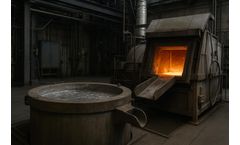
Sulfur-Based Refining: Antimony removal via Sb-S reaction forming Sb2S3; 750-850°C; sulfur addition 0.5-1.0 kg S per kg Sb; 2-4 hours; Sb removal 95-98% per cycle; crude lead with 2% Sb requires 8-16 kg S per tonne and 3-4 hours to reach Vacuum Refining: Evaporation of high vapor pressure impurities (Zn, Mg) at 650-850°C and 0.1-10 mbar; 1-3 hours; Zn removal ...

The vacuum acid removal system is a highly efficient, flexible, safe, and intelligent laboratory sample pretreatment device. ...
The vacuum parallel concentrator is a core piece of equipment for sample pretreatment, and its malfunctions directly affect experimental efficiency and the accuracy of results. The following is a systematic overview of typical malfunctions, their causes, and targeted solutions: 1. Abnormal vacuum level (failed to reach the set value) Characteristics: The ...
Traditional treatment methods often struggle to achieve complete resource recovery and zero liquid discharge (ZLD). The SOLIDEST vacuum evaporator offers a highly efficient and energy-saving solution for treating electroplating wastewater—particularly chrome plating effluent—through its advanced low-temperature vacuum evaporation ...
ByYASA ET
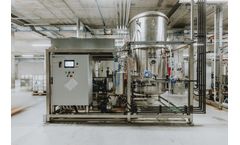
At C&G Evaporator, we believe innovation should always align with sustainability. ...

In lithium and boron production systems, the magnesium-lithium separation, filtration, and washing processes occur in high-humidity environments, while refining, evaporation, and conversion processes involve temperatures as high as 90°C. ...
In lithium and boron production systems, the magnesium-lithium separation, filtration, and washing processes occur in high-humidity environments, while refining, evaporation, and conversion processes involve temperatures as high as 90°C. ...
In lithium and boron production systems, the magnesium-lithium separation, filtration, and washing processes occur in high-humidity environments, while refining, evaporation, and conversion processes involve temperatures as high as 90°C. ...
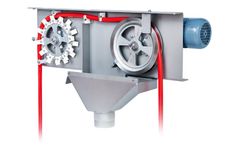
A milk processing company produces milk powder. In a vacuum evaporator, water is extracted from the milk. Approx. 15 % of the milk will be processed to milk powder. ...

These advantages enable the triphenylbenzene derivative to easily prepare a practical organic semiconductor thin film by a coating method or a vacuum evaporation method. In addition, the triphenylbenzene derivative can form a stable and durable high-performance semiconductor thin film at a relatively high temperature without using a binder resin. ...
Zero Liquid Discharge (ZLD) refers to a treatment process in which the plant discharges no liquid effluent into surface waters, in effect completely eliminating the environmental pollution associated with treatment. These systems combine vacuum evaporators and membrane filtration technologies and offer a compact, efficient, and sustainable solution to the ...
ByYASA ET
READ MORE > Super Duplex 2507 Stainless Steel: A Premier Choice for Water & Wastewater Treatment Equipment (yasa.ltd) Super Duplex 2507 stainless steel finds extensive applications in various water and wastewater treatment equipment and components. These include: Evaporators: vacuum evaporators play an important role in wastewater ...
ByYASA ET
Wastewater Vacuum Evaporator with Forward Feed Design: Key Benefits & How it WorksForward feed design in wastewater vacuum evaporators is a cost-effective and efficient solution for industrial wastewater treatment. ...
ByYASA ET
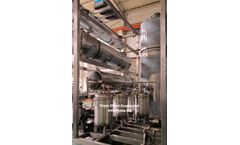
Industrial waste water evaporators are used to purify water by distillation, which is a process that involves heating the water to its boiling point and collecting the resulting steam, which is then cooled and condensed back into a liquid form. ...
ByYASA ET
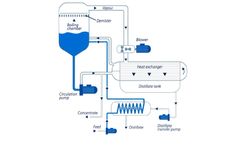
Heat pump vacuum evaporators can treat an aqueous waste stream efficiently and simply without using reagents. ...
ByYASA ET
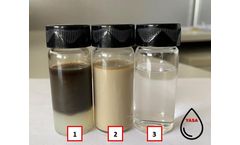
Some of the most used treatment technologies are evaporators, electrocoagulation, and ultrafiltration systems. Cutting Fluid Wastewater Treatment by Vacuum Evaporators Wastewater evaporation has become an effective method for removing contaminants and concentrating liquid waste from cutting fluids. ...
ByYASA ET
In industrial applications, feed water is heated until it evaporates, leaving behind contaminants (with higher boiling points) as residue. ...
ByYASA ET
Although PLEDs possess limitations in their application use, multilayer phosphorescent SM-OLEDs fabricated through the thermal evaporation process can achieve higher efficiency to overcome certain limitations. In one study, Xia et al. created thin films of these traditional thermally evaporated small-molecule materials by inkjet printing and prepared ...
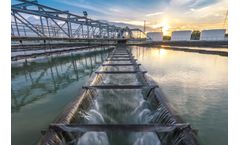
Some of these processes can be performed using Vacuum Evaporators, Electrocoagulation, Reverse Osmosis, and other technologies. ...
ByYASA ET
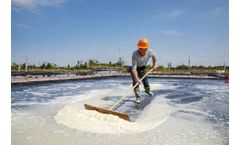
There are three methods of salt production: solar energy, evaporation, and rock mining. 1. Production Method Of Salt 1.1 Solar Evaporation Method This is the oldest method of making salt. ...