
Vegetable Harvesting Articles & Analysis
17 articles found

4945-acre bay within Green Bay, extending across the Door County Peninsula. Bay is artificially linked to Lake Michigan with a shipping canal. Substantial activity from commercial and recreational watercraft. Home to 4 marinas and 2 yacht clubs with 750 boat slips & about 80 moorings. Port is home to a major ship building and repair facility and a Coast Guard Station. ...
67,900 acre reservoir created for flood control and electric generation. 94’ high and 3,979 dam across the Tennessee River generates 123 megawatts. Only 15% of the 890 miles of shoreline is developed. Average depth of Guntersville Lake is 15’ with a maximum depth of 45’. Premier angling destination with a robust and diverse fishery. Abundance of aquatic vegetation including ...
2500-acre flowage created by a dam across the Fox River. Mostly a muck bottom with portions as sand. 13.1 miles long with 32.2 miles of shoreline. Watershed area is 600 square miles. Permanent and seasonal homes with much of the lakeshore footage wooded and undeveloped. ...

Created as a spin-off of Modena and Reggio Emilia University, Packtin recovers by-products such as orange, apple and tomato peels and beetroot pulp – which would otherwise end up as waste or, at best, be sent to a biodigester – to extract biopolymers to be used both in edible and biodegradable packaging as well as in films, supplements, coating and gel for meat and fruits and ...

In order to estimate yield, Producers generally measure the amount of a particular crop harvested in a sample area to estimate crop yield. The harvested crop is then weighed, and the entire crop production of the area is approximated from the sample. ...

The Term: Automatic and automatic-flowering plants have established In other words, Examples: tomatoes, pea plants, rose, cannabis ruderalis,… Light intensity The current daylength (length of illumination) controls, depending on the plant’s type: (SDP, LDP, NDP) which growing-phase is currently initiated As a simplified version we usually differentiate between ...
This year, 200 acres of the root vegetable will be hand harvested off of 46” beds and they have plans to build infrastructure to expand even further. ...

I think upwards of a third of the world’s leafy green vegetables come from the area. We have pest pressures that might not be as common in a vineyard specific ...

Recent years ecological food is becoming more and more popular. Society wants to eat healthy products, of known origin and free of harmful chemicals that have an impact on our health. Where to get such food? The answer is simple – you should ask the source, which in this case are farmers. Despite the demand for ecological products is large, only a few producers decide to grow ecological ...
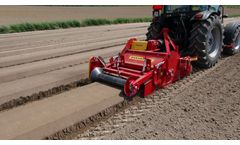
WEREMCZUK company cares for the agriculture development. The offer for vegetable farmers is designed both for growing and harvesting vegetables. Top lifting trailed harvester Particularly, the top-lifting root vegetable harvesters- ALINA SUPERNOVA and ALINA ECO II are noteworthy. ...
The competition between vegetable producers, high production costs, expensive seeds and many other factors, mean that vegetable producers want to provide optimal conditions for their cropping. ...

During the 2018 season, growers reported early vigor, more tillers, and 10 bushel per acre increases at harvest, even with limited rainfall, late freezes, and record high abandonment rates in the region. Indigo Wheat™ has now been harvested across thousands of acres, under hundreds of growers, and throughout dozens of counties. ...

Genetic improvement of vegetable crops is an appropriate adaptation strategy to cope with climate change adversities. ...

In the latest edition of Bioconservacion's Partner Meeting with all its partners from the post-harvest sector, we had the good fortune to have Professor Emeritus Ron Wills from the University of Newcastle in Australia. ...

Previous research showed marketing and consumption losses of fruit and vegetables in Brazil to be 18% of turnover. This study develops a scoring guide that can assist commercial establishments and households in evaluating and mitigating the loss potential for fruit and vegetables within their operations. ...
ABSTRACTThe aim of this study was to evaluate the potential cultivation of lettuce (Lactuca sativa) with domestic wastewater effluents with different levels of treatment from a compact WWTP in Brazil. Vegetables were grown in five treatments: nutrient solution (control), secondary effluent diluted 50%, secondary effluent not diluted, tertiary effluent UV irradiated, and UASB ...

However, these treatments require periodical inspections for settlement, ponding of liquids, erosion, and naturally occurring invasion by deep-rooted vegetation. Additionally, ground water monitoring wells, associated with the treatments, need to be periodically sampled and maintained. ...