
Refine by
Vegetable Protein Articles & Analysis
15 articles found

World-wide 1.5 million babies are born every week, over the last hundred years the human population has grown from fewer than two billion to over seven-and-a-half billion people. Aside from this people live longer due to better nutrition and healthcare and the average age of populations worl-wide is increasing. This means our planet has to feed over four times as many mouths as it had to a ...

Healthy diet Adopt a balanced diet rich in fruits, vegetables, whole grains, lean proteins, and low-fat dairy products. Limit sodium (salt) intake and avoid processed foods high in salt. ...

Over the years, many new flavor enhancers have been developed, including meat extracts, yeast extracts, hydrolyzed animal proteins, and hydrolyzed vegetable proteins. Sweetener Sweeteners refer to food additives that impart sweetness to foods. ...

There are many types of enzymes that catalyze protein hydrolysis, mainly including pepsin, trypsin, cathepsin, papain and subtilisin. ...

The current trend is to use more and more vegetable proteins and this has an impact on the extrusion process. Normally, when you add more vegetable protein, the process will require more water and the more water in the system, the more energy is needed to perform the cooking, since the water acts as oil and reduces friction. ...
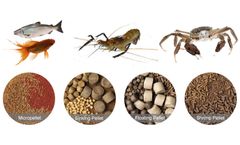
They are combined with other ingredients such as vegetable proteins, cereal grains, vitamins and minerals and formed into feed pellets. ...
They are combined with other ingredients such as vegetable proteins, cereal grains, vitamins and minerals and formed into feed pellets or flakes. ...

These are concoctions of concoctions, engineered from ingredients that are already highly refined, such as cheap vegetable oils, flours, whey proteins and sugars, which are then whipped up into something more appetising with the help of industrial additives such as emulsifiers. ...
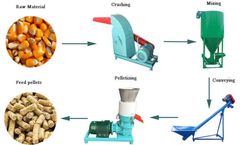
As sudden changes can cause digestive upsets that may reduce productivity and predispose the poultry to disease. Protein Meals Protein is provided from both vegetable and animal sources, such as oilseed meals, legumes and abattoir and fish processing by-products. Vegetable protein sources ...

Seasonal foods, such as fruits and vegetables, are, once they have been frozen, now available year-round. In the same way, people living in landlocked locations can enjoy fresh-frozen seafood, no matter the distance from the coast. ...

Building upon these results, FutureFood aims at the demonstration and first market application of CO2-drying, an eco-innovative solution for drying of food products (e.g. vegetables, herbs, fruits and proteins). The main benefits of the technology is preserving the fresh quality attributes and vital nutrients of the products, while reducing carbon footprint and ...
ByFeyeCon

Effects on Biodiversity The core of the animal-product problem is that producing protein from meat requires far more land area than does producing protein from plant sources. A pound of protein from chicken requires three times more land area to produce than a pound of soy protein; pork requires nine times more land, and beef, ...
ByEnsia

According to primary calculations a shift from the actual animal-based nutrition to a “healthier nutrition” (mainly characterised by 2/3 vegetable protein supply) would lead to a reduction of needed nitrogen supply as well as of nitrogen emissions to the environment by about one quarter to one third on a national scale. ...

Our objectives were to determine how P and K impact (i) alfalfa yield and yield components, (ii) accumulation and use of taproot carbon (C) and nitrogen (N) pools, and (iii) transcript levels for β-amylase, sucrose synthase, and the high molecular weight vegetative storage protein in alfalfa taproots. Yield and yield components were determined at 30-d ...

Benefits of the rendering process include reducing total waste material, and helping the livestock industry stay competitive over vegetable protein manufacturers. However, the rendering process can have a negative effect on the environment through the emission of nuisance odorous compounds such as hydrogen sulfide, reduced sulfur compounds, ammonia, various fatty ...