
Vermiculture Articles & Analysis
15 articles found
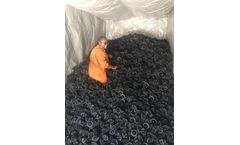
Local energy from local waste The farm has long been involved in sustainability, and boasts a large solar farm, geothermal wells and vermiculture farm. Now the farm plays host to a waste-to-energy project funded by Innovate UK, in partnership with QUBE Renewables, Grants Biotech and the University of South Wales. ...

“We trialled Australian Vermiculture products with an aim to improve the health of our soil and keep production costs down. ...

A study conducted at Vermiculture Research Station (VRS), Aligarh, to transform the timber solid waste vermicompost (TSWV) into bioactive compost with the addition of beneficial microbes has brought to light feasibility of a potential technique to develop value added quality product with higher agronomic value for the first–time. ...
Thus, the treatment combination of T12 followed by T9 and T3 proved to be the best treatments for all the studied characteristics.Keywords: Eisenia foetida, vermicomposting, vermiculture, biosolids, apple pomace, nutrients, micro–organisms, organic waste, nitrogen, phosphorus, potassium, calcium, sulphur, magnesium, ...
The removal efficiency of the heavy metals was more in the vermicompost produced by E. eugeniae than that of E. fetida and P. excavatus, and the compost (P Keywords: municipal solid waste, MSW, organic solid waste, vegetable market waste, floral waste, earthworm species, vermiculture, composting, cadmium, lead, zinc, copper, manganese, waste management, earthworms, heavy metals, ...

Since 2001 the swine experimental station of Guernévez has studied biological treatment plants for nutrient recovery and water recycling, suited to the fresh liquid manure coming out of flushing systems. An integrated system with continuous recycling was set up in 2007, associated with a piggery of 30 pregnant sows. It includes a screen, a vermifilter, and macrophyte ponds alternating with ...
Rice yield was significantly greater with 5t/ha of vermicompost and 50% of chemical fertilisers than with chemicals only.Keywords: vermiculture, agro-forestry waste, crop production, Philippines, organic fertiliser, plant production, vermicompost, earthworms, vermicomposting, Perionyx excavatus, Eudrilus eugeniae, animal manure, leguminous leaves, grass, rice yield, corn yield, ...
Results obtained by earthworm application were best followed by results of vermicompost application.Keywords: earthworms, vermicomposting, cattle dung, plant growth, vermiculture, sustainable horticulture, agronomic impact, cow dung, vermicompost, chemical fertilisers, lady', s finger, Abelmoschus ...
To achieve satisfactory results with vermiculture, it is important to know how many times to rinse cattle manure to eliminate salts. ...
In this paper, the authors compile the research results of vermicomposting of organic residues from different raw materials and its use as a biofertiliser, to provide a general outlook of the development of vermiculture technology in Argentina within the last decade. Research results of bioaccumulation of some trace elements by worms in artificially contaminated systems are also ...
Earthworms are being used to manage most organic wastes; treat wastewater; clean-up chemically contaminated soils; improve soil fertility and produce food crops. Their use in production of life-saving medicines and raw materials for industries are some new discoveries. We have successfully experimented in vermicomposting of 'MSW', vermifiltration of 'municipal & industrial wastewater', ...
Earthworms can also supply quality animal protein as feed, and offer the best raw materials for the biochemical and pharmaceutical industries. Vermiculture should be put into a whole circular economy as a means of protecting environment, maintaining ecological balance, and fully utilising resources. However, it should be oriented to stabilise sludge and organic wastes at present ...
This study suggests that earthworm production can be managed by using feedstuff having higher nitrogen contents with low C:N ratios.Keywords: organic waste, vermiculture, Eudrilus eugeniae, Perionyx excavatus, Perionyx sansibaricus, cocoon, hatchlings success, hatchling numbers per cocoon, substrate quality, earthworm growth, reproduction patterns, vermicomposting, composting ...
The maximum earthworm mortality was in vermibed having P. sansibaricus (~50% higher than by P. excavatus) (t-test: P = 0.423), since both species did not show a drastic difference in waste mineralization rate, but comparatively, P. excavatus exhibited better growth and reproduction performance, which further support the suitability of the species for large scale vermiculture ...
There are several possible technologies and alternatives to reduce the adverse impact of these chemicals on the environment, such as biological control of pests, integrated pest management, development of pest-resistant varieties of crops, vermiculture. etc., that need to be supplemented through an economic approach. ...