
Vis Nir Spectroscopy Articles & Analysis
10 articles found
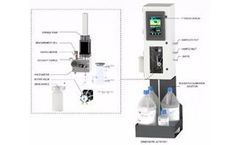
Custom Sensors & Technology (CST) was established in 1980 and has provided process monitoring products and solutions across various industrial sectors such as petroleum, chemical, food processing, pharmaceutical, and biotherapeutics. CST is uniquely positioned to service the water quality industry with its portfolio of products and technologies. Several of its current and emerging ...

In the first part of this series, a brief historical overview was given for both infrared (IR) and near-infrared (NIR) spectroscopy, as well as for Fourier transformation (FT) and dispersive spectroscopy. A few myths were discussed and put to rest, and we showed that Fourier transformation spectroscopy (FT-NIR) is not necessarily the only nor the best way to integrate reproducible spectroscopic ...

In the first part of this series, a brief historical overview was given for both infrared (IR) and near-infrared (NIR) spectroscopy, as well as for Fourier transformation (FT) and dispersive spectroscopy. A few myths were discussed and put to rest, and we showed that Fourier transformation spectroscopy (FT-NIR) is not necessarily the only nor the best way to integrate reproducible spectroscopic ...
ByB&W Tek
History of ASTM International The American Society for Testing and Materials (ASTM) is an organization that currently provides over 12,500 international standards. Its roots date back to 1898, when ASTM was formed by a group of scientists and engineers to address the frequent rail breaks affecting the fast-growing railroad industry. The group developed a standard for the steel used to fabricate ...
Cyclic voltammetry (CV) is the backbone of most electrochemical research and is an essential electrochemical technique that allows researchers to explore candidate catalysts in greater depth. When coupled with modeling, a systematic goal-focused protocol will supply a range of data that will inform the user of more novel techniques and complex setups. This disciplined approach will save time in ...
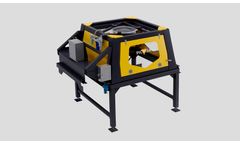
Material detection is done using a visible imaging spectrometer (VIS) and, optionally, near-infrared spectroscopy (NIR). It also includes the option of a remote connection for system updates and streamlining, expanding the library of objects it recognises and enhancing precision over time. ...

Material detection is done using a visible imaging spectrometer (VIS-RGB) and, optionally, near-infrared spectroscopy (NIRS). It also includes the option of a remote connection for system updates and streamlining, expanding the library of objects to be recognised and enhancing precision over time. ...

In this paper, we analyze the characteristics of the snow albedo of different underlying surfaces based on measurements of shortwave radiation and observations of forest litter on snow surfaces, both in an open, unforested environment and in areas with differing forest canopy openness. The fractional litter coverage was obtained through the binarization of digital photos of forest litter ...

Optical, compositional, morphological and structural studies were performed by UV-VIS-NIR spectrophotometry, X-ray photoelectron spectroscopy (XPS), scanning electron microscopy (SEM) and X-ray diffraction (XRD) studies. ...
The visible and near infrared spectroscopy is a fast and inexpensive non-destructive technique for the prediction of concentrations of salts in wastewater. Conventional chemical methods are usually used, which are very accurate, take more time and require special techniques for sampling, storing and pretreatment of wastewater. In this work we studied the spectral characteristics of water and ...