
Visual Surface Inspection Articles & Analysis
9 articles found
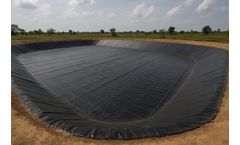
Destructive peel and shear testing per ASTM D6392 on random samples. Visual inspection of the complete liner surface for damage or contamination.Long-Term Performance ConsiderationsChemical Degradation and Stress Cracking: HDPE exhibits resistance to hydrocarbons; however prolonged exposure to aromatic solvents can cause slow chain scission. The ...

In many organizations, inspections are done seriously. Teams take the time to document, fill out reports, take photos, and write observations. At the moment they are performed, inspections do their job. They answer a very specific question: what is the condition of this asset today? But a few months later, that same inspection often loses its value. Six months go by—sometimes less—and ...

Pressure vessels are specialized bins designed to keep gases or drinks at a pressure notably extraordinary from the ambient pressure. These vessels play a pivotal function in numerous industries, including petrochemical, power, and production, to call some. Their capability to soundly include excessive-pressure substances is critical for diverse strategies, from heating water to strengthen plant ...

Without the dangers posed by radiography, the cumbersome setup of liquid penetrant testing, or the surface-level limitations of visual inspection, ultrasonic testing allows fast, simple inspections of many materials. Ultrasonic inspection also achieves deeper material penetration than most other NDT methods can ...
Is visual inspection effective? Overall, the visual inspection method on its own cannot produce the same quality results as other nondestructive testing (NDT) methods. ...
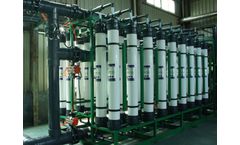
Dead-end flow In a dead-end flow ultrafiltration technology filtration configuration, the feed water flows perpendicular to the membrane surface. Molecules and particles smaller than the effective pore size pass through to the opposite side while larger matter builds up in a cake layer on the membrane surface. ...

This inspection may involve the use of a moisture meter, infrared cameras, surface sampling for mold and air sampling for molds, as well as a visual inspection. Replace the water damaged surfaces. Always consider the use of mold resistant materials (like mold resistant sheetrock or mold resistant paints). If ...

Also, fats, oils and greases accumulate in the wet well, floating on the surface of the collected wastewater. The grease layer had to be removed every six weeks. ...

The depth of investigation, greater than 90 feet below land surface, did not allow the use of field screening techniques with CPT technology. Rather, the program consisted of the drilling of soil borings using continuous core drilling and screening the core sample at the surface. Screening methods included visual inspection of ...