
Refine by
Voc Oxidation Articles & Analysis
146 articles found
With intertwined and superimposed gas streams, the operating conditions are highly complex, presenting four major treatment difficulties:Complex composition with strong odor The waste gas contains pollutants such as benzene series, sulfides and non-methane total hydrocarbons (NMHC). With the superimposition of VOCs and malodorous substances, simultaneous removal of pollutants and ...
By consolidating VOCs treatment resources at the park level, the project provides an efficient, reliable, and cost-effective solution for industrial air pollution control while supporting the park's long-term sustainability goals.The successful implementation and stable operation of the project further demonstrate CADAIR's expertise in delivering large-scale VOCs ...
How Are Pharmaceutical Waste Gases Treated? VOC Control Solutions for Pharmaceutical Manufacturing Pharmaceutical manufacturing is one of the most heavily regulated industries for volatile organic compound (VOC) emissions. ...
Key Technical Advantages High Purification Efficiency The zeolite rotor concentrates low-concentration and large-volume scattered VOCs into high-concentration and small-volume airflow, greatly improving the efficiency of catalytic oxidation treatment. ...
Selecting the appropriate treatment technology depends on VOC concentration, airflow volume, and exhaust composition.Emission Type Recommended Technology Low-concentration, high-air-volume VOCs Zeolite Rotor + Catalytic Oxidation Medium- to high-concentration VOCs RTO Electrolyte exhaust gas Scrubber + RTO Combination NMP tail ...
CADAIR: Direct Fired Thermal Oxidizer (DFTO) Manufacturer for Industrial VOC Treatment Beijing, China – June 2026CADAIR Air Technology (Beijing) Co., Ltd. is a leading Direct Fired Thermal Oxidizer (DFTO) Manufacturer in China, specializing in industrial VOC abatement systems for chemical, pharmaceutical, coating, printing, ...
However, spray painting and drying processes still release measurable quantities of volatile organic compounds (VOCs), including benzene, toluene, and xylene.In Beijing and many other regions, these emissions must be controlled to comply with environmental regulations.For large airflow applications with relatively low VOC concentrations, a Zeolite Rotor ...
Project Parameters Item Value Air Volume 80,000 m³/h VOC Concentration 500 mg/m³ Exhaust Characteristics High Air Volume, Low Concentration Main Components Silane, Xylene, Ethanol, Chlorobenzene This represents a typical VOC emission profile for photovoltaic material manufacturing facilities. CADAIR VOC Treatment Solution After detailed site ...
CADAIR Solution: Zeolite Concentration + Oxidation Technology To address the unique requirements of aircraft painting exhaust treatment, CADAIR has developed an integrated solution combining zeolite concentration technology with thermal oxidation systems.Process Flow The exhaust air first passes through a pre-treatment stage to remove particulates and stabilize ...
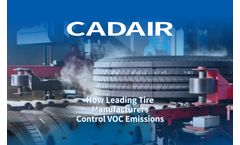
Volatile Organic Compound (VOC) emissions are among the most significant environmental challenges facing tire and rubber manufacturers worldwide.As environmental regulations continue to tighten across Europe, North America, and Asia-Pacific, manufacturers are under increasing pressure to reduce emissions, improve energy efficiency, and support long-term sustainability goals.As a ...
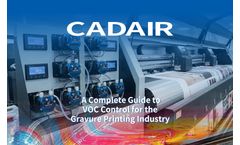
The optimal solution depends on airflow volume, VOC concentration, solvent composition, and operating requirements.Regenerative Thermal Oxidizer (RTO) RTO technology is widely recognized as one of the most effective solutions for printing exhaust gas treatment.The system oxidizes VOCs at temperatures typically ranging from 760°C ...
The optimal solution depends on: Air volume VOC concentration Production schedule Coating materials Local emission regulations Energy costs Available installation space For many medium and large furniture manufacturing facilities, Zeolite Rotor Concentration combined with Thermal Oxidation technology is widely adopted because it can effectively concentrate ...
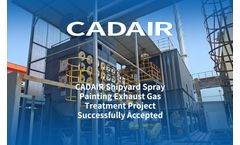
Project Key Parameters Industry:Shipyard Spray Painting VOC Treatment Exhaust Sources:Paint mixing, spray coating, drying Airflow Volume:22,000 m³/h VOC Concentration:1800 mg/m³ Treatment Technology:RTO Regenerative Thermal Oxidizer Emission Standard:DB31/934 Shipbuilding Industry Air Pollutant Emission Standard Project ...
For enterprises aiming to achieve long-term compliant emissions, choosing an experienced and technically capable waste gas treatment provider is crucial. As a professional VOCs treatment company with years of industry experience, CADAIR provides customized solutions including RTO, RCO, zeolite rotor concentration systems, catalytic oxidation (CO), and scrubber ...
Should coating plants choose RTO or catalytic oxidation systems? What are the latest VOC emission standards in different countries and regions? ...
For many years, thermal oxidation technologies such as RTO and RCO dominated the VOC control market. ...
Combustion types including RTO (760°C), RCO (300–550°C) and CO (300–550°C) are applied to oxidize and decompose VOCs into harmless CO₂ and H₂O. 2. Acidic/Alkaline Exhaust Scrubber towers are utilized for purification via acid-base neutralization reactions. ...

This study develops a biodegradable photocatalytic membrane with titanium dioxide (TiO2, p25) nanoparticles with a polylactic acid (PLA) support to remove volatile organic compounds (VOCs) from indoor air. It addresses two challenges simultaneously: (i) achieving effective gas-phase photocatalytic oxidation (PCO) of VOCs and (ii) enabling ...

Without proper air quality monitoring, pollutants like PM2.5, CO2, VOCs, and bioaerosols can accumulate, leading to poor indoor air quality (IAQ). ...
Key Pollutants from Jet Engine Combustion: PollutantSourceImpact Ultrafine Particles (UFPs) Jet fuel combustion Penetrates deep into lungs; oxidative stress on cells. Nitrogen Oxides (NOx) High-temperature combustion Reacts with VOCs to form ground-level ozone, a respiratory irritant. ...