
Refine by
Waste Framework Regulations Articles & Analysis
28 articles found
The scale, cost, and impact of food waste across European supply chains is increasingly recognised as a structural inefficiency. From production and processing to retail and hospitality, waste streams are substantial with significant environmental and economic consequences.EU data indicate roughly 59 million tonnes of food waste are generated each year, equating to about 131 kg per person. The ...
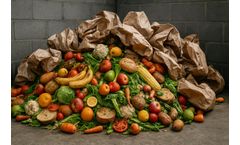
Food waste across Europe is a structural inefficiency embedded in how food systems operate, spanning production, processing, retail and hospitality. It carries significant environmental and economic consequences as volumes accumulate annually. EU data from Eurostat show the European Union generates approximately 59 million tonnes of food waste per year, equating to about 131 kg per person, with ...
The accelerating pace of environmental regulation worldwide is shaping the trajectory of thermal desorption technology adoption. ...
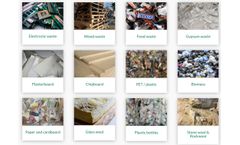
The importance of enhanced sorting and separation in material recovery Enhanced sorting and separation in material recovery is crucial due to the complexity and diversity of waste materials. Effective separation is essential for recycling operations to recover valuable materials, reduce contamination and improve the quality of recycled products. But sorting also poses challenges because of the ...
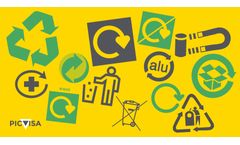
The intention is to ensure that food or other product waste does not contaminate other materials, especially if it is collected together with paper. ...

On the one hand, the Circular Economy Law 7/2022 establishes that manufacturers must take responsibility for managing their products when they become waste. They will have three years to implement it from its entry into force in April 2025. Moreover, they must prepare to comply with the future Waste Framework Directive, which includes the ...

On the one hand, the Circular Economy Law 7/2022 establishes that manufacturers must take responsibility for managing their products when they become waste. They will have three years to implement it from its entry into force in April 2025. Moreover, they must prepare to comply with the future Waste Framework Directive, which includes the ...

There are many different waste streams that are produced. Some are suitable for incineration and for others, incineration is an essential method of disposal. ...

Manufacturers and importers of articles have six months from the date of the announcement (July 17, 2022) to meet their obligations. >The REACH Regulation isn’t the only hurdle companies will have to clear. The EU Waste Framework Directive requires companies doing business in the EU to submit complex dossiers to the Substances of ...
The SCIP Database is similar to ECHA database of Substances of Very High Concern (SVHC) in articles or in complex objects (products) established under the Waste Framework Directive (2008/98/EC). Any company that is supplying or intend to supply any product containing an SVHC (Substance of Very High Concern) on the Candidate List Substances with a concentration more than 0.1% in weight in the ...
Q1. WHY WAS THE SCIP DATABASE IMPLEMENTED? Ans. The SCIP database is a result of the European Union’s (EU) Waste Framework Directive (WFD). the goal of SCIP is to create an eco-friendly atmosphere by decreasing hazardous waste substances. The increase in reporting transparency of hazardous substances in products enables better decision-making to substitute SVHC and handle them responsibly ...
The UK consistently overestimates how much of its plastic packaging it recycles, and may have failed to meet EU recycling targets in each year between 2008 and 2012. That is according to a new report from waste consultancy Eunomia, which explains how the weight of plastic recorded for recycling in Britain is often inflated by the inclusion of moisture and contaminants. It also ...
The Act goes beyond obligations created by Regulation EC/166/2006 (E-PRTR Regulation); in addition to obligations listed in the Regulation, companies must also report pollutants if they exceed the levels for the release or off-site transfer of waste containing polluting substances, which are specified in the Annex. ...
Recycled waste material could play a major role in the construction of roads in Europe, bringing both environmental and economic benefits. A new study proposes a scenario where 50% of the asphalt for Europe's roads consists of recycled materials, leading to significant reductions in costs, energy use and greenhouse gas emissions. According to the European Waste Framework Directive, there is a ...
Landfill taxes and ‘enhanced waste management’ practices have been introduced to reduce the amount of waste that goes to landfill and to convert waste into useful products. This study investigated the interplay of these two policy options in Belgium, generating findings that could help Europe move towards a resource-efficient, circular economy. Landfill taxes and ‘enhanced ...

Waste prevention is the top priority of the European waste management strategy. In fact, as indicated in the latest Waste Framework Directive, the best option to deal with waste is not to generate it at all. In this framework, the distribution of loose dry food products through self‐dispensing systems (so‐called “loose distribution”) is being considered worldwide as a practice to reduce ...
This publication is part of a series of reviews by the European Environment Agency (EEA) of waste prevention programmes in Europe. The review process covers programmes in the 28 European Union (EU) Member States and the three European Free Trade Association (EFTA) countries, namely Iceland, Liechtenstein and Norway (Table 2.1). This second review covers the 27 national and regional programmes (1) ...
Many organisations are unaware of how waste impacts their bottom line. The EU Waste Framework Directive outlines 5 core steps for dealing with waste and when ranked according their environmental impact, they make up the ‘waste hierarchy’. ...
Riverside Waste Machinery’s managing director Jonathan Oldfield, a passionate advocate of UK resource efficiency, talks about the current uncertainty surrounding the circular economy. There are a few things the waste and recycling industry knows for certain in 2015. New rules stipulating the separate collection of paper, plastics, metals and glass for recycling – where technically, ...
The Commission proposes to establish a common and coherent EU framework to promote the circular economy. This combines smart regulation, market-based instruments, incentives, information exchange, and support for voluntary approaches. ...