
Waste Solidification Articles & Analysis
15 articles found
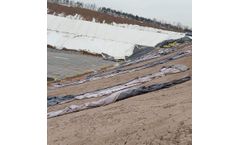
The second is the use of organic waste, the degradable solidification and sealing of gold mine tailings dust, and the selection of appropriate seeds and substrates to make plants germinate and grow to achieve the purpose of vegetation use. This method of treating tailings, through several years of practice, it has found some experience, even in the selection of ...

Abstract : Solidification is a process for treating contaminated wastes that reduces or entirely prevents the release of hazardous waste compounds into the environment. This process aims to make materials either not harmful nor toxic at all or at least less hazardous than the raw waste. The most widely used basic materials for ...
The Client has requested the inclusion of a new, more energetically efficient soil washing plant in the pre- existing waste stabilization/solidification line; a new soil washing plant that would rely on physical separation of contaminants from soils, inert materials, sand and gravel destined for recovery and valorisation. ...
One of the most important functions of a drilling fluid is to stabilize and maintain a borehole opening. Borehole stability in coarse soils starts with creating an impermeable barrier between the soil and the drilling fluid or slurry via the filter cake (or polymer gel membrane for non-rotary mud drilling such as foundation drilling). Then, positive hydrostatic pressure from having the hole full ...
ByCETCO

The Environment Agency have announced that this new innovative end-use for incinerator fly ash meets the ‘end-of-waste criteria’. Castle Environmental and sister company Castle Construction Products are now investing in additional facilities to increase production and product range. ...
In particular, for Lot 1 a pilot inertization plant of sludge/soil/waste and for Lot 2 a pilot soil washing plant of sludge/contaminated land. Description of the plants Both pilot plants are made available from the Dicatech to improve specific skills and services with industrial partners, public and private bodies, through the exploitation and the use as testing ground on ...

The main aim of this paper is to review: (i) the characteristics of arsenic waste produced by arsenic treatment systems; and (ii) the treatment and disposal methods of this waste. Arsenic waste type or its characteristics play an important role in choosing the best method of treatment and disposal. Currently, encapsulation of arsenic ...
Inertisation is a technology widely used in the management of hazardous waste and it consists of two operations: Stabilisation of the waste. ...
The use of subterranean salt mines for the final storage of inorganic hazardous waste is state of the art in Germany, and in fact most other European countries. However, the technical requirements to prepare the waste in an appropriate way are quite challenging. Over ten years ago econ supplied a plant to a salt mine in eastern Germany. The plant uses econ’s unique batch-wise working mixing ...
In 2003 econ received an inquiry from a service company operating an industrial waste water treatment plant. At the end of the physical-chemical WWT process this client generated metal-hydroxide sludge from his chamber filter presses. Originally he discharged the sludge into skips and brought it to a hazardous waste landfill. At this landfill, a ...

The ranges of microsphere composition, suitable for liquid radioactive waste solidification in the forms of iron phosphate (36–94 wt.% Fe2O3) and aluminosilicate (2–20 wt.% Fe2O3) ceramics were determined. The possibility of producing porous materials and specific microspherical sorbents, based on coal fly ash cenospheres and their application for mmobilisation ...
A sharp reduction of nuclear waste amounts is possible if their elements are considered as source material of atomic complexes – SMAC. ...
It showed the possibility of disposing of the liquid phase from the liquid radwaste storage basins by the drying-up method using VCF.Keywords: outdoor storage basins, liquid radioactive waste, isolation, biosphere, underwater solidification, drying up, leaching, mechanical strength, radionuclides, metallurgical slag, porous vitrocrystalline forms, localisation, ...
There are many innovations in the stabilization and solidification technology. Most of the innovations are modifications of proven processes and are directed to encapsulation or immobilizing the harmful constituents and involve processing of the waste or contaminated soil. Nine distinct innovative processes or groups of processes include: (1) bituminization, (2) ...
Solidification processes produce monolithic blocks of waste with high structural integrity. ...