
Refine by
Wastewater Plant Optimization Articles & Analysis
22 articles found
Ever watched a whirlpool drain? Picture that as your company’s wastewater stream. It swirls, twists and disappears down the drain – out of sight and out of mind. But what if I said there is more to this than meets the eye? In reality, this ‘whirlpool’ holds potential regulatory nightmares and costly fines. Just like how every ripple in water has a story to tell, each ...

Clean water is essential to modern society. Today, the utilities that pump, treat and distribute water are grappling with extreme weather events, an aging electric infrastructure and increased security concerns – all of which can cause disruptions to their operations. Increasingly, water utilities are turning to microgrids to address these challenges. In this white paper, you’ll ...
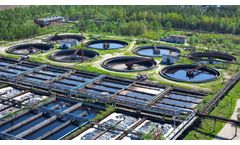
Over the past few years, advances have been accomplished in the process of optimizing wastewater treatment plant operations but issues still remain. 1. ...

GWT Treatment Solutions Can Assist A Wastewater Treatment Plant to Conquer 4 Critical Issues Clean water is a necessary resource for life, business, and the environment in which we live throughout the world.Companies and utilities that utilize sustainable, effective and efficient solutions within their wastewater treatment plant ...
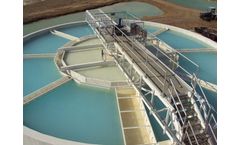
Proven Success in Africa: Genesis Water Technologies, Inc. has been involved in various client projects in Africa, from optimizing water & wastewater treatment for water utilities to lower costs and increase water quality, to boosting agriculture plant yield production, as well as treating water from oil/gas and food/beverage operations. ...
Proven Success in Africa Genesis Water Technologies, Inc. has been involved in various client projects in Africa, from optimizing water & wastewater treatment for water utilities to lower costs and increase water quality, to boosting agriculture plant yield production, as well as treating water from oil/gas and food/beverage operations. ...

Part of a 2016 expansion project, the Elkhart Wastewater Treatment Plant improved its grit removal efficiency and wet weather capacity by installing PISTA® VIO™ Grit Chambers in existing detritor grit basins. Unlike the other technologies considered, the PISTA® VIO™ allowed utilization of existing infrastructure in addition to providing improved efficiencies and capacities. ...

A newly upgraded water and wastewater treatment facility in Denmark is reportedly the first energy-neutral facility of its kind in the world. Through 3.19 million euros in upgrades, the Marselisborg Wastewater Treatment Plant has been able to optimize a range of processes to become more energy efficient, said Aarhus Water, which ...

A dynamic simulation model has been developed and validated for the 1.4 million p.e. capacity Budapest Central Wastewater Treatment Plant to support intensification, process development and risk assessment. ...

Many wastewater treatment plants use more than 50% of their total energy budget in the aeration basin and, when nutrient removal is included in the activated sludge process, it is very common that the majority of oxygen uptake goes to the nitrification process. For that reason, in most wastewater treatment plants, energy ...
Performance History and Discussion Texas City selected in-Pipe Technology. Inc. to provide a collection system bioaugmentatlon program to control fats, oil and grease (FOG) and H2S odor in the sewer system. The program is also designed to reduce influent load to the wastewater treatment plant (WWTP), improve the quality of the effluent water, improve the operating efficiency and reduce operating ...

Problem One of the Lithuanian resort towns, during the warm period of year, continuously had problems with the fat, oil and grease (FOG) accumulation in the sewer lines and wastewater treatment plant. The highly polluted wastewater directly impacted the treatment plant in the following ways: Increased grease accumulation in sewer lines and lift: stations; Poor sedimentation of the active ...

Northern Ireland - Trailblazing with 11 ASP-Cons Strathkelvin Instruments have optimised 32 of NI Water Biological Wastewater Treatment Plants. The optimisation programme saw 14 sites optimised in 2012/2013 with a further 18 sites optimised for compliance in aeration energy optimisation in the financial year to March 2015. NIW are also leading the industry with the adaptation of the ASP-Con ...
Overview At the Dudley Shasun facility we have a 7500 m3 biological treatment plant that can treat up to 36 tonnes of waste COD per day. Part of this capacity is utilised to treat up to 15 tankers per day of third party aqueous waste. The waste is very varied, covering everything from leachates at only 2000ppm COD to industrial waste at up to 500,000ppm COD. The Strathkelvin respirometer forms a ...
This work provides a case study on how activated sludge modelling and computational fluid dynamics (CFD) can help to optimize the energy consumption of a treatment plant that is already equipped with an advanced control based on online nutrient measurements. Currently, aeration basins on wastewater treatment plant Antwerp-South ...
ABSTRACT Many wastewater treatment plants use more than 50% of their total energy budget in the aeration basin and, when nutrient removal is included in the activated sludge process, it is very common that the majority of oxygen uptake goes to the nitrification process. For that reason, in most wastewater treatment plants, ...
The anaerobic digestion of primary and waste activated sludge generates biogas that can be converted into energy to power the operation of a sewage wastewater treatment plant (WWTP). But can the biogas generated by anaerobic sludge digestion ever completely satisfy the electricity requirements of a WWTP with ‘standard’ energy consumption (i.e. ...

We also invite you to visit the case studies listed which show how 2nd Generation has helped several water and wastewater treatment plants optimize their treatment and distribution systems through routine ...
Estimates of urban wet-weather flow pollutant loads are required to assess their impact on receiving waters and optimize wastewater treatment plant (WWTP) and combined sewer overflow (CSO) operations. ...
More stringent effluent criteria with regard to nitrogen calls for improved nutrient removal techniques in wastewater treatment plants (WWTPs). Besides optimisation of the liquid treatment train of the plants, attention has increasingly centred on the problem of return flows from sludge treatment. One of the most recent developments aimed at the reduction of this nitrogen load is deammonification ...