
Refine by
Wastewater Recycling Articles & Analysis
742 articles found
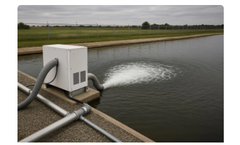
Water treatment technology is continually evolving, and efficient oxygen transfer is central to water quality, sustainability, and performance. Advanced nanobubble technology provides a smarter solution to elevate dissolved oxygen levels while reducing chemical and energy use.The nanobubble system has transformed the water environment in industrial contexts by generating ultra-fine, highly stable ...
At one of North America's largest treatment facilities, SiteWorks gives 31-year old aeration system new life. Project Information Location: Denver, CO Design Flow: 220 MGD, (830,000 m3/day) Diffusers Replaced: 64,000+ ...

The Problem: A well known electrical components company manufactures electrical wiring components such as grounding rod clamps, wiring crimps, end connectors, distribution components, and a variety of other electrical parts. In this process, they generate a waste stream containing various metals including copper, zinc, and aluminum. The CF 200 system has been installed to remove the metals and ...
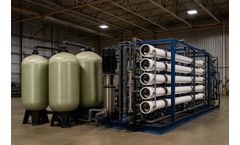
High water demand industries are increasingly adopting water reuse, recycling, and advanced wastewater treatment strategies to close the water loop. ...

Purpose The purposes of this technical memorandum are briefly outlined as: To evaluate the wastewater discharge payment method used by Metro Wastewater Reclamation District (METRO). To develop a wastewater discharge payment model applied to Industrial Park Water and Sanitation District (District). Based on the wastewater discharge payment model (Payment Model), to predict the ...
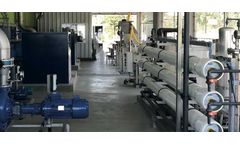
Protecting membranes, improving reliability, and reducing long-term operating risk Reverse osmosis (RO) plays a critical role in modern industrial water treatment. The technology delivers consistent, high-quality water for applications ranging from manufacturing and food and beverage production to power generation and high-purity processes. Yet even the most advanced RO systems depend on one ...

Laguna Technopark, a light industrial park near Laguna lake, 18.5 miles south of Metro Manila, upgraded to the Organica Water solution in November 2017. The 6,500 m3/d facility is the first Organica-powered for the Philippines, a country with over 100 million people but less than 30% of wastewater is treated. The newly integrated WWTP, located directly between an industrial area and a ...

A phased way to deliver reliable water and wastewater capacity as communities grow Growing communities don’t reach full size overnight. Residential developments grow in phases, occupancy rises over time, and the infrastructure roadmap often has to accommodate real-world changes in schedule and funding. “Build to grow” is a practical way of planning for that reality. It’s ...
Treating wastewater to a high standard for reuse provides a dependable internal resource that strengthens both environmental and economic performance In most industries, water is both an essential and a potential challenge. It cools, cleans, rinses, steams, and transports materials, yet the same processes that depend on it also generate large volumes of wastewater. For decades, the common ...
The focus is turning to systems that conserve, reuse, and account for every drop of water In the world of wastewater treatment, one of the most visible shifts in 2025 has been the growing focus on wastewater reuse and circular water systems. ...

Persian Gulf nations turn oil wealth into water resilience For decades, Middle East economies have been driven largely by oil. Oil exports have built nations, funded infrastructure, and fueled growth across a region that holds more than half of the world’s crude reserves. While the region’s oil, petroleum, and natural gas supplies have built wealth and enabled growth, it cannot ...

Data centers consume approximately 200 billion gallons of water annually in the United States alone, with cooling systems accounting for 80-90% of that demand. As water scarcity intensifies across major data center markets—from Phoenix to Northern Virginia—operations managers face a critical challenge: maintaining uptime while addressing water availability constraints and rising ...
Now is the time to lay the groundwork for greater efficiency and compliance Water is the lifeblood of communities, industries, and ecosystems. As population pressures, climate uncertainty, and stricter regulatory demands mount, the water and wastewater sectors are entering a period of rapid transformation. For firms, municipalities, and regulators alike, staying ahead means embracing innovation ...

For industrial parks, treatment solutions can transform wastewater from a liability into a valuable resource For decades, industrial parks have looked at wastewater treatment as just another unavoidable expense, a by-product of manufacturing to be managed, regulated, and disposed of. But that mindset is changing quickly. With growing water scarcity, increasing environmental pressures, and a ...

Water is present in everything we eat. It often goes unseen, yet it is essential for growing, processing, transporting, and preparing every ingredient that reaches our tables. From a cup of coffee to a fresh salad or a plate of rice, water is at the heart of global gastronomy. Today, in an increasingly interconnected world, this relationship between water and food takes on new dimensions, ...

Stringent purity requirements mean that lapses in quality can cause expensive delays In semiconductor manufacturing, ultrapure water (UPW) is essential to every stage of production. From wafer cleaning to final rinses, even the smallest impurities can lead to costly defects and equipment failure. A single 8-inch wafer requires up to 2,000 gallons of UPW to achieve necessary cleanliness levels. ...
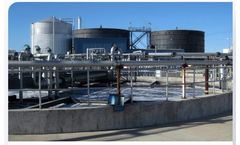
That’s why we explore two common water treatment processes: wastewater treatment and drinking water treatment. Wastewater Treatment Process Wastewater is water mixed with waste matter from domestic, municipal, or industrial sources. It carries harmful contaminants that must be treated before it can be safely discharged or ...

As the last few weeks have demonstrated, with the driest start to spring seen since 1893 and the warmest June on record for England, the UK should perhaps start bracing itself now for what the future holds. As temperatures continue to climb in line with climate change and as we continue to see increased urbanisation, pollution and population growth, pressure on water supplies around the country ...
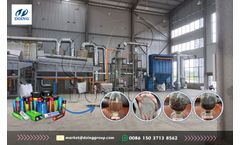
The traditional hydrometallurgical lithium battery recycling method relies on chemical leaching, which requires the treatment of highly acidic wastewater and is energy-intensive, while small and medium-sized enterprises in India generally face financial and environmental compliance pressures. ...
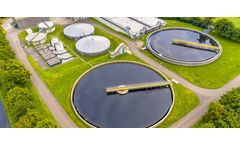
Water infrastructure, such as desalination plants and treatment facilities, is fundamental to ensuring access to this vital resource. However, these systems are not permanent. From their initial conception to eventual decommissioning or renewal, they undergo a complex life cycle that involves strategic decision-making and technological challenges. Understanding each phase of this cycle, with an ...