
Refine by
Water Cycle Management Articles & Analysis
30 articles found
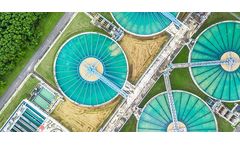
In the world of water management, artificial intelligence (AI) and digital twins are transforming treatment plants, enabling process optimization and improving sustainability. In this interview, Marta Fraile, a water specialist at Idrica, explores how AI is changing the paradigm in water and wastewater treatment plants. The conversation covered topics such as the maturity of digital twins, the ...
ByIdrica

In this conversation, Chema addressed critical issues such as the end-to-end water cycle, the challenges of the circular economy, the importance of democratizing data and technologies including artificial intelligence. Idrica is committed to innovation and sustainability in end-to-end water cycle management, and ...
ByIdrica
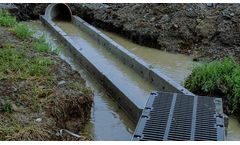
Sanitation systems are another core part of the water cycle as they manage the entire network from their source to their point of use or end-of-life disposal. ...
ByIdrica
Rolling out artificial intelligence and data integration to warn of and prepare for extreme events in drinking water and wastewater treatment plants, and for irrigation will deliver more preventive, automated management in just a few years.? Part of managing the water cycle is the challenging task of handling ...
ByIdrica
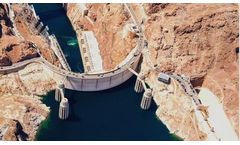
Currently, over 25% of water for human consumption is wasted due to broken pipes, leaks, poor fault response times and inefficient water cycle management, to name but a few reasons. ...
ByIdrica
Artificial Intelligence (AI) is the technology everyone is talking about this year, and it is a trend that water utilities cannot ignore. However, how can artificial intelligence really help in water cycle management? ...
ByIdrica
The current global water situation requires a major shift in strategy. In fact, the water crisis is already regarded by the World Economic Forum as one of the main threats to the planet. Drought, migratory movements, population growth, and inefficient water management are some of the drivers behind a major issue that directly affects the population’s water security. Against this backdrop, ...
ByIdrica

According to the latest data published by the UN, water losses in water distribution networks are a major concern, with Non-Revenue Water or non-billed water accounting for the supply of water to almost 200 million people. ...
ByIdrica

Process automation is one of the most important trends for 2023 and is one of the promising alternatives hailed to improve the current water scenario. Comprehensive data integration in innovative, vendor-agnostic technological solutions is the first stepping stone towards more proactive, automated water-cycle management. ...
ByIdrica
Pre-emption and prevention, security, reuse, process automation, optimization and planning are the main technological challenges ahead for water management in 2023, according to Idrica. In 2025, around 3.5 billion people will be living in water-scarce areas, while water demand is set to rise by 30% by 2050. It is also ...
ByIdrica
Water technology has gone from being an idea of the future to a real need. ...
ByIdrica

LoRaWAN networks are becoming a viable alternative thanks to their efficient, low-cost connections and their versatility in numerous water cycle applications, centering on monitoring as the key to greater efficiency. Digital transformation is the biggest challenge facing all water utilities, requiring the right technology to address the main issue of data transfer and analysis. In this sense, ...
ByIdrica

Designing the urban landscape to preserve water resources is becoming more important as climate change progresses Water-sensitive urban design (WSUD) is an approach to urban planning that integrates sustainable urban water-cycle management into the built environment to achieve positive ecological and ...

The Conference, organized by FuturENVIRO and Enviro Networking, takes place on 6th October in the context of Canagua & energía International Fair of Canary Islands Toro Equipment, leader company in wastewater manufacturing equipment, is holding a speech in Technical Conference about Water Management in Canary Islands: Efficiency and Innovation on ...

Climate change linked to urbanization is altering the natural water cycle and nowadays water management became an issue of significant relevance. Catastrophic events due to a wrong management of water are more and more common. Among these floods, which are Earth’s most common–and ...
Understanding this influence on water shortages and surpluses is particularly meaningful information for water managers in times of drought. ...

Aura, the ‘City of Colour’, is a 48,000 person masterplanned community on Queensland's Sunshine Coast. Aura commenced construction in 2015 and will be developed over the next 25 years. Aura sets a benchmark in Australia regarding large scale urban water sustainability through the application of techniques such as rainwater capture and reuse, construction and operational stormwater treatment, ...
Melbourne is one of the fastest growing cities in Australia. City West Water (CWW) has developed an Integrated Water Cycle Management (IWCM) Strategy which includes the development of aquifer storage and recovery (ASR) schemes to store recycled water and storm water to assist with meeting ...

Centralized treatment of wastewater is emerging as a viable solution for long-term efficiency in managing water sourcing and wastewater treatment in hydraulic fracturing. ...

Management of the urban water cycle in Australia has changed significantly over the past few decades. Stormwater management philosophy has evolved from the conventional, but still important, flood mitigation paradigm, to the current runoff quality control approach. ...
ByIVWater