
Refine by
Water Distribution Control Articles & Analysis
23 articles found

Here are the main application scenarios: 1. Water and Wastewater Treatment Influent and Effluent Monitoring: Accurate measurement of raw water inflow and treated water outflow in treatment plants. ...
Water treatment plants are undergoing unprecedented digital transformation. In 2024, DWTPs will continue to invest in automated technology-based plant management, streamlining their operations. First of all, digital transformation helps to centralize and control data management and therefore bring different DWTP processes together under one umbrella. These processes can be optimized using ...
ByIdrica
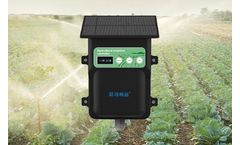
Benefits of the V3 Irrigation Controller a. Water Conservation: By providing precise control over water distribution, the controller minimizes water wastage and promotes efficient water use. ...
Historically, farmers relied on intuition, experience, and broad-sweeping techniques to manage their fields. They often lead to uneven distribution of resources, such as water, fertilizers, and pesticides, resulting in inefficiencies and wasted inputs. ...
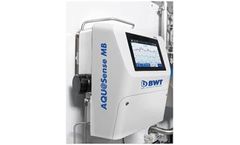
Continuous monitoring of Purified Water distribution system. In Process Control Using RMM with connection to several sampling points at the same time with sequential measurement allows for fast and easy process monitoring. ...
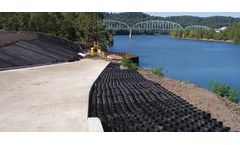
Infrastructure With estimates of 84,000 structures nationwide, dams and spillways are essential for controlling flooding, water distribution and management, and providing hydroelectric power. ...

Syarikat Bekalan Air Selangor Sdn Bhd (SYABAS) in Malaysia is the sole water distribution company supplying water to industrial and domestic users in the state of Selangor and the federal territories of Kuala Lumpur and Putrajaya. SYABAS relies heavily on a network of TBox remote telemetry units (RTU) relaying information to their SCADA ...
ByOvarro

Municipal Utilities Department (MUD) employs coagulation, sedimentation, active flow control and filtration to produce 60 million gal per day (mgd) of water at its surface water treatment plant. In addition, the system includes 27 wells and 21 booster stations controlled by SCADA. Water ...
In water distribution networks (WDNs), the classic pressure control valves (PCVs) are mechanical/hydraulic devices aimed at maintaining the target pressure just downstream or upstream of the PCV pipe, namely pressure reduction or sustaining valves. From a modelling standpoint, the major drawback of such local control is that ...
Water distribution systems have become immensely complex due to ever increasing water demand and sporadic availability of water at the sources. ...
Water network partitioning represents one of the best methodologies for improving water balance and pressure control of a water distribution system in order to reduce water leakage. ...
This paper presents a novel concept of adaptive water distribution networks with dynamically reconfigurable topology for optimal pressure control, leakage management and improved system resilience. The implementation of District Meter Areas (DMAs) has greatly assisted water utilities in reducing leakage. DMAs segregate ...
Key developments of instrumentation, control and automation (ICA) applications in wastewater systems during the past 40 years are highlighted in this paper. From the first ICA conference in 1973 through to today there has been a tremendous increase in the understanding of the processes, instrumentation, computer systems and control theory. However, many ...
The analysis of water distribution networks has to take into account the variability of users' water demand and the variability of network boundary conditions. ...

Abstract: Key developments of instrumentation, control and automation (ICA) applications in wastewater systems during the past 40 years are highlighted in this paper. From the first ICA conference in 1973 through to today there has been a tremendous increase in the understanding of the processes, instrumentation, computer systems and control theory. However, many ...
This paper presents a new logic algorithm for real-time control of regulation valves in water distribution networks. This method entails identifying in real time the appropriate closure setting of regulation valves in order to reach and keep the desired piezometric height at the control node(s), by making use of measurements ...
This paper deals with predictive control applied to the management of water storage in a small water distribution network. ...

As a way of controlling fouling in water distribution lines, utilities often conduct system-wide flushing cycles to clear lines of sediment, biofilm, and other accumulated material to maintain good water quality for customers. ...
Artificial neural network (ANN) methodology has found some recent applications as efficient control tools for satisfying free residual chlorine (FRC) levels at critical locations of water distribution systems. This particular research was started to critically investigate the potential and applicability of the ANN approach as a tool for ...
Distribution pipelines now require a lot of maintenance and mass renewal. ...