
Refine by
Water Process Conditioning Articles & Analysis
28 articles found

Aligning with this core theme, the green development of the pulp and paper industry is inseparable from water treatment — the flocculation and sedimentation process, in particular, is critical to improving production efficiency and ensuring environmental compliance, which is also the core service area where Shouxin has deeply rooted itself for years. ...

Here are the main application scenarios: 1. Water and Wastewater Treatment Influent and Effluent Monitoring: Accurate measurement of raw water inflow and treated water outflow in treatment plants. ...
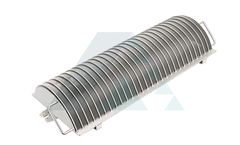
Their corrosion resistance makes them ideal for handling different water chemistries. 3. Pharmaceutical Industry Wedge wire scallops are employed in reactors for precise chemical processing and filtration. ...

They represent a relatively inexpensive and dependable means of removing heat from cooling water. The make-up water source is used to replenish water lost to evaporation. ...
At present large-scale cultivation wastewater treatment is adopted to conventional anaerobism-well foster group technology or SBR treatment process conventionally. The meaning of filtration, in the water treatment process, filtration generally refers to the process of intercepting suspended impurities in water ...

Chlorine is widely used in water treatment as a disinfection and oxidizing agent. However, the reaction of free chlorine in water leads to the generation of undesirable by-products and have harmful effects on industrial processes. ...
Wastewater containing predominantly inorganic loads from the supply circuits: backwash water, reclaimed water from the water softening plant, and purge water from the cooling tower and boiler. 2. Wastewater containing predominantly organic loads from manufacturing cleaning processes. Sustainable ...
Unlike competing technologies, one major benefit of the HiPOx process is that it does not produce any additional waste streams. Based on the results from the pilot test on water representing “worst-case” conditions, the City of Wichita authorized APCI’s construction of a 30 million gallon per day (MGD) surface ...

According to experts in the pulp and paper industry, it is estimated that 80% to 85% of water used in the papermaking process is used as process water. This creates sizable quantities of contaminated water that require the use of onsite wastewater treatment solutions. Treatment options include primary treatment ...

With the MBBR IFAS (moving bed biofilm reactor integrated fixed-film activated sludge) process, the biomass required for biological wastewater treatment is either suspended or fixed on free-moving plastic carriers in the reactor. Coarse- or fine-bubble aeration systems are used in the MBBR IFAS process. In this study, the oxygen transfer efficiency (OTE) of a ...
Adding water reuse system processes to recycle this waste water resource requires an overall understanding of processes, chemistry and water quality conditions, not only in the paper industry in general, but also of the particular paper mill/facility itself. ...
Cooling towers are large evaporation systems that evaporate water to remove heat to cool process water in applications including, air-conditioning systems, water cooling for equipment and general manufacturing requirements. ...
Granular-activated carbon (GAC) adsorption of biologically pre-treated process waters from hydrothermal carbonization (HTC) of different materials was investigated. ...

Fluidized bed material is derived from a combustion process that utilizes a bed of finely ground limestone to control the release of gases to the atmosphere. During the combustion process, the fluidized bed material - a combination of spent limestone and the coal combustion products - takes on a higher alkaline pH in the form of calcium oxide. ...
It was found that in the absence of membrane-panel cleaning operations, the oxygen transfer efficiency under standard conditions in process water (αSOTE) dropped from 18 to 9.5% in 2 years. ...

The Intensifier of Technological Process (or ABC-100) can be successfully applied at the fuel industry for liquid hydrocarbon fuels modification by means of water. ...
Ozonation and ozone-based advanced oxidation processes have been shown to be effective in the oxidation of several pharmaceutically active compounds (PhACs) routinely detected in surface waters. Under typical operating conditions of these processes, most of the parent compound oxidized is expected to lead to the formation of ...
Plants for industrial water processing and wastewater treatment designed using a modular approach have an advantage in a global implementation strategy. The German company, EnviroChemie, head quartered in Rossdorf has been developing, manufacturing and installing systems lo clean industrial wastewater, circulate water and ...
Laboratory scale batch reactor experiments were conducted to investigate the removal of dissolved organic carbon (DOC) and 14 different pharmaceutically active compounds (PhACs) from MAR influent water and water subjected to oxidation, under different process conditions. A DOC removal of 10% was found in ...
The WFs of sweeteners and bio-ethanol are mainly determined by the crop type that is used as a source and by agricultural practise and agro-climatic conditions; process water footprints are relatively small. The weighted global average WF of sugar cane is 209 m3/tonne; for sugar beet this is 133 m3/tonne and for maize 1222 m3/tonne. ...