
Refine by
Water Sampling Laboratory Articles & Analysis
24 articles found
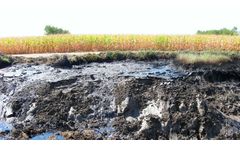
It includes different steps: Answering the Initial Ecological Assessment Screening Questions found in that methodology document If "yes" is the response to any of the four questions, then the sampling findings should be compared to the HSCA Screening Levels for ecological sediment, surface water, and surface soil, as appropriate. If any ...
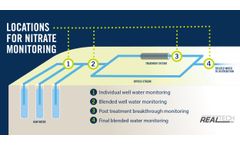
Lab Testing for Nitrate = Delayed Results & Missed Opportunities When nitrate analysis of water involves sending samples to a third-party laboratory, certain issues are encountered: laboratory methods are lengthy, are expensive, and samples may be compromised during transportation. The amount of time it takes ...
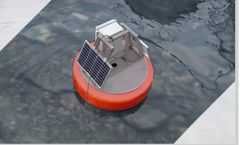
Water quality sensor is the front end of water quality monitoring systemLaboratory water quality analyzer-COD, BOD, PH, turbidity Laboratory water quality analyzer (laboratory water quality testing equipment), adopts sealed catalytic digestion, and then uses colorimetric method ...

Lab Testing for Nitrate = Delayed Results & Missed Opportunities When nitrate analysis of water involves sending samples to a third-party laboratory, certain issues are encountered: laboratory methods are lengthy, are expensive, and samples may be compromised during transportation. The amount of time it ...
Site Description Chlorinated solvents were found in soil and around water beneath a drum storage area at a manufacturing facility in central Indiana. The contamination was mainly found in the uppermost occurrence of ground water in an intratill silty sand formation. Within this zone the contamination had spread to cover an area of approximately 3,500 square ...

When it comes to off-site testing, it takes 10-14 days to grow a Legionella culture on a Petri dish in the laboratory. There are various other disadvantages to off-site culture testing as well, like the shipping degradation effect and the underestimation of the amount of Legionella in a given water system. ...
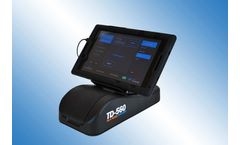
Oil concentration in water can be measured using many different methods. Local government regulations usually require a specific laboratory method, which is difficult to perform in the field. ...

The most common method of detecting oil in cooling water is by manually collecting water samples for analysis. Laboratory gravimetric analytical methods are not able to report oil in water concentrations less than 5 ppm and can take hours to days for a response to be generated. ...

Safe drinking water is scarce in southwest coastal Bangladesh. Harvested rainwater and rain-fed pond water are the main sources of drinking water for people living in this area. Both government and non-government organizations are promoting aquifer storage and recovery (ASR) schemes to provide safe drinking water for this ...
In this study, the performance of a new most probable number (MPN) test (Pseudalert®/Quanti-Tray®) for the enumeration of Pseudomonas aeruginosa from hospital waters was compared with both international and national membrane filtration-based culture methods for P. aeruginosa: ISO 16266:2006 and UK The Microbiology of Drinking Water – Part 8 ...

Liquid Nitrogen can be used in some cooling systems and there are now a number of companies who specialise in water-cooling ‘chiller’ solutions for cooling of MRIs. Shielding gas for welding Helium is commonly used as a shield gas for non-ferrous welding. ...
Hydrogen generators offers a number of advantages to Helium for gas chromatography including lower cost, availability through electrolysis of water, and improved sampling speed. Helium is well known as Helium that makes balloons and airships float and in its liquid form, Helium is used in a variety of applications including cooling for magnets in Magnetic ...
However, ultraviolet (UV)–Vis sensors have to be calibrated by means of a local fingerprint laboratory reference concentration-value data-set. The detection of outliers in these data-sets is therefore important. This paper presents a method for detecting outliers in UV–Vis absorbances coupled to water quality reference laboratory ...

The water effect ratio (WER) procedure developed by the U.S. Environmental Protection Agency is commonly used to derive site‐specific criteria (SSC) for point‐source metal discharges into perennial waters. ...

Introduction Usually, the costs of performing statistical analyses range between 10% to 15% and rarely should exceed 20% of the total ground water monitoring costs. Field sampling, analytic laboratory and regulatory reporting costs comprise most of the monitoring costs. ...

Site Specific Background Current physical set up to manage waste water Reception tank > Aqua rake > Balance tank 150m³ > DAF similar to Puriflow DAF > sewer Trade Consent Daily flow 150m³ per 24 hours COD 3000mg/l BOD 2000mg/l pH 5-11 FOG 200mg/l TSS 1000mg/l Current chemical treatment regime to manage waste water Sodium ...
A real-time PCR assay combined with a pre-enrichment step for the specific and rapid detection of Salmonella in water samples is described. Following amplification of the invA gene target, High Resolution Melt (HRM) curve analysis was used to discriminate between products formed and to positively identify invA amplification. ...
Analysed data collected using questionnaires from 60 randomly sampled pilot device users revealed that it is useful to its users. Yield trials results led to the conclusion that one device unit could provide enough drinking water to satisfy the needs of a large representative household. Laboratory tests of water ...

Polyethylene diffusion bag (PDB) samplers are low-density polyethylene bags containing deionized water, used to collect water samples in groundwater wells for laboratory analyses of volatile organic compounds (VOCs). ...

On top of this situation, measurement of some chemical and biological parameters is only possible when the water sample is subject to standard laboratory analysis methods. ...