
Refine by
Water Well Screen Articles & Analysis
15 articles found
In numerous industrial sectors, efficient and reliable screening and filtration are paramount. YUBO's wedge wire screen tubes, also known as Johnson screen pipe, offer a superior solution for solid-liquid separation, boasting a unique design and exceptional performance. ...
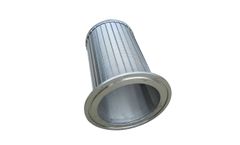
Application: water-treatment, beer brewing, water well drilling, oil well drilling, mineral processing, coal-cleaning plant, refining & petrochemical Conical and Cylindrical screen baskets can be tailor-made to suit the customer's requirements and maximum efficiency. We offer a range of wedge wire ...

Traveling water or sump screens are an ideal solution for facilities aiming to minimize or eliminate the costs and resource demands associated with the maintenance, cleaning, and replacement required by static water screens. These traveling screens are well-known for being an efficient, ...
Durability and Corrosion Resistance: Constructed from materials such as stainless steel and corrosion-resistant alloys, these screens excel in harsh and corrosive environments. Filtration Applications: These screens find application in a wide range of industries, including wastewater treatment, water well ...
Traveling water or traveling sump screens are ideal for facilities looking to reduce or eliminate the cost and resource expenditure for maintenance, cleaning, and replacement that static water screens require. Traveling water screens have long been regarded as an effective, efficient, ...

Client: Region of Peel Infrastructure Planning, Engineering and Construction Group A. Korniluk, M.Sc., P.Geo. Project Manager Hydrogeologist 10 Peel Centre Drive, Brampton, ON L6T 4B9 Project Description: Earthfx was hired by the Region of Peel to develop wellhead protection areas and contaminant vulnerability assessments for the Caledon East and Palgrave communities. Project work began with the ...
Client: Trent Conservation Coalition Drinking Water Source Protection – Lower Trent Conservation: Ms. Andrea Hicks, 714 Murray Street, R.R. #1, Trenton, ON K8V 5P4 Key Personnel: E.J. Wexler Earthfx Incorporated delineated wellhead protection areas (WHPA) for all municipal wells within the Trent Conservation Coalition Drinking Water Source Protection Region. Included in this ...
Client: Grand River Conservation Authority (GRCA): 400 Clyde, Cambridge, ON Contact: Sonja Strynatka, P.Geo, Senior Hydrogeologist Key Personnel: Michael Takeda, Spencer Malott, E.J. Wexler The Brantford Airport wellfield, located 6 kilometers west of the Brantford town centre, services a small population of residential and industrial water users. A single well (Airport Well 1) ...

This well was constructed with a 20 inch borehole and 16 inch well casing and when completed yielded 1,800 gallons of water per minute. In 2003, the well yield had dropped to essentially 0 gallons per minute. They were only able to get enough water to fill the well pipe. The ...
ByCETCO

Sampling groundwater from monitoring wells has traditionally involved purging the well to remove stagnant and contaminated drilling water within the borehole that may not be representative of in-situ groundwater quality. Scientific and regulatory guidance often recommends purging a fixed volume of water from the ...

A real-time PCR assay combined with a pre-enrichment step for the specific and rapid detection of Salmonella in water samples is described. Following amplification of the invA gene target, High Resolution Melt (HRM) curve analysis was used to discriminate between products formed and to positively identify invA amplification. ...

The HydraSleeve sampler is designed to collect representative water samples from monitoring wells without purging. The disposable sampler collects a discreet sample from only the 'fresh formation' water in the screened interval of the well. ...
Monitoring wells were screened at two levels in the aquifer to assess the potential for DNAPL. Shallow wells were screened at the water table (10 to 20 feet deep). Deep monitoring wells were screened at the bottom of the perched aquifer approximately 25 to 35 feet deep. ...
Sampling ground water from monitoring wells has traditionally involved "purging" the well to remove stagnant water that may not be representative of in situ ground water quality. Regulatory guidance often recommends purging a fixed volume of water from the well, usually three to ...
However, the water in the screened interval may indeed be representative of the formation, depending upon well construction and site hydrogeology. ...