
Welding Pollution Articles & Analysis
20 articles found
Introduction Installing a welding fume extraction system is only the first step toward maintaining clean and safe industrial environments. In many facilities, systems operate below their intended performance due to airflow imbalance, poor hood positioning, clogged filters, or improper maintenance practices. As a result, fumes escape into the workspace despite the presence of extraction ...
Introduction Welding operations in industrial workshops generate fumes that contain fine particulate matter and hazardous gases. These fumes, if not effectively controlled, can accumulate in the workspace and expose workers to unsafe conditions. While many workshops install extraction systems, a significant number still experience poor performance due to design flaws, incorrect usage, or ...
Introduction Many industrial workshops invest in fume extraction systems but still struggle with poor air quality, visible smoke, and inconsistent system performance. These issues are typically not due to the absence of equipment, but rather improper system design, incorrect usage, or lack of maintenance. As a result, common welding fume extraction problems persist despite the presence of ...
Introduction Automotive manufacturing is one of the most welding-intensive industries, involving processes such as robotic spot welding, MIG welding, and arc welding across body shops, chassis assembly lines, and component fabrication units. These processes generate large volumes of welding fumes containing fine metal particulates and gases, which can quickly accumulate in enclosed production ...
Heavy engineering shops work with big metal structures, thick materials, and long welding cycles. These conditions produce a large amount of welding fumes that spread out over large areas of production. Heavy engineering units often have more complicated extraction problems than small fabrication shops. It's hard to control fumes when there are big workpieces, moving equipment, and open spaces. ...
Why Does Every Industry Need the Right Fume Extraction System? Air pollution in industrial environments is a major concern for both safety and productivity. Processes such as welding, soldering, grinding, and machining release harmful fumes, mist, and fine particles. A fume extractor helps capture these pollutants at the source before they ...
Creating Cleaner and Safer Work Environments in Welding Operations Welding is an essential part of most manufacturing processes, but it produces fumes that can harm workers and reduce air quality. ...
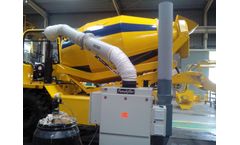
Why Air Quality Matters in Automotive Workshops Automotive workshops handle welding, soldering, painting, and engine testing on a daily basis. These processes release fumes, smoke, dust, and oil mist that pollute the air. ...
Delivering Efficient Fume Control for Simultaneous Welding Powertech Pollution Controls recently completed a project where the requirement was a fume extraction system that can manage to capture and control fumes from two welding applications running at the same time. ...
Delivering Efficient Fume Control for Simultaneous Welding Powertech Pollution Controls recently completed a project where the requirement was a fume extraction system that can manage to capture and control fumes from two welding applications running at the same time. Welding fumes, if not controlled, reduce air quality, affect ...
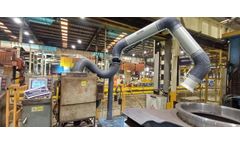
Improving Air Quality in Automated Welding Applications Powertech Pollution Controls recently implemented a clean air solution for Hyundai Construction Equipment. The requirement was to manage welding fumes generated from an automated welding process on the shop floor. ...
Improving Air Quality in Automated Welding Applications Powertech Pollution Controls recently implemented a clean air solution for Hyundai Construction Equipment. The requirement was to manage welding fumes generated from an automated welding process on the shop floor. ...
In an era marked by heightened environmental consciousness and an increasing awareness of the detrimental impacts of air pollution, the pursuit of innovative solutions in pollution control technology has become paramount. ...
We’ll explore its application as a welding fume extractor in a case study involving robotic welding of an excavator’s chassis. Its ability to effectively manage a wide range of emissions, including Oil or Coolant Mist and Welding Fumes, has made it an indispensable tool. We’ll explore its application in a case study involving robotic welding of an excavator’s ...
In today’s rapidly evolving industrial landscape, the need for efficient air pollution control cannot be overstated. Industries, in their quest for progress and production, often emit pollutants that pose significant threats to the environment and public health. Addressing these pollution concerns requires tailored solutions. Companies like Powertech Pollution Controls Pvt Ltd understand ...
The pressing need for cleaner, breathable air has given rise to numerous air pollution control mechanisms. Amidst this arsenal of tools, two stand out due to their popularity and efficiency: electrostatic filtration and mechanical filtration. Both these systems have their unique advantages, especially when applied to environments where pollutants like fumes from ...
and is generally included in most standard analytical methods such as Solder Metals, Priority Pollutant Metals, Welding Fume Metals, CAM 17 Metals, EPA DW Primary List Metals, and Appendix IX Metals. ...
and is generally included in most standard analytical methods such as Solder Metals, Priority Pollutant Metals, Welding Fume Metals, CAM 17 Metals, EPA DW Primary List Metals, and Appendix IX Metals. ...
During the design stage they took purchasing a welding fume filtration system into consideration. In view of the stringent environmental legislation and to meet the TLV values for welding fumes, Voortman strongly focused on proper and effective removal of welding fumes. Pollution in the workshop is not only caused by ...

Especially production processes (blasting, welding, painting, machining and metalworking), repair processes (hull washing) and painting processes (paint removal) create a huge amount of wastewater. ...