
Wellpoint Articles & Analysis
17 articles found
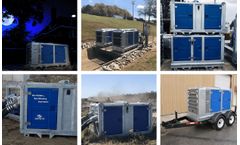
In this blog, we explain why sound attenuation has long since ceased to be the only reason to choose a sound attenuated pump. There are so many more advantages in pump canopies that we would like to explain in this blog. First a quick ...

Water and pumps are inherently linked to the Netherlands. Our country has a rich tradition in the fight against flooding and the construction of polders with their own pumping stations. The diesel pumping station J. Leegwater is located in Alkmaar, a cultural city located close to Amsterdam. This pumping station had been active from 1913 to 1988, but now functions only as working museum with the ...
Griffin designed a dewatering system using deep wells, eductors, and wellpoints to control groundwater and allow construction on the dam to be conducted safely and efficiently. ...
The Solution Multiple drilling methods were required to install the wellpoint dewatering system in the varying conditions along Little Dry Creek. ...
SOLUTION Based on the available information, Griffin designed a wellpoint dewatering system that was installed inside the shored excavation. Griffin installed 70 wellpoints to a depth of 22 ft. spaced 7 ft. apart, with 1 operating and 1 standby wellpoint pump. ...
Griffin provided 280 linear ft. of wellpoint dewatering around the perimeter of the open-cut 60×60 ft. excavation. We installed 140 wellpoints on very close spacing (2 ft. centers), using track punch jetting. To accommodate the high flow rate that was expected we utilized two (2) 6-inch diesel wellpoint pumps with one (1) standby pump, to ...
Griffin had to lower approximately 10 ft. of water but most importantly stop the running sands from entering the 25 x 30 foot (ft.) casting pit that is 45 ft. deep The Solution To dewater the excavation to the required drawdown, Griffin used a modular wellpoint system, installing battered wellpoints at an angle, by hand jetting between the gaps in the ...
Griffin then installed a series of wellpoints along the sheeting on the southeast corner and along the east side of the excavation to obtain the required drawdown and intercept the groundwater that was leaking into the excavation. ...
There are five main reasons to use an eductor system when in need of high pressure, high stability solutions: More versatile than wellpoint systems Lower the water table as much as 90+ feet Higher performance in stratified and/or low permeability soils Greater stability in fine grained soils Low maintenance Eductor systems have proven effective in removing and ...

The second school of thought is a little different, and it is more suited toward a caisson installation method, though it would work for any project. It is typically called wellpoint dewatering. With this method, small wells are dug or bored around the construction site to an elevation below the bottom elevation of the pump station. ...
Nearly every excavation site down to 9 m (30 feet) is dewatered using wellpoint filters connected to HDPE header pipes with a single or multiple piston pumps. ...
By installing each of the diesel driven units on an 80 meter header pipe with approximately 80 wellpoint filters, the groundwater level has been lowered quickly and effectively, much to the clients approval. ...

” New Technology The company is currently working on newer wellpoint dewatering technology, in which groundwater is extracted from multiple wells installed into the area requiring excavation. ...

In-stream surveys have comprised quarterly discharge measurements; quarterly sampling and analysis of surface water for nitrate-N and perchlorate; and occasional analysis for major ion suites in samples collected at strategic surface water and wellpoint locations (H+A, 2001). These investigations confirmed the broader conclusions of Usunoff (1984) regarding in-stream transitions ...
If you have a specific need, say sumping a lake, wellpointing a construction excavation or sewage bypass pumping, then selecting the right pump will make the project a successful one. ...
This relatively new approach produces fast, clean results eliminating turbidity in the discharge water and, with the proper installation, eliminates the need for using a filter sand or gravel around wells or wellpoints. This innovation gives the contractor the ability to adjust to changing ground water conditions with less guesswork, faster installation, lower labor costs, ...
The solution was to first install a perimeter wellpoint/wick point system with one 12 in. x 15 ft long (or approximately 7 ft below excavation bottoms) screened and wicked wellpoints at 48 in. +/- centers/horizontally. ...