
Refine by
Wet Electrostatic Precipitator Articles & Analysis
42 articles found

The project presented exceptionally demanding operating conditions:Parameter Value Treatment Airflow 110,000 Nm³/h CO Concentration 3,000–15,000 mg/Nm³ Main Pollutants CO, NOx, VOCs, Tar, Heavy Metals, Odors The extremely high CO concentration, combined with multiple pollutants and fluctuating operating conditions, required a highly integrated and robust treatment system.To address these ...

This integrated process can reduce operating costs significantly while maintaining VOC destruction efficiencies above 99%.As part of its customized engineering approach, Cadair frequently recommends this configuration for large printing and packaging facilities seeking both compliance and energy savings.Core Components of a Printing Exhaust Gas Treatment System Successful VOC treatment requires ...
The industry features three prominent exhaust characteristics: Wide Pollution Sources: Waste gas is discharged throughout multiple production processes, including silicon wafer cleaning, oxidation, wet/dry etching, ion implantation, and CVD. Complex & Variable Compositions: Various pollutants are continuously generated during production, including acidic exhaust, alkaline ...
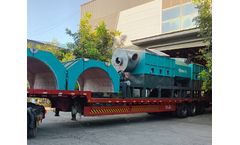
These gases then pass through a series of filtration stages, including cyclones, wet scrubbers, and electrostatic precipitators. Cyclones remove larger particulates through centrifugal force, while wet scrubbers dissolve water-soluble contaminants. Electrostatic precipitators capture fine ...

The WESP is usually installed in the wet desulfurization device. After desulfurization, a large number of water droplets are carried in the saturated smoke, which is captured when passing through the high-pressure electric field, thus reducing the probability of gypsum rain formation. At the same time, it has a good effect on collecting fine particulate matter PM2.5 and acid fog, etc., and the ...
Entrusted by the company, shandong baolan environmental protection engineering co., ltd. for its preparation of the preliminary design scheme of dust removal and desulfurization treatment. In line with the design principle of mature and reliable technology, reasonable overall layout, convenient operation and management, and low processing cost, we compiled the ...
The WESP is usually installed in the wet desulfurization device. After desulfurization, a large number of water droplets are carried in the saturated smoke, which is captured when passing through the high-pressure electric field, thus reducing the probability of gypsum rain formation. At the same time, it has a good effect on collecting fine particulate matter PM2.5 and acid fog, etc., and the ...
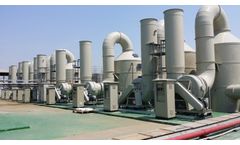
Common waste gas treatment equipment includes wet scrubbers, electrostatic precipitators, and venturi scrubbers. 1. ...

Abstract Wet electrostatic precipitation technology can be used to control acid mists, sub-micron particulate, mercury, metals and dioxins/furans as the final polishing device within a multi-pollutant air pollution control system. ...

Abstract: Marine industry in the past traditionally did not required any Air Pollution Control regulations for obvious reasons of locations of the ships in the open far from the residential areas and as the result the working conditions for the ships personnel where neglected as well as for passengers on the ships especially for such as cruise ships where population of passengers very dense. ...

The one technology that is becoming almost universally specified for this purpose is the Wet Electrostatic Precipitator (WESP). For engineers and plant designers in the field of gas cleaning, several operational goals stand out: achieving the highest level of particle collection efficiency. ...

Fire laboratory at SP Borås uses EnviBat’s Wet Electrostatic Precipitator technology (WESP) since 2007. Extremely low emissions and high availability are key advantages. ...
Rockwood Pigments, a global manufacturer of pigment products, has chosen a wet electrostatic precipitator (WESP) system engineered by Beltran Technologies, Inc.. to clean process gas streams before entering a sulfuric acid plant at its Easton, Pa., manufacturing facilities. ...
To maximize gas cleaning efficiency before gases enter the acid plant, the firm contracted with Beltran Technologies, Inc., of Brooklyn, NY, who designed and constructed two wet electrostatic precipitators (WESPs) at the site. The Mopani copper smelter and refinery in the town of Mufulira utilizes pyrometallurgical processes, which produce high ...
To prevent the formation of "black" or contaminated acid and to protect the catalyst beds from fouling and plugging, wet electrostatic precipitators are utilised to clean the off-gases before entry into the acid plant. ...
In an effort to reduce these emissions, plant designers have deployed an arsenal of gas cleaning equipment and techniques, including wet and dry flue-gas scrubbers, venturis, cyclones and fabric filters. In addition, thanks to innovative technological enhancements, plant operators are turning with renewed interest to modern wet electrostatic ...
AngloGold Ashanti's Cuiaba Expansion Project involved expansion of an existing unit with a goal for production of up to 6 tons of gold per year. The facility has selected a wet electrostatic precipitator (WESP) engineered by Beltran Technologies, Inc.. of Brooklyn. ...
Michael Beltran of Beltran Technologies, Inc. reports on a renewed interest in high-efficiency wet electrostatic precipitators (WESPs) and discusses their importance for controlling sulphuric acid mists and other pollutants in a wide range of industries including mining, metallurgical and power generation. ...
In 1997, the company found a solution in a system of wet electrostatic precipitators (WESPs) engineered by Beltran Technologies, Inc., of Brooklyn, N.Y. ...
The system is configured into three main components: A gasification reactor wliich produces high-quality syngas from biomass and other carbon-based materials. A wet electrostatic precipitator (WESP) to clean and condition the syngas - a critical prerequisite for downstream uses. ...