
Refine by
Wet Sensor Articles & Analysis
21 articles found

Grape Powdery Mildew One of the most serious and persistent diseases that plagues grape growers on the West Coast is Grapevine powdery mildew (Erisiphe necator). It is a fungal disease that effects wine grape, table grape, and raisin vineyards. This disease has a very swift onset and if not controlled immediately can have devastating consequences to a vineyard in terms of severely reducing yields ...

Semiconductors are the fundamental components of modern electronic goods. Cleanliness is crucial inside of a semiconductor fabrication facility, considering the scale of the working surfaces (nanometers). Contaminants of all types can result in defects, leading manufacturers to implement extremely strict and precise production control procedures with high reproducibility, especially during one ...
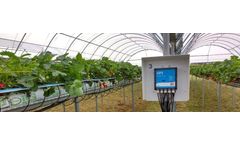
2020 was a record year for strawberry yields at the Water Efficient Technology Centre (WET Centre), based at NIAB EMR in Kent, UK. The WET Centre is an extensive research and demonstration facility that features a portfolio of innovative growing techniques and smart irrigation systems for the soft fruit sector. ...

The 90-degree scattered light detection method is the industry’s most common sensor design for turbidity. ECD’s powerful sensor design is advantageous in that it provide high sensitivity for turbid conditions over the entire measurement sample range. ...

In the last ten years or so we have seen a number of traditional parameters being measured continuously using ‘substantial’ sensor platforms often using wet chemistry/reagents or very complex and expensive semi-laboratory styled kiosk arrangements. ...

There has been much recent interest in modifying root system properties to overcome the effects of soil abiotic stress on crop growth and yield (Lynch 2007; Ghanem et al. 2011). Plant root systems are usually exposed to heterogeneous environmental conditions due to vertical differences in soil moisture and strength. Strong subsurface layers of soil can confine root systems to shallower soil ...
Using the WET Sensor to optimise growing conditions and irrigation efficiency in high volume strawberry and raspberry production Clock House farm nestles in the rolling hills of Kent, a few miles south of Maidstone in the UK. ...

The sensors are usually electrically driven as a constant-temperature or constant-current anemometer. For high flows, the dual sensor probe is inserted into a duct or pipe. The wetted surfaces of the sensors are either glass, alumina, or 316 stainless steel. For low flows, the MFM consists of one or more micromachmed rectangular ...
Sierra differentiates its thermal mass flow meters with patented Dry-Sense™ Sensor Technology. Unlike other thermal mass flow meters, Sierra’s sensors use no organic fillers or cements in device construction. With the thermal expansion and contraction that is common to thermal mass flow technology, organic or “wet” ...

Engineered to take measurements at high oxygen saturation, and with a large surface area filter for enhanced performance during sediment events, the instrument employs advanced fluidics, that are resistant to the bubbles that can plague wet chemistry sensors. Environment Agency application The National Laboratory Service Instrumentation team (NLSI) provides ...

” Relay and Redundant Sensor Run Time Report The Greyline non-contacting ultrasonic level sensors were installed about 1 meter above the high water level in Eckville's wet wells. ...

The instrument uses the same high quality Sea-Bird and WET Labs sensors found on their industry leading CTDs and ocean systems in a robust, compact package designed for extended deployments in coastal environments. ...

The model accounts for wetter periods of soil moisture and the main summer soil deficit and autumn re-wetting; limitations involve short-term, rapid changes in drying and re-wetting. The soil moisture sensor observations however do not reflect field variability. Analysis of more than one field allows an assessment of unexpected ...

Here are five Dos which, if followed, will keep your sensor and its diaphragm performing great. DO 1: Know Your Sensor's Pressure Ratings (Over Pressure And Burst Pressure) Many pressure sensors have an over pressure rating of at least 2X (or, twice the full scale pressure of the sensor). ...
Sierra’s solutions: Include new patented dry sensor technology that has a lifetime warranty versus the typical wet sensor design requiring annual off-site calibration Ensure zero drift on the sensor, reducing the cost of ownership tied to repeated calibration practices with other meter solutions Do not require ...
Assimilation of data from heterogeneous sensors and sensor networks is critical for achieving accurate measurements of environmental processes at the time and space scales necessary to improve forecasting and decision-making. Owing to different measurement accuracies and types of spatial and/or temporal measurement support of the component ...

The HPM-760S utilizes a piezoresistive sensor. A cutaway drawing of this sensor is shown in the figure below. ...
Since 2008 they have been using Delta-T WET Sensors to monitor growing conditions, making thousands of readings a week. Farm Manager Nick Deppe oversees the WET Sensor usage across the farm - and here he explains how and why the device is used: “The WET Sensor measures substrate ...

The advanced solid-state nature of 613's reference electrode mean they remain extremely accurate and reliable across a wide range of conditions, including: Temperature: 0 to 90°C Pressure:0 to 20bar In addition, 613 reference is immune to chemical poisoning and sensor fouling pH Sensor Fouling One of the major problems for traditional pH ...

As concerns about N pollution continue to mount, the sensors offer a way to cut fertilizer inputs without hurting yield or profits. ...