
Wetlands Development Articles & Analysis
41 articles found
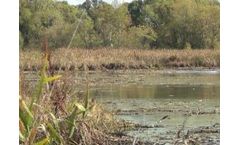
Minnesota has 10.6 million acres of wetlands. 43% of U.S. threatened or endangered species live or depend on wetlands. The state has lost abut 50% of its original wetland acreage. Wetland quality is largely degraded in developed parts of the state. Native vegetation is found in 67% of wetlands in ...
The risk to the wellfields, as well as the impact of the wellfields on other users, cold water streams, and Provincially Significant Wetlands was evaluated.The study focussed on the development, calibration, and application of an integrated surface water/groundwater model to assess the water budget in the study area, delineate wellhead protection areas, and ...
Some approaches, such as requiring developers to install retention basins or drainage, aren’t really working and they aren’t addressing cities’ pressing needs to provide residents and industry with potable water. Newer approaches combine a variety of management practices, including water reuse; development of constructed ...

More recently, a merged technique of embedding MFC into a constructed wetland (CW) has been developed and appears to be increasingly investigated. The driving force to integrate these two technologies lies in the fact that CWs naturally possess a redox gradient (depending on flow direction and wetland depth), which is required by MFCs as ...
The documentary “Can’t Stop the Water” takes viewers to southern Louisiana’s Isle de Jean Charles, where storm surges exacerbated by climate change, coastal oil and gas development, and wetland degradation are combining to push the island under water. ...
ByEnsia
The treatment units, planted with Cynodon spp., were based on an adaptation of the first-stage of the French vertical-flow constructed wetland, originally developed for treating sewage. Two different operational phases were investigated; in the first one, the full-scale unit was used together with six pilot-scale columns in order to test different feeding ...
This Framework underlines the vital role of wetlands to reduce water-related hazards like floods and droughts, and signals the need for attention to wetlands in risk assessments linked to development planning. ...
This means more than just protecting special places, it means investing in functioning systems in the landscape – wetlands as natural water infrastructure. To make this happen, we develop knowledge and apply tools that inform decisions about wetland wise use and water sharing. ...
10 tips developed by Wetlands International for policy makers and practitioners to better integrate the management of ecosystems and natural resources in their DRR work. 1. ...
For several developed and developing countries peatland emissions constitute a significant part of their total emissions. ...
Wetlands have been the focus of conservation and restoration efforts for over a century. ...
The constructed wetland technology is today continuously evolving with new and innovative applications. Vertical flow constructed wetlands is a relatively new and still developing technology in the field of ecological and environmental engineering. ...
The new requirements constitute a major step forward in the development of sustainable palm oil. Wetlands International has developed further advice and recommendations for: the appropriate implementation of the P&C by its members; further improvement of the P&C related to peatlands, and RSPO to establish a level playing fi eld for ...
Solution: Examples of support provided to date: Rainwater harvesting through barrel donation programs (55-gallon drums donated to watershed group or County Extension Service to repurpose as rain barrels and distribute in the community) Rain gardens established to cleanse water pollution from stormwater runoff and help infiltrate the water to the ground for replenishment Annual beach/river ...
Last week, I visited Indonesia together with Femke Tonneijck from Wetlands International to meet our partners that are involved in the development of a Building with Nature approach to solve the severe erosion along the muddy Northern coast of Central Java (Demak district). Deltares and Wetlands International have developed a ...
Africa Regional Office hosted Wetlands International's Board meeting wich is the first of its kind. Senegal proudly played host to the work sessions of Wetlands International’s governing body and its members who came from each corner of the world. Wetlands International has developed Senegal’s National Policy for ...

Landscape changes such as increased impervious surfaces, wetland drainage, damming of rivers, and water diversions can alter the volume, timing, magnitude, and quality of surface water, and can also affect groundwater. ...
Our Collective Targets Wise use and restoration of 20 wetlands is linked with the development of sustainable livelihoods, resulting in a strengthened asset base for at least 200,000 people Species oriented and ecological network initiatives result in improved status of selected wetland biodiversity groups, including waterbirds and freshwater ...
Wetlands are too often perceived as standalone elements and are poorly integrated into river basin management. The Ramsar Convention recognizes the critical linkage between wetlands, water and river basin management; the governments that are party to the Convention have committed to conserving their wetlands within a framework of Integrated Water ...
This paper describes the results of the first full-scale implementation of a two-stage vertical flow constructed wetland (CW) system developed to increase nitrogen removal. The full-scale system was constructed for the Bärenkogelhaus, which is located in Styria at the top of a mountain, 1,168 m above sea level. ...