
Wheat Leaf Articles & Analysis
13 articles found
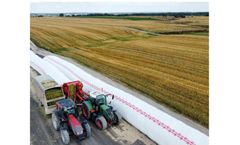
If needed, farmers can even designate sections within a single bag for different crops, such as marking one portion for wheat and another for corn. This method allows for greater versatility in feed storage without the inconvenience of physically separating crops in a silo, where it would be challenging to determine where one type starts and another ends. ...

Wheat crops in the Americas, Asia, Europe, and Africa are regularly damaged by wheat yellow mosaic virus (WYMV), and there is a high demand for wheat varieties or cultivars that are resistant to this virus. ...

So today, let's talk about the steps required for organic fertilizer equipment to convert straw into organic fertilizer. Let's take a look. 1. Stack the straw into a rectangle, and stack it into a strip with a width of 2 meters, a height of 1.5 meters, and an unlimited length. Cover them with straw mats and other breathable materials. Fertilizer fermentation is aerobic fermentation and does not ...

Up to 50% of photosynthetical activity of wheat is due to the flag ...

(commonly known as cobbler's peg) is an annual broad leaf weed widely distributed in tropical and subtropical regions of the world and is reported to be a weed of 31 crops, including wheat. Automatic detection of Bidens in wheat farms is a non-trivial problem due to their similarity in colour and presence of occlusions. This paper proposes a ...

Leaf rust, caused by Puccinia triticina Eriks., is an important foliar disease of wheat (Triticum aestivum L.) worldwide. Leaf rust resistance gene Lr42 from Aegilops tauschii Coss. has been used as a source of rust resistance in breeding programs. ...
Intercrops of canola (Brassica napus L.) and wheat (Triticum aestivum L.) were established at three sites in Alberta, Canada in 2005 and 2006 to determine interactions between intercropping regimes and crop grain and biomass yield, crop quality characteristics, soil microbial community biomass and diversity, flea beetles (Phyllotreta spp., Coleoptera: Chrysomelidae), and ...
The soft red winter wheat (Triticum aestivum L.) ‘Caldwell’ has effective resistance to leaf rust caused by Puccinia triticina. To determine the genetic basis of this resistance, Caldwell was crossed with the leaf rust–susceptible spring wheat ‘Thatcher’, and the F1 plants were backcrossed to Thatcher to obtain backcross (BC) F2 ...
Continued genetic control of the cereal rusts depends on the availability of effective resistance genes. The wild relatives of wheat (Triticum aestivum L.) constitute a source of such genes. Wheat leaf rust (Puccinia triticina Eriks.) resistant Aegilops neglecta accession 155 was crossed with ‘Chinese Spring’. ...
Leaf rust (caused by Puccinia triticina Eriks.) is a widespread disease of wheat (Triticum spp.) that can be controlled effectively through the use of genetic resistance. Little is known about the slow-rusting type of resistance to leaf rust in durum wheat [Triticum turgidum L. ssp. durum (Desf.) Husn.]. ...
Pretreatment with exogenous hydrogen peroxide (H2O2) mitigated the water loss of wheat leaves exposed to 4°C for 24 h. The same treatment also partially reduced the increases of electrolyte leakage and H2O2 production of the chilled plants. These observations suggest that H2O2 pretreatment could effectively induce chilling tolerance. The capacity of the alternative respiratory pathway and the ...
Most rice (Oryza sativa L.) simulation models assume that only temperature affects leaf appearance rate (LAR). This assumption ignores results from controlled environment studies that show that LAR in rice is not constant with time (calendar days) under constant temperature. The Streck model, which takes into account age effects on LAR, improved the prediction of ...
The objective of this study was to determine the yield responses of spring wheat (Triticum aestivum L.) and durum [T. turgidum subsp. durum (Desf.) Husn.] to Cu fertilization, and to determine whether wheat leaf rust (Puccinia triticina Roberge ex Desmaz f. sp. tritica), tan spot [Pyrenophora tritica-repentis (Died.) ...