
Refine by
Wine Production Process Articles & Analysis
20 articles found

Traditional Breeding This method allows two different yeast strains to be mated in order to produce offspring with desirable traits, which has been used for centuries in the production of beer and wine. The process involves selecting parent strains that possess the desired traits and then crossing them to create offspring with a combination of ...

You obviously don’t need a centrifuge for winemaking. For nearly 10,000 years humans have been stomping grapes, mashing up fruit and honey, or spitting starchy root pulp into jars, then letting it ferment. Wine happens. That said, most commercial-scale winemakers use centrifuges. Why? Because centrifugation is a quick and effective method for separating liquids and insoluble matter without ...
ByTrucent
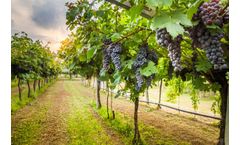
Fermentation, the chemical process that uses yeast to convert sugars to ethanol, is at the heart of the wine production process and requires accurate CO₂ measurement to ensure quality wines. Temperatures and conditions in wineries are very carefully controlled to ensure that fermentation does not occur too fast, ...

The VITISPEC project is a 2 year industry driven research and development project that is being funded by the European Commission’s Seventh Framework Programme under ‘Research for SME – ...

Nitrogen Generators also Offer Many Advantages in Wine and Beer Production Inmatec offers a wide range of nitrogen generators with which nitrogen can be produced in any desired quantity and purity in an environmentally friendly and cost-effective way. Here you can read about how the devices work, the advantages of on-site nitrogen production and the possible uses, especially in the production of ...

The Trautwein winery, located in Lonsheim, Germany, produces a wide range of wines and juices. The production process generates rinsing water, which has to undergo treatment before it can be discharged into the sewage system. ...

Wineries and vineyards face some added environmental and economic challenges to properly treat and dispose of wastewater. Proper treatment and disposal can be costly and there are very strict regulations that must be followed. Wineries can vary in size from 2,000 to over 100,000 cases per year, ages of facilities cover a wide range, and some are housed in converted buildings, or are in rural ...
Ceramic membrane can greatly satisfy your needs in food and beverage processing! Sweetener Membrane filtration and continuous ion exchange technology: reform sweetener production process. Wine Crossflow membrane filtration for wine clarification solution is an ideal way for wineries. ...
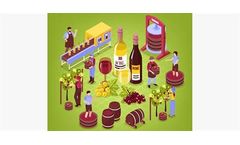
For reds, solids are left in the must, to create a more flavorful wine.Next, the young wine is transferred to fermentation tanks. The fermentation process begins when yeast is introduced to the must. Most winemakers today use commercial yeasts, so they can control the predictability of the final product, though some winemakers (much like certain ...
Sweetener Membrane filtration and continuous ion exchange technology: reform sweetener production process. Wine Crossflow membrane filtration for wine clarification solution is an ideal way for wineries. ...
Fermentation, the chemical process that uses yeast to convert sugars to ethanol, is at the heart of the wine production process and requires accurate CO₂ measurement to ensure quality wines.Temperatures and conditions in wineries are very carefully controlled to ensure that fermentation does not occur too fast, distorting the ...

Fermentation, the chemical process that uses yeast to convert sugars to ethanol, is at the heart of the wine production process and requires accurate CO₂ measurement to ensure quality wines. Temperatures and conditions in wineries are very carefully controlled to ensure that fermentation does not occur too ...
With the help of an investment from the Canadian Agricultural Adaptation Program (CAAP), the Wine Council of Ontario (WCO) has launched a project to help find solutions that will meet its members’ environmental and economic needs. ...
Complexity is a term often used in tasting rooms to describe a fine wine, although little thought and understanding is given to the complexity of treating winery wastewater. It is vital to understand not only the nature of winery wastewater, but the by‐products produced during the wine making process, such as juice ...

A case study on the Pasqua Vigneti e Cantine Winery, Verona Italian wine is enjoyed by many all over the world. However, to grow the best grapes, develop the best flavour and ensure success on a global scale, a seamless production process needs to be in place behind the scenes. ...

In this paper, the case of the European wine industry is analyzed. It studies the sanitation fees of the five major wine producing countries: France, Italy, Spain, Germany and Portugal. ...

THE CHALLENGE Wineries around the world utilize waste lagoons to deposit the waste products from the wine making process. This includes the pulpy residue, known as "pomace", and the insoluble material (or liquid sediments) known as "lees". These waste products often produce unpleasant odors and lead to environmental concerns. ...

The article's objective is to analyse the improvements obtained by the implementation of eco-efficiency in wine production. The principal aim is to achieve the rational energy and materials consumption in the whole wine production process implementing the Life Cycle Analysis (LCA) methodology. The ...
ABSTRACTWine production in South Africa is delocalised, with numerous small-to-medium sized producers within several regions within the Western Cape. Whilst adapting to new technological changes, producers have to respond to pressure from consumers and governments regarding the environmental consequences of winemaking, especially water usage and pollution. To date, no systematic analysis ...

The winery aims for best performance, investing a great deal of time, care and labor in improving both the quality of the grapes and the efficiency of the production process. The Problems The process of wine making at the Suntime winery starts with fermenting the wine at controlled temperatures for up to two ...