
Refine by
Workplace Safety Articles & Analysis
1,378 articles found
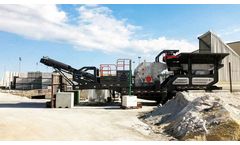
Saudi Arabia is currently undergoing a massive expansion in its national infrastructure and building sectors. Consequently, local contractors face a rapidly growing demand for high-quality aggregate materials. Establishing an on-site facility helps builders secure a steady supply of these materials. This technical guide outlines the key factors for operating an efficient crushing plant under ...
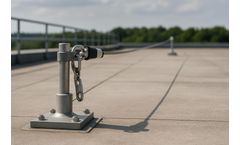
Published June 18, 2026, the discussion clarifies how to distinguish engineered horizontal lifelines from non-engineered, pre-engineered options and why the choice matters for project safety, compliance, and liability. The key distinction is whether the system is designed for the site by a qualified person or used as a manufacturer-tested configuration within published limits. Engineered ...

Effective exhaust gas treatment is essential for meeting environmental standards, protecting workplace safety, and improving operational sustainability.CADAIR specializes in industrial air pollution control solutions and has provided customized exhaust gas treatment systems for leading battery manufacturers in China. ...

Quick Summary This comprehensive blog post explains that electrical control panels are the backbone of industrial manufacturing, serving as centralized systems that distribute power, protect equipment, and automate processes. The main components include structural elements (enclosures, DIN rails, wire ducts) and functional devices such as circuit breakers for protection, PLCs for automation ...

Introduction Soldering operations in electronics manufacturing generate more than just visible smoke. When flux compounds are heated during soldering, they release volatile organic compounds (VOCs), resin vapors, odors, and fine airborne contaminants that can accumulate rapidly in enclosed workspaces. While particulate filters capture smoke particles, gaseous contaminants require a different ...
Introduction Soldering operations in electronics manufacturing generate fumes that contain flux vapors, fine particulate matter, and volatile organic compounds (VOCs). These fumes are released directly into the operator’s breathing zone and can quickly accumulate in enclosed workspaces if not controlled effectively. ...
Introduction Soldering is a critical process in electronics manufacturing, PCB assembly, and repair operations. While the process itself appears relatively clean compared to heavy industrial applications, soldering generates airborne contaminants that can accumulate rapidly in enclosed workspaces. These fumes are primarily produced when flux compounds are heated during soldering and may contain ...
Introduction Electronics manufacturing processes such as manual soldering, wave soldering, and rework operations generate fumes containing flux vapors, fine particulate matter, and volatile organic compounds (VOCs). Although soldering fumes may appear less intense than welding fumes, prolonged exposure in enclosed workspaces can significantly affect indoor air quality and operator health. ...
Introduction Installing a welding fume extraction system is only the first step toward maintaining clean and safe industrial environments. In many facilities, systems operate below their intended performance due to airflow imbalance, poor hood positioning, clogged filters, or improper maintenance practices. As a result, fumes escape into the workspace despite the presence of extraction ...

OSHA violations frequently center on the facility environment beyond visible safety gear. With tightening requirements for heat stress and indoor air quality, proactive monitoring has moved from a best practice to a compliance imperative. ...
Introduction The performance of any fume extraction system depends not only on its design but also on how well it is maintained over time. In industrial environments, welding fume extractors are continuously exposed to particulate loading, pressure fluctuations, and operational wear. Without proper upkeep, even a well-designed system can lose efficiency, leading to poor air quality and increased ...
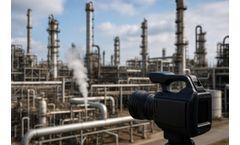
Downstream petrochemical and refining facilities face a complex leak-detection landscape beyond methane. In high-density environments, leaks involve a mixture of VOCs, aromatics, and heavy hydrocarbons. Modern infrared camera leak-detection (OGI) enables multi-spectral detection to identify a broad range of gases, supporting safety, environmental compliance, and product recovery within a single ...
ByOPGAL
Introduction Selecting the right filtration technology is one of the most critical decisions in designing an effective fume extraction system. Welding and metalworking processes generate fine particulate matter, often in submicron ranges, which require specialized filtration approaches. Among the most widely used technologies are electrostatic fume extractor systems and cartridge fume extractor ...

Automated waste sorting systems are revolutionizing recycling facilities worldwide, achieving up to 85% greater accuracy than manual sorting methods. PICVISA, a leader in machine vision and AI-based recycling solutions based in Barcelona, Spain, offers cutting-edge automated waste sorting systems that transform Materials Recovery Facilities (MRFs) and waste treatment plants. How Automated Sorting ...
Introduction Welding fumes consist of submicron particulate matter, metal oxides, and gaseous byproducts that are difficult to remove without properly engineered filtration systems. While capture at the source is critical, the effectiveness of a welding fume extraction system ultimately depends on how efficiently these contaminants are filtered before the air is discharged or recirculated. ...
Introduction Accurate airflow design is one of the most critical aspects of any welding fume extraction system. Undersized systems fail to capture fumes effectively, while oversized systems lead to unnecessary energy consumption and operational costs. In industrial workshops, improper airflow design is one of the leading causes of poor fume control ...
Introduction Effective welding fume control depends fundamentally on the ability to capture contaminants at the point of generation. In welding operations, fumes are produced at high temperatures and disperse rapidly into the surrounding air. If not captured immediately, they spread across the workspace, reducing air quality and increasing operator exposure. ...
Introduction Even the most advanced extraction unit will underperform if the capture point is incorrectly positioned. In welding environments, fumes rise rapidly due to thermal buoyancy and disperse with even minor air currents. If the extraction arm is not placed strategically, fu mes bypass th e h ood an d enter th e operator's breath in g zon e. Effective welding extraction arm positioning ...
Introduction Welding operations in industrial workshops generate fumes that contain fine particulate matter and hazardous gases. These fumes, if not effectively controlled, can accumulate in the workspace and expose workers to unsafe conditions. While many workshops install extraction systems, a significant number still experience poor performance due to design flaws, incorrect usage, or ...
Introduction Welding is one of the most common fabrication processes used across industries such as automotive manufacturing, heavy engineering, structural fabrication, and equipment manufacturing. While welding enables strong and reliable metal joints, it also produces significant airborne contaminants in the form of welding fumes. These fumes consist of fine metal particles, gases, and ...